UX Research ● Product Design ● Interaction Design ● Project Management
Liberating education consists in acts of cognition, not transferals of information. ― Paulo Freire

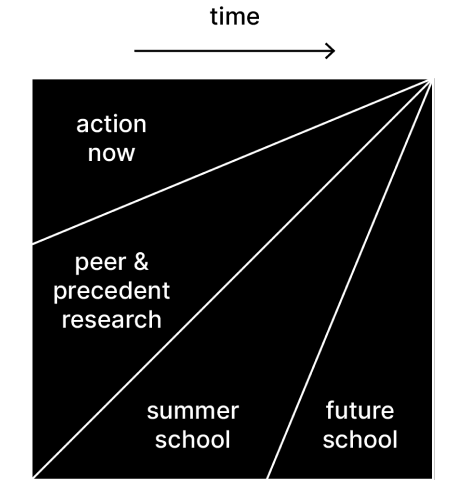
When our group first came together, we identified four directions that we could investigate:
These each had various starting point, and over time, they would all work towards a single goal of making architecture more relevant to the urgent needs of the time. We used a "divide and conquer" approach and formed groups that each would focus on researching one of these topics, coming together on a weekly basis to compare notes and identify commonalities and differences. We quickly realized that the summer school framework was the most agile to discover, design, develop, and test our pedagogical and platform ideas.
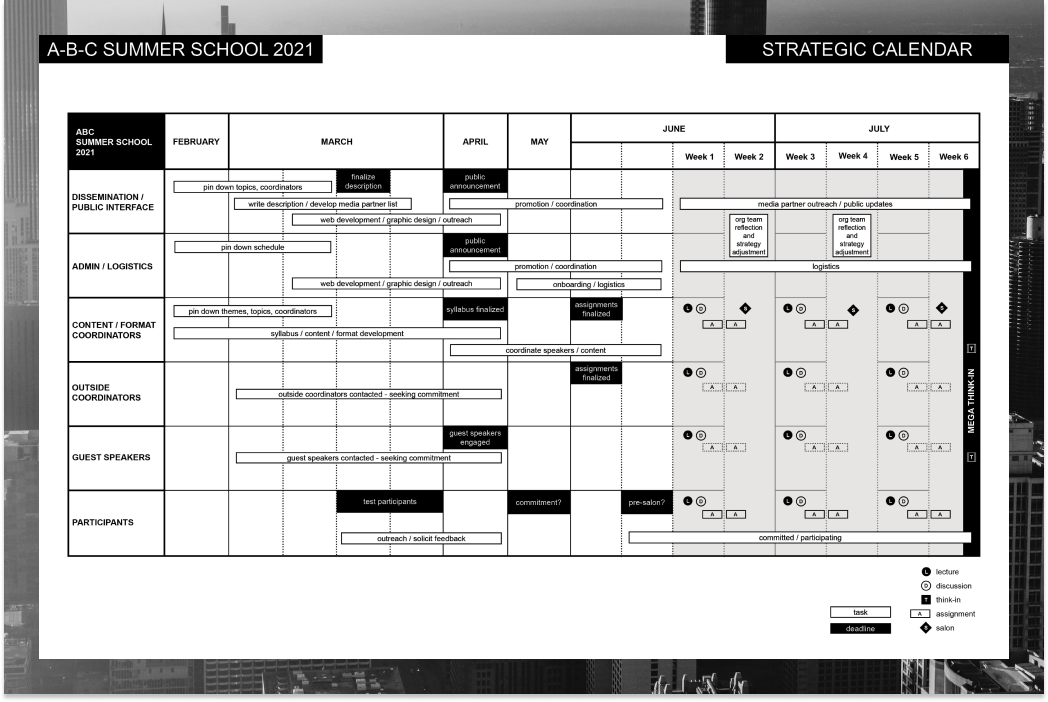
As the project evolved and our strategy honed in on developing a summer school, the divide and conquer approach continued. We identified four back end teams, in charge of communicating with two other groups on the front end. A coordinated development plan outlining epics for each of these groups was communicated through a strategic calendar, accessible to all, and frequently tweaked and updated.
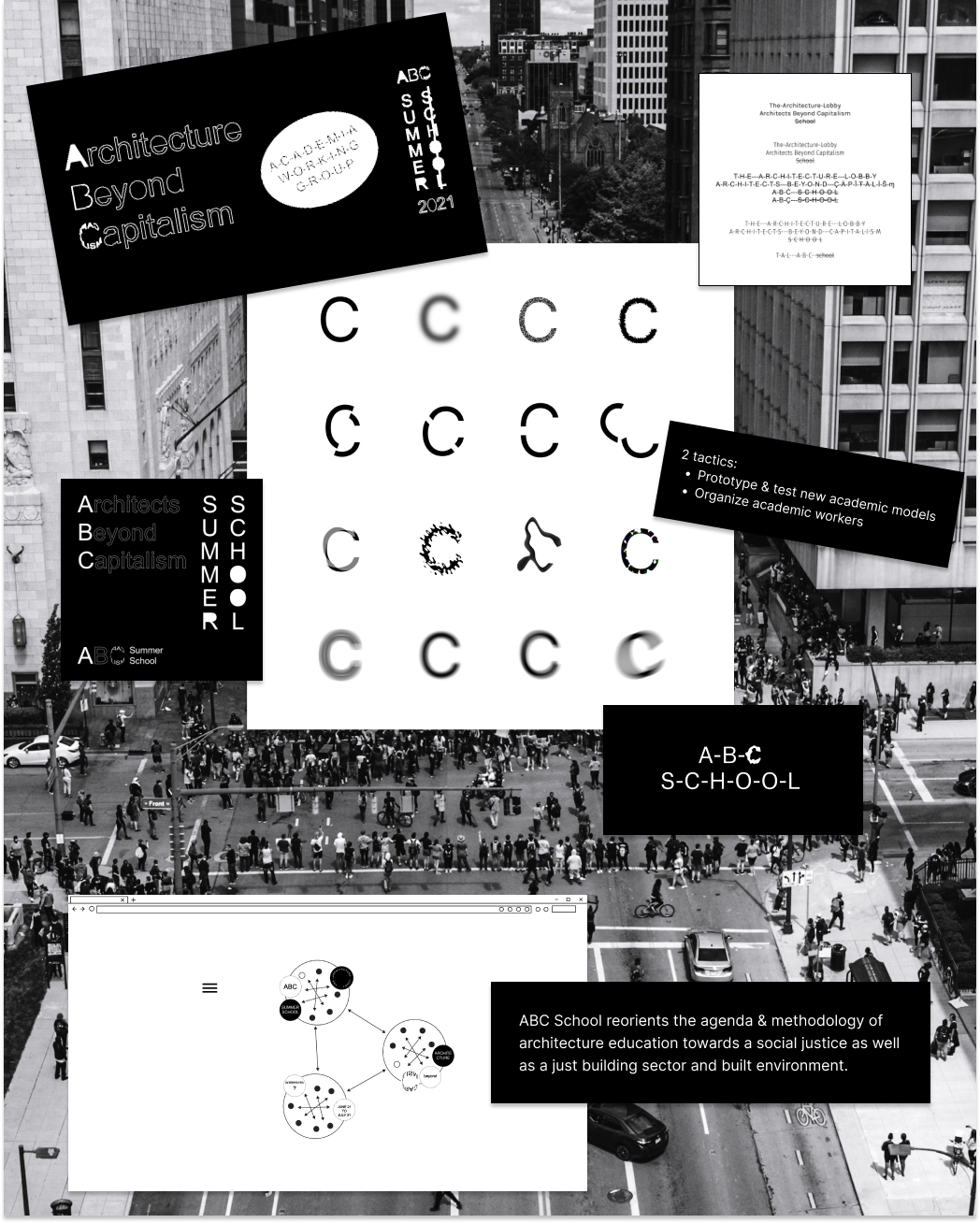
To effectively capture the attention of our desired audience, the ABC School's graphic identity needed to identify a fine balance between the aesthetics of dissent, optimism, creativity, and justice. The graphic research approach stayed within the black and white bounds the The Architecture Lobby is well known for, while experimenting with form, content, and interaction.
To quickly and effectively communicate the conceptual driver of the school — to take a critical stance on business as usual capitalism — I decided to focus on defining a unique treatment of the letter "C" in "ABC." The logo research process is detailed below, together with research for the landing page and boilerplate description of the project.
We conducted one on one conversations with recent and current architecture students to understand their experiences, pain points, desires, and needs with regards to the current academic system. These insights were shared back with the group by interviewers. Affinity mapping allowed to identify that a feature of the mission of the ABC School would be to define and test new modes of exchange between student and teacher: we needed new session typologies.
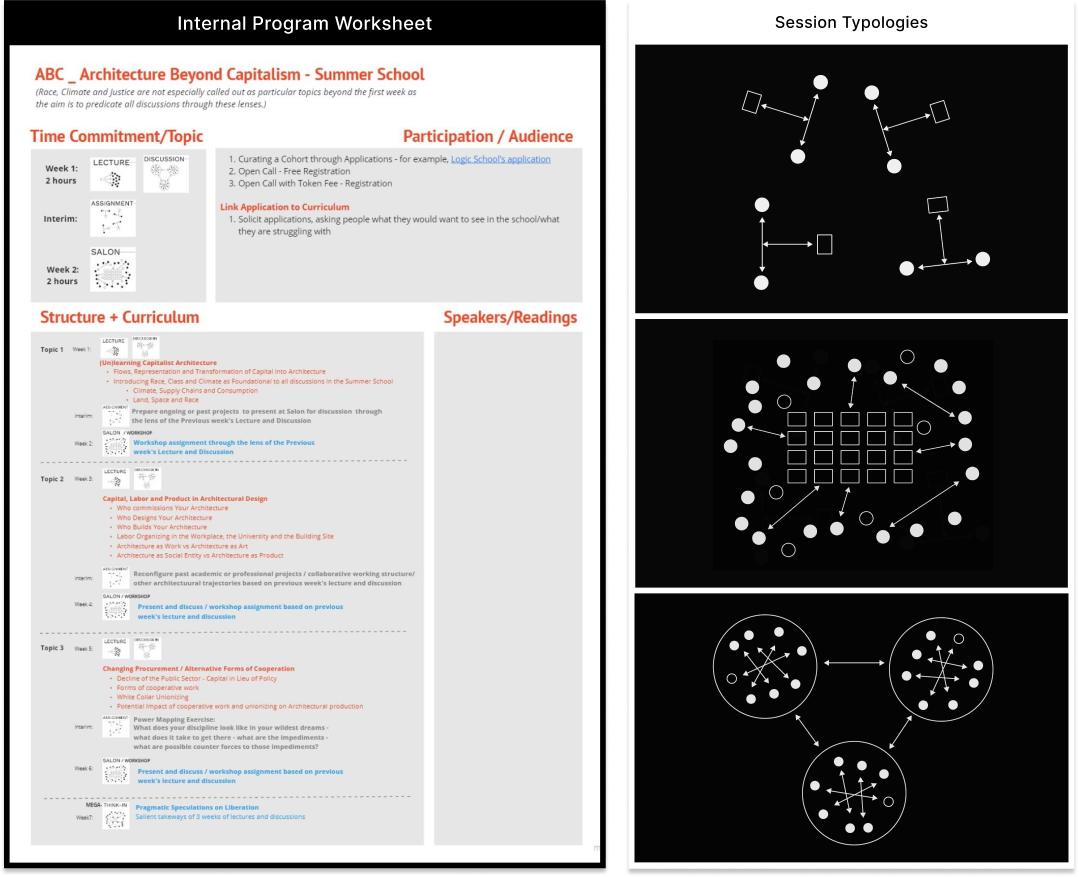
Questioning established power dynamics would be embodied through innovative session typologies. An iterative diagram process allowed to brainstorm what these could be. This series was shown and discussed with the group of academics, allowing to identify the most promising ones. Their assembly over time would repeat to define a multi-part cycle. Repetition is a key feature of pedagogy to build a sense of expectations and a learning rhythm.
To drive an asynchronous and documented program content development strategy across the team of a dozen of opinionated academics, we assemble a worksheet. Members of the content team are invited to populate it and present their thought and collection of topics, speakers, and readings to the rest of the group during a collective workshop. The session typologies are instrumental to guiding the academics towards designing content for new pedagogical formats.
Our outreach to speakers is successful and several of our first choices confirm their participation. Finally, our program is coming together! We are ready to announce it publicly and onboard participants.
Saturday June 5 — ORIENTATION
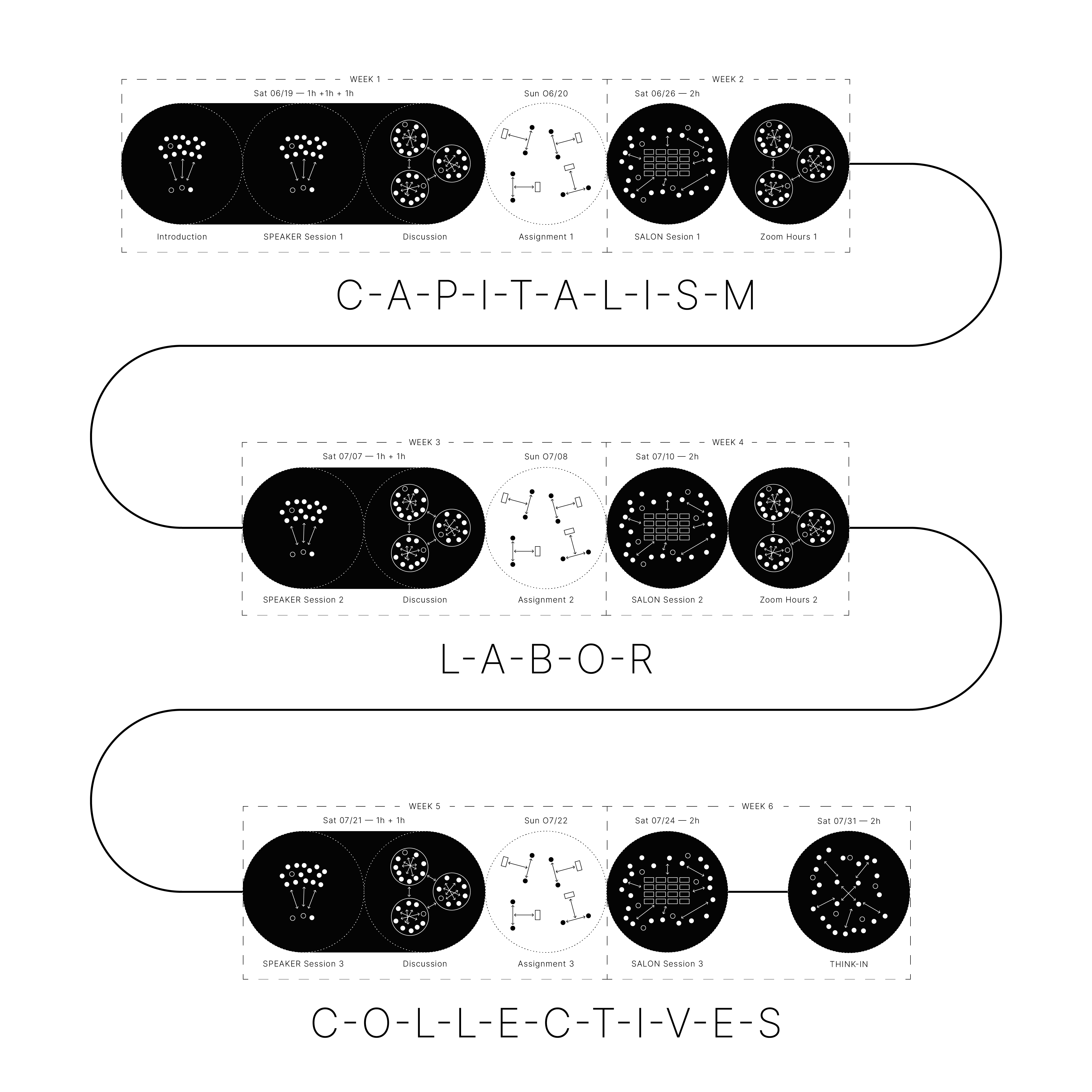
Theme 1 — C-A-P-I-T-A-L-I-S-M
Saturday June 19 — SPEAKER Session
Saturday June 26 — SALON Session
Theme 2 — L-A-B-O-R
Saturday July 3 — SPEAKER Session
Saturday July 10 — SALON Session
Theme 3 — C-O-L-L-E-C-T-I-V-E-S
Saturday July 17 — SPEAKER Session
Saturday July 24 — SALON Session
Saturday July 31 — THINK-IN
To begin to understand the needs and wants of the ABC School's digital platform, user groups are outlined and represented with an abstract persona diagram. Inspired by representations of cells in biology, and bauhaus aesthetics, these icons have a minimal visual design. Front end users are square while back end users are circles.

These persona icons are useful as we develop the digital platform through which the course is to take place, allowing to outline the flow of each user group.
A quick study allowed to identify the questions commonly asked in academic applications. This format is replicated together with some tweaks: the admission committee is interested in getting to know the positionality of any interested party.
The program is finalized, speakers are confirmed, the sign-up form is ready, time to onboard students! They are invited to let go of their traditional "student" roles and instead get involved in the ABC School as "participants." A mass outreach email template is redacted and shared progressively with 100+ organizations and individuals. It invites anyone interested to sign-up for the ABC School.
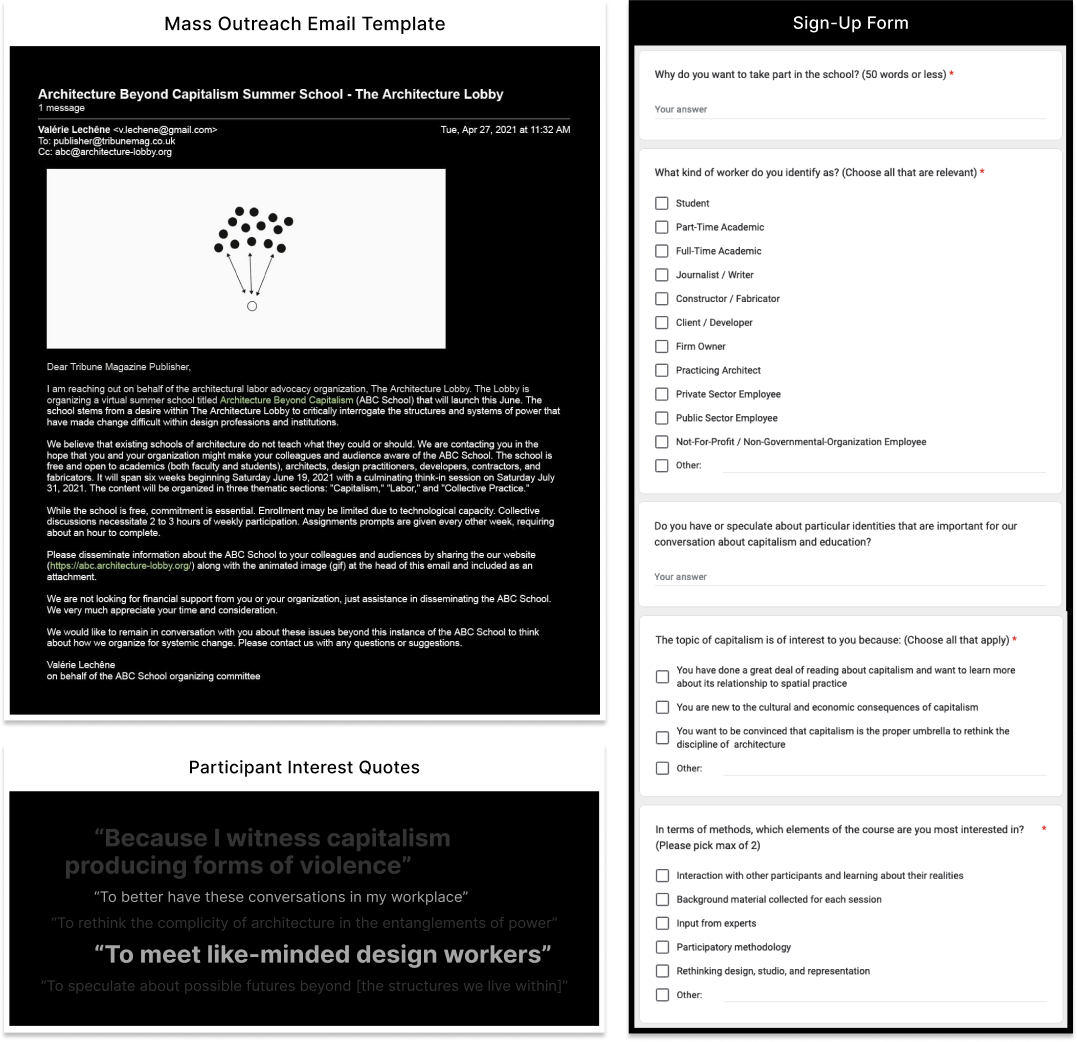
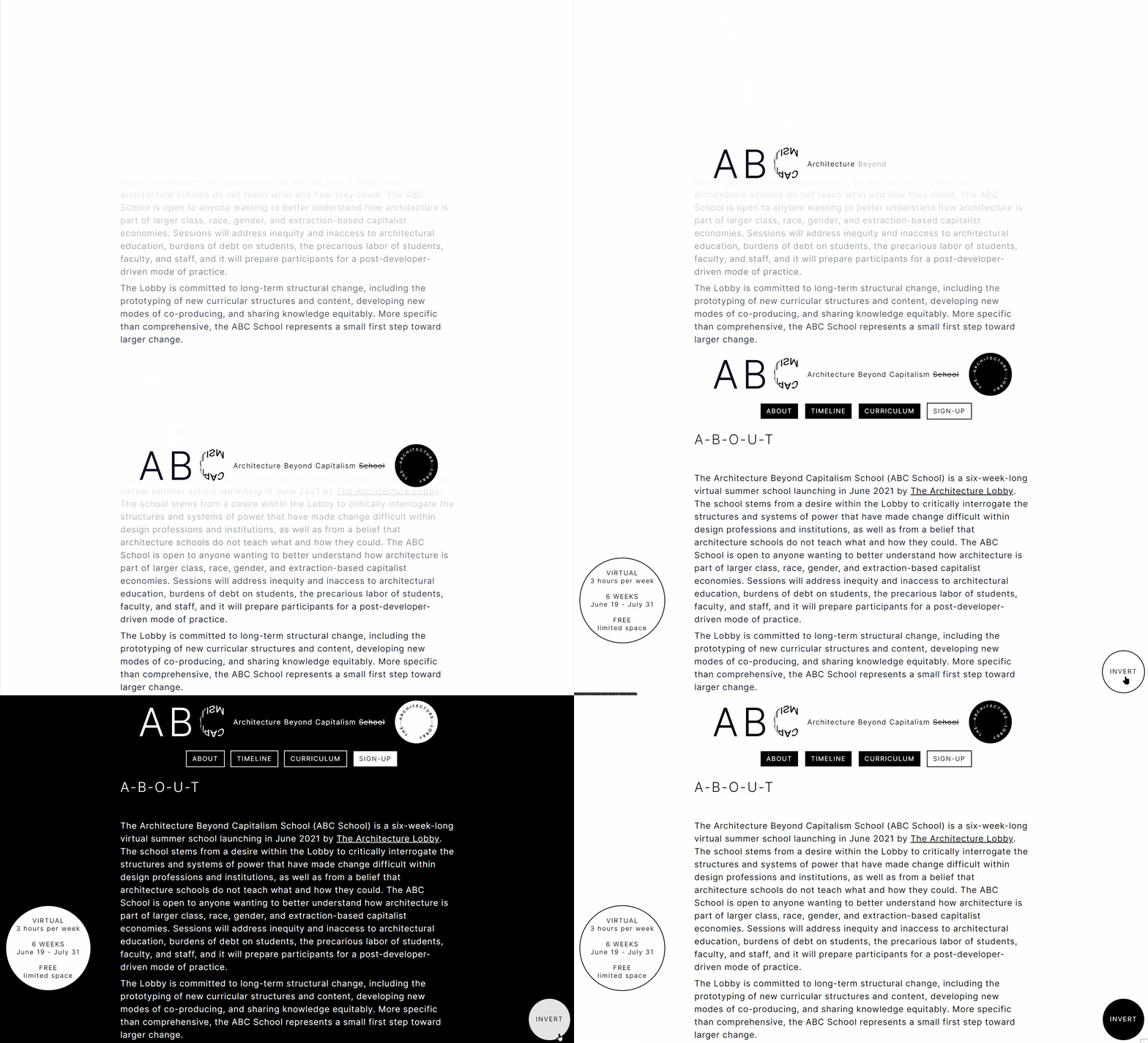
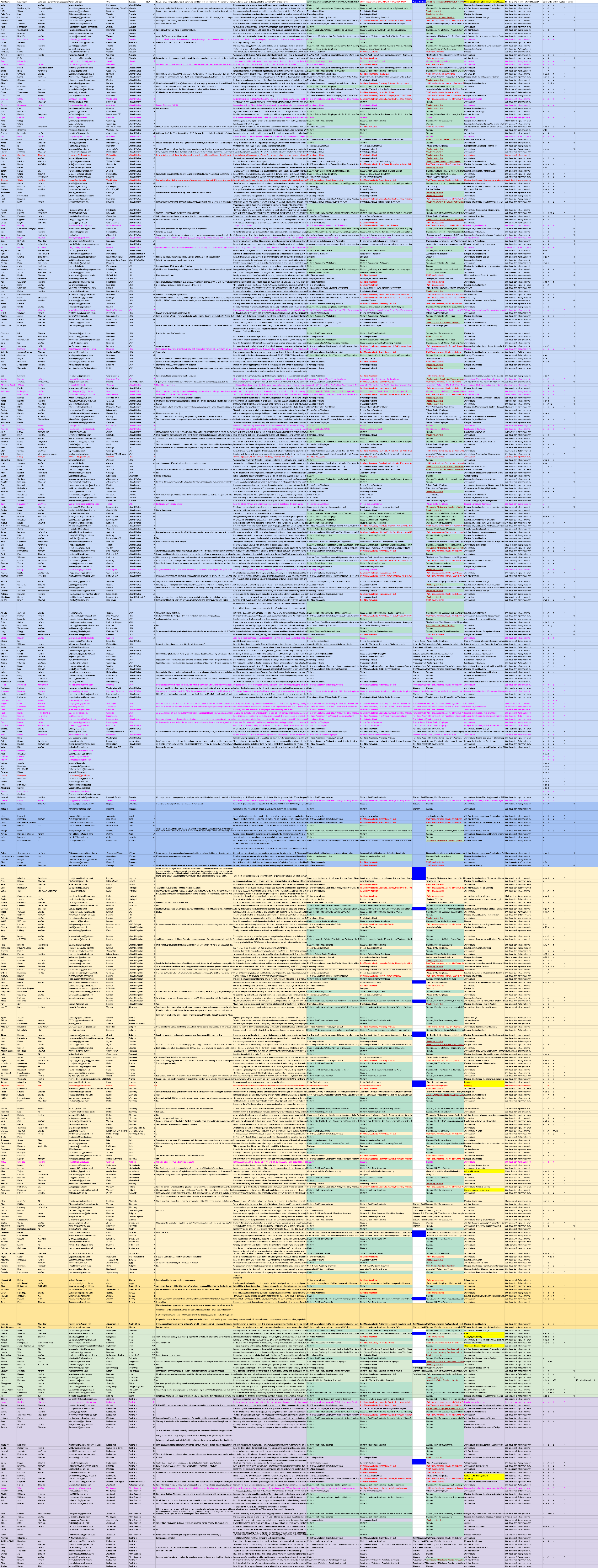
These months of hard work discussing the detail of the program content, the speakers, the readings, the user experience, the session types pay off. Our offering is an unexpected success and over 500 people from around the globe and all walks of life want to participate in the program! There are more than we can accept into our high engagement route, so we need to figure out which of the applicants are likely to do the assignments, and which will be happy simply auditing.
Applicants are sorted by the continental geography to which they belong. Each member of the admission committee reads carefully the reasons participants want to partake in the school, and place a vote if they think they are deserving to be in the high engagement program.
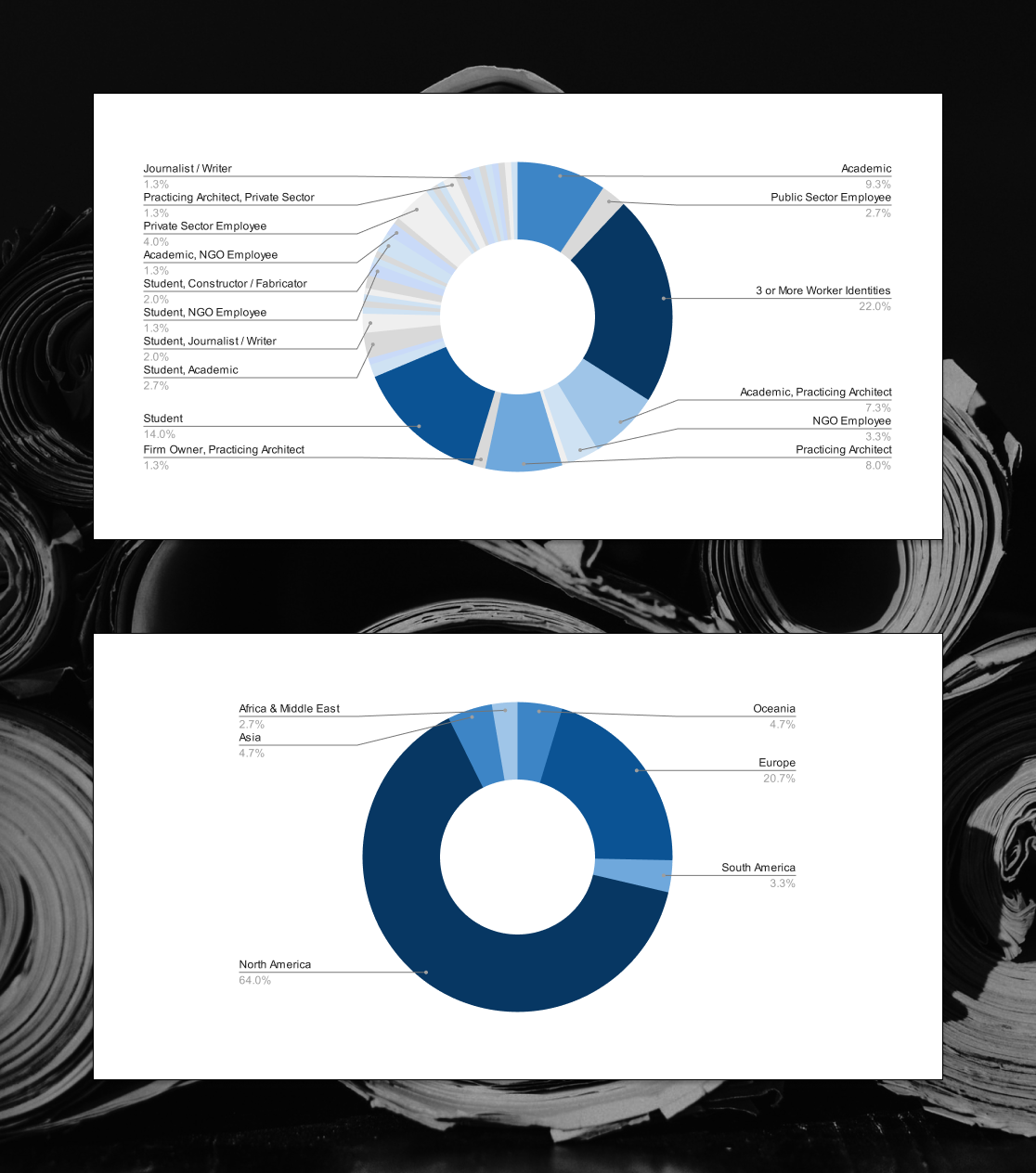
The success of the outreach campaign is also measured by the diversity of participants. Their geographical range is equally diverse as their areas of knowledge.
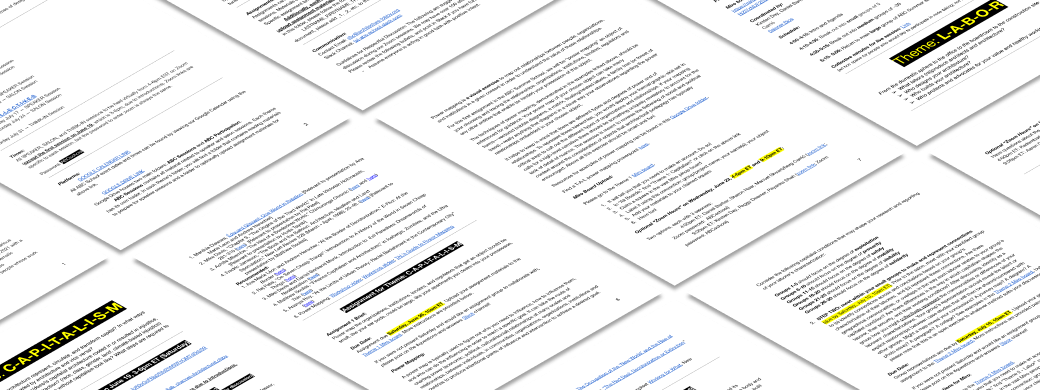
An editable, twenty page document rich in links, descriptions, assignment prompts, further readings is published online. It will be our participant's companion throughout the program. I pin it to out Slack workspace's general channel to make sure all find it with ease. A linked table of content allows quick navigation throughout the detailed document.
The session type assemble in two week formations and repeat three times throughout the program. All in all, it's a completely unique and different offering.
In the backend, an integration across emails, google docs, Slack, zoom, and Miro are designed to onboard participants, auditors, speakers, and saloners into the ABC School as seamlessly as possible, and allow participants to focus on what matters: connecting with others, learning, collecting insight, and sharing their findings.
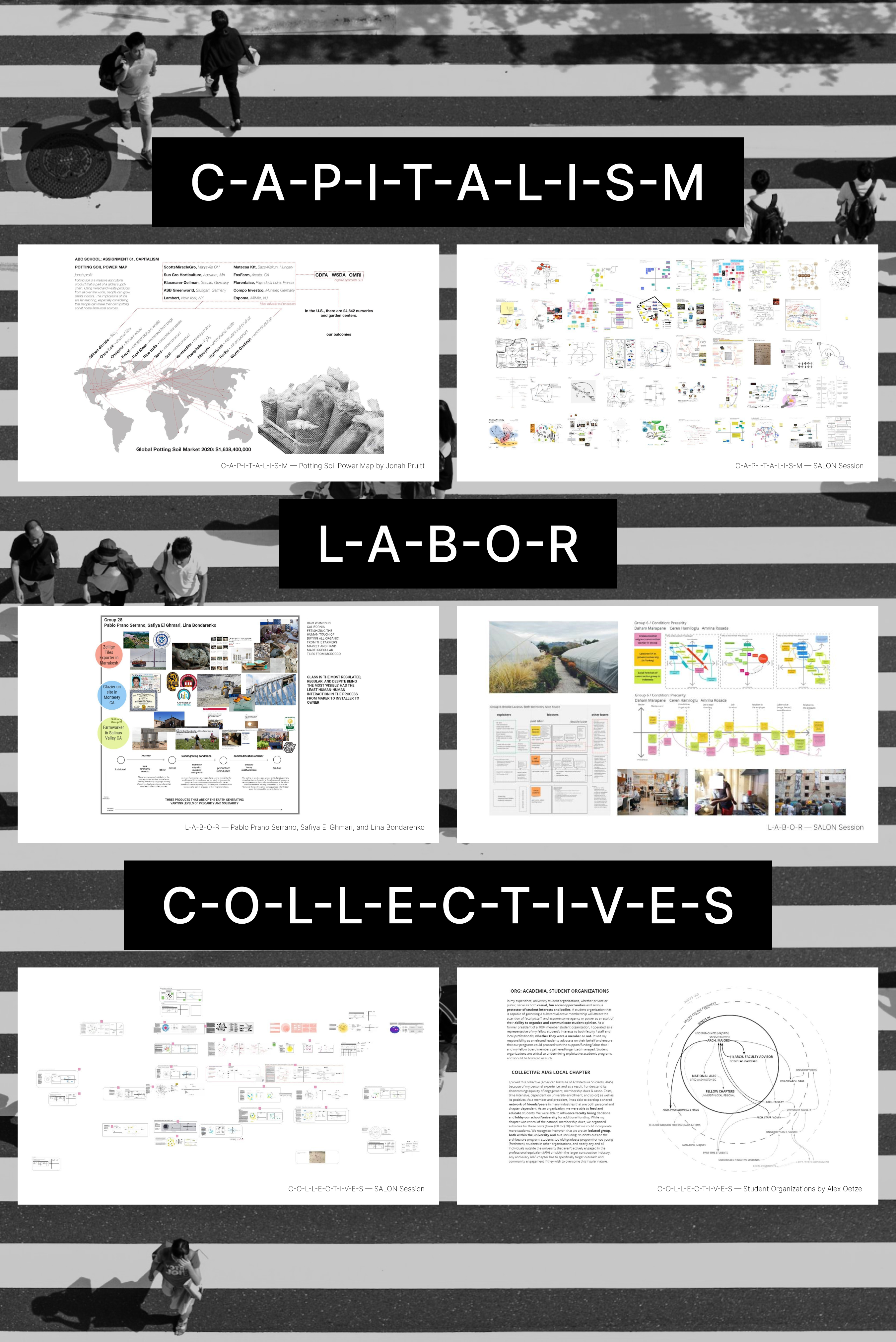
Finally, our program starts. Speaker sessions, succeed discussion during which lectures and readings are discussed. Participants collect their thoughts over assignments which are presented and discussed during salons.
Participant work is displayed below with permission from the authors.
The end of the program culminates into a think-in during which the discourse integrated over the course of the program is integrated and the participants are invited to individually and collectively outline next steps for advancing the mission of the ABC School.
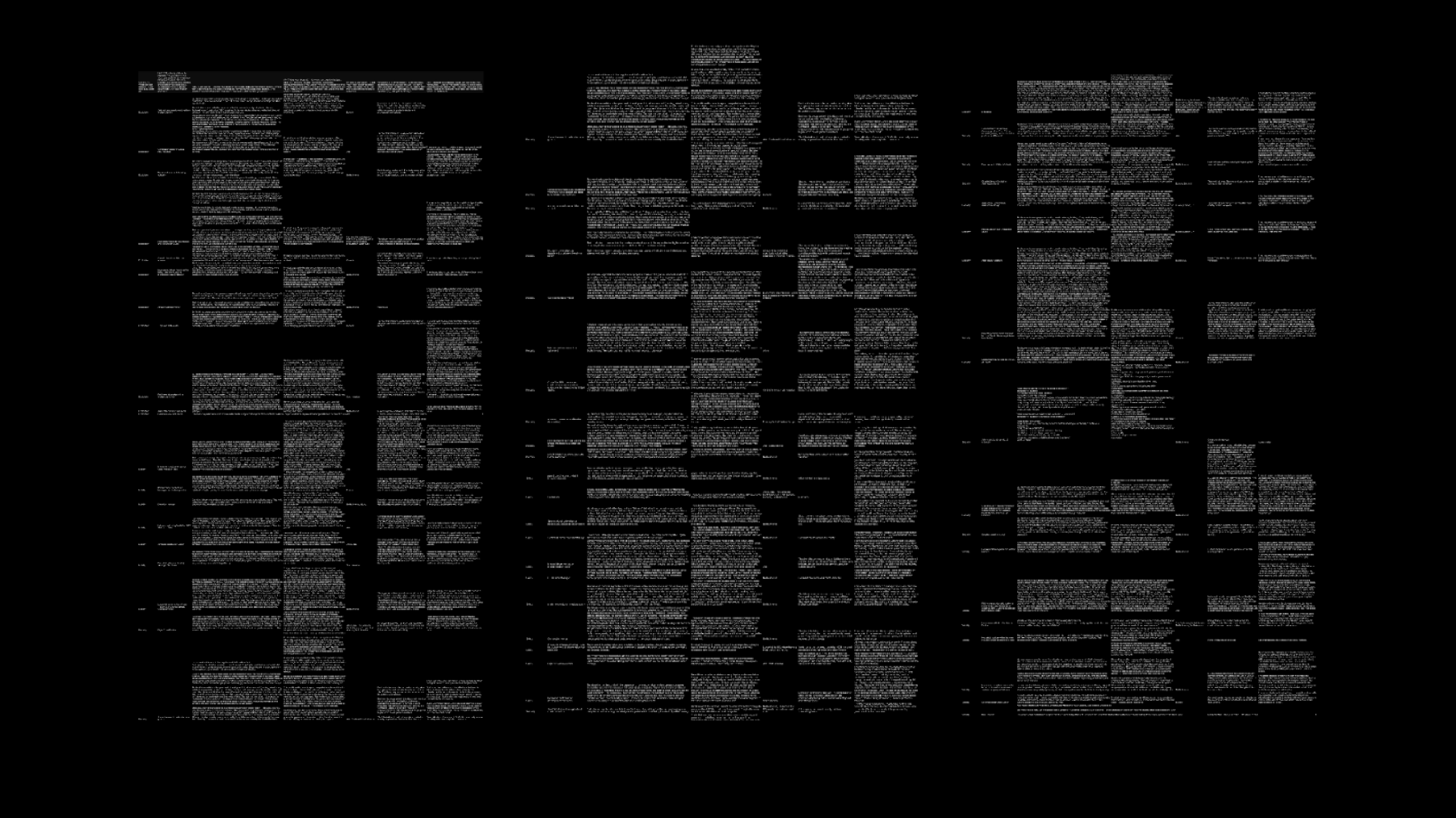
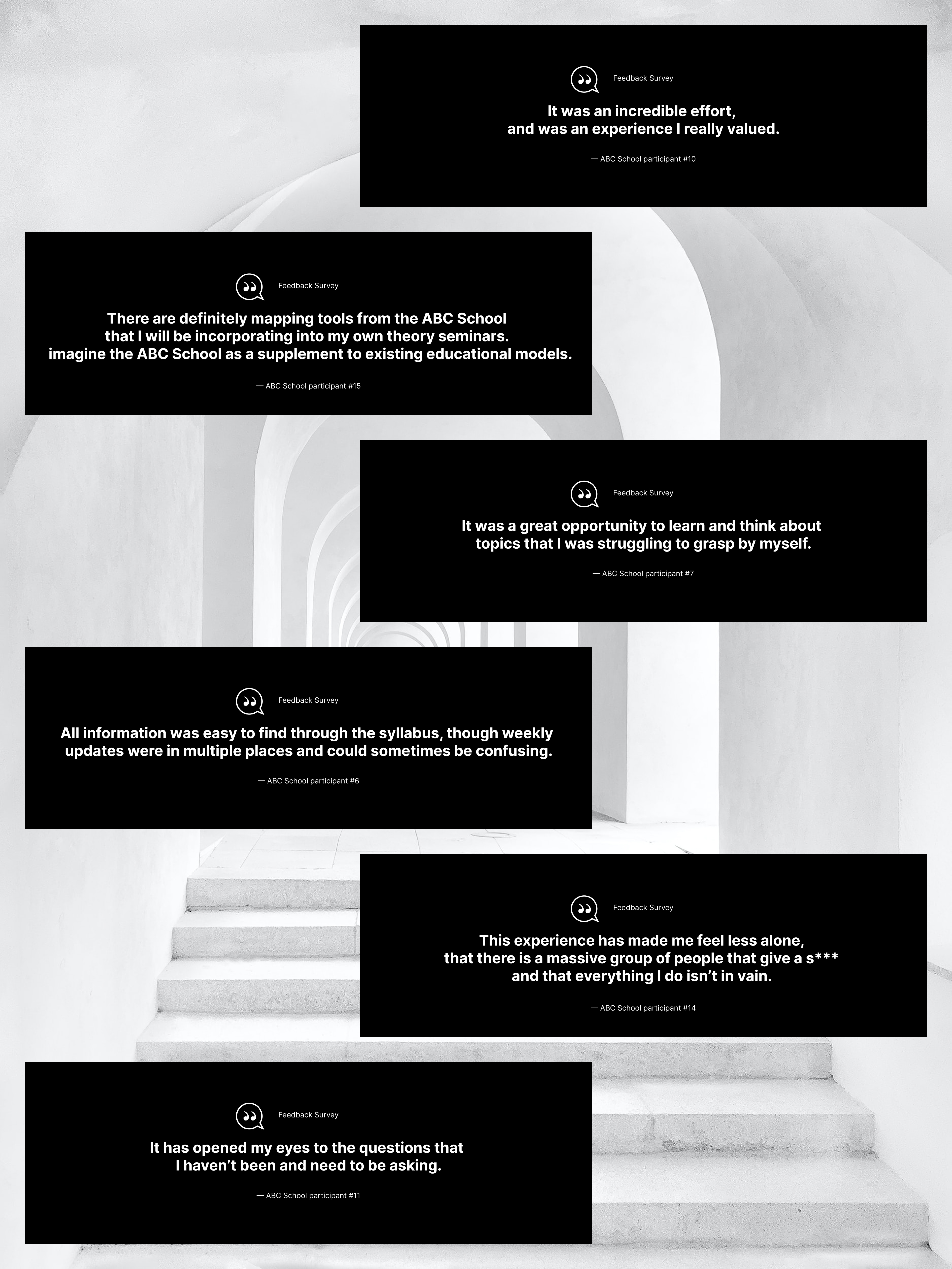
Participants are invited to share feedback on their experience at the school. These insights shared demonstrate that the content and the community experience have landed well with the audience.
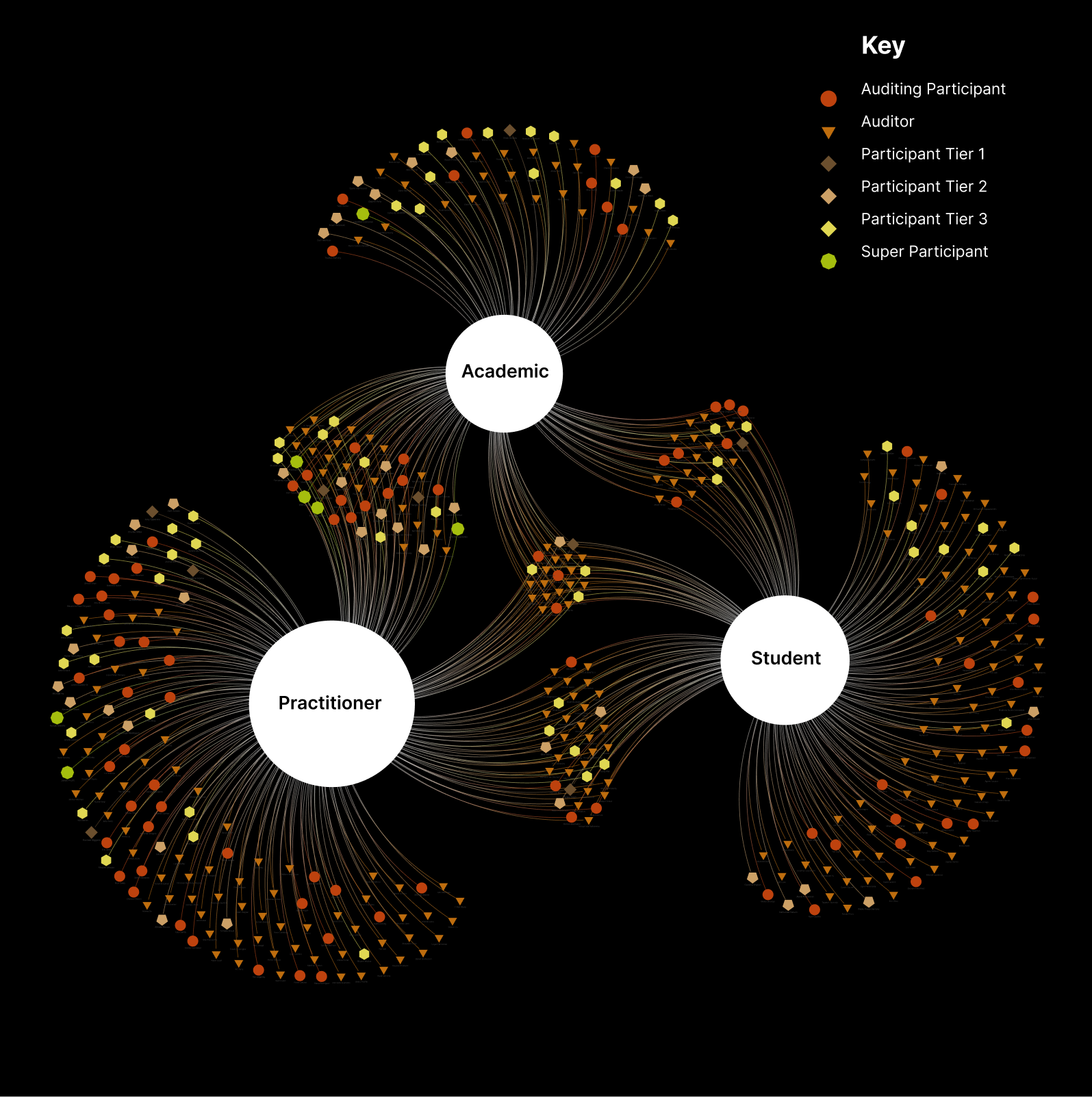
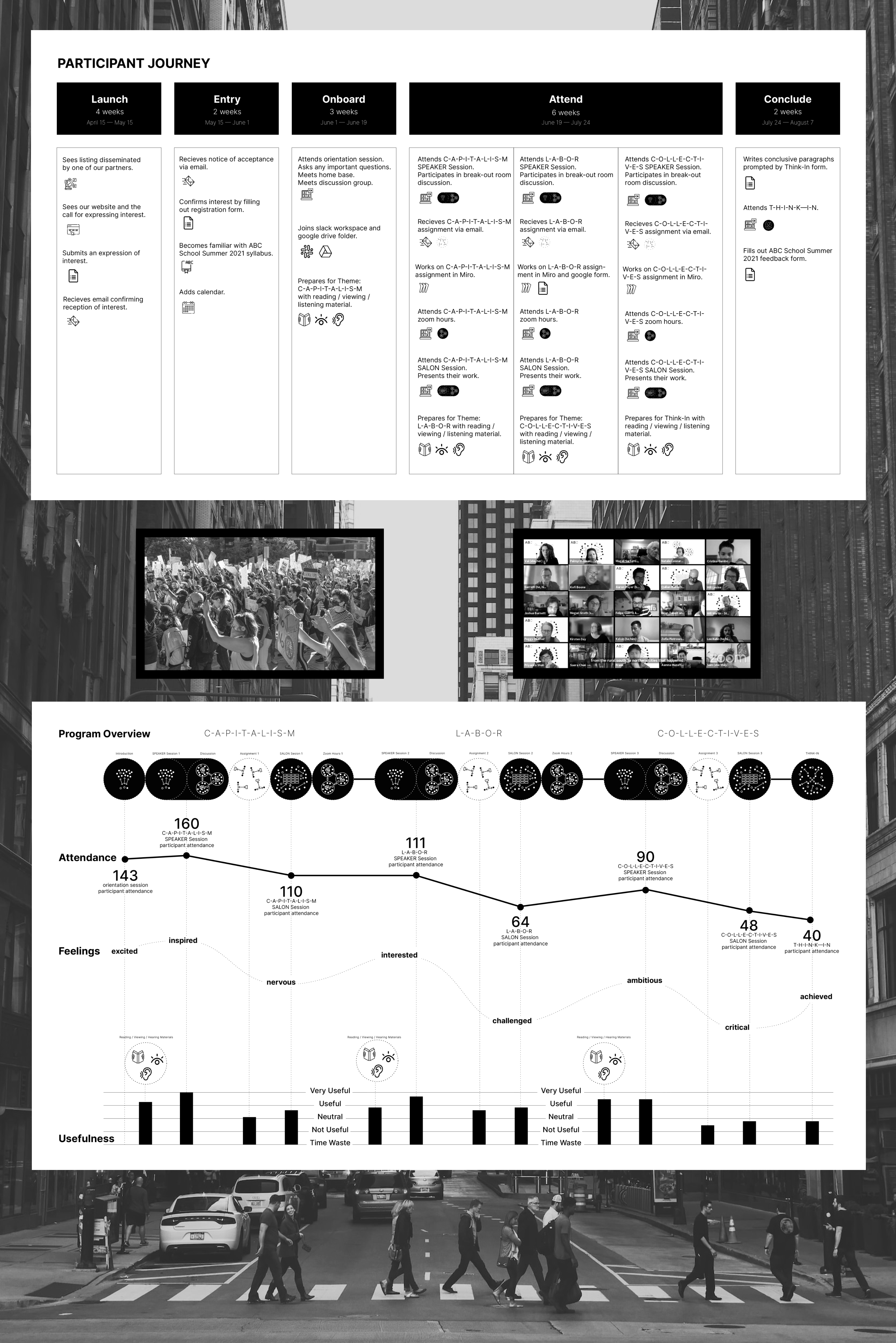
As the programs wraps, all the engagement data points collected throughout are integrated and juxtaposed with the participant journey outlining the platforms used at specific moments in time. Participation tapered over time, and these insights are to be presented such that they can be further studied for the next iteration of the ABC School.
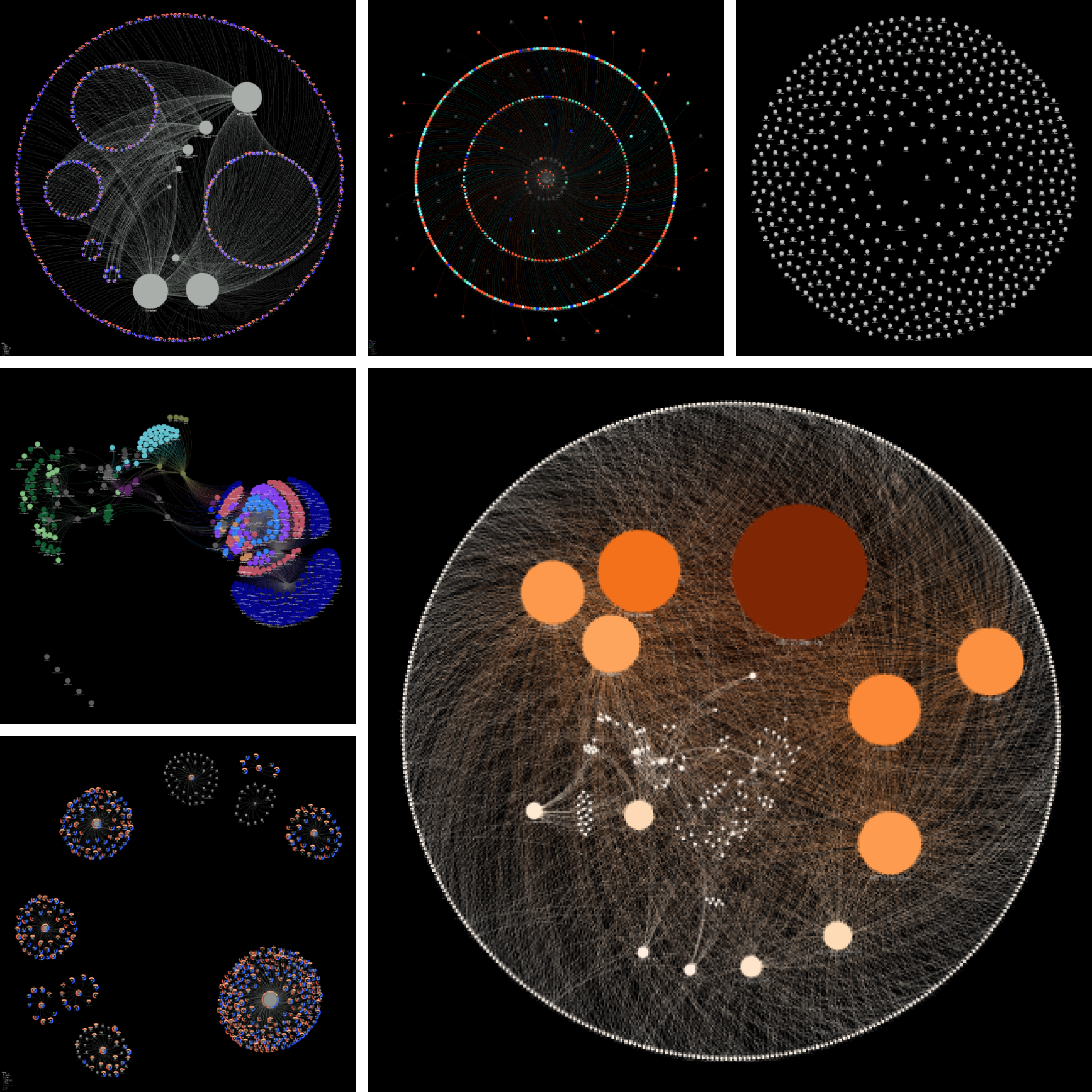
Using Kumu, an open source social graph software, our data is modeled and visualized in various ways, yielding static infographic graph such as the one immediately below, and interactive interfaces of which the screenshots are shown in a fractal grid.
Plotting these data illustrates that our participant pool which the highest and most consistent engagement rate are those that self identify as both practitioners and academics. These findings are summarized for the next cohort of the ABC School.
Over the course of the ABC School, participants gained better capacity to:
The diagram below shows the interactive process of the ABC School development, and the ways in which the insights gained through each teaching cycle inform a longer term process of developing a future school and developing action pathways able to drive deep change towards the status quo of architecture (modes of licensure and an expanded field).

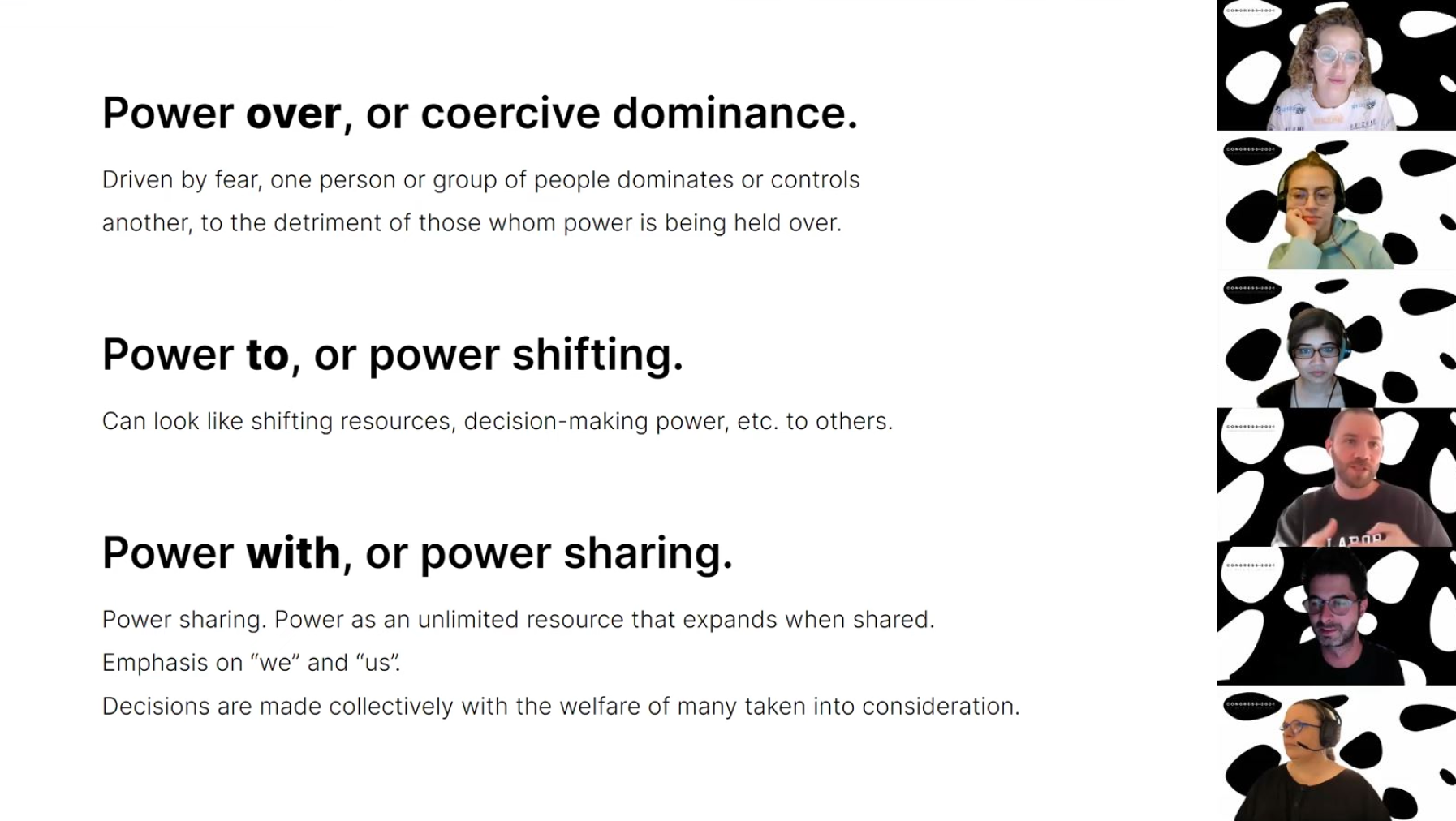
Our team was invited to present the ABC School project at the ACD's 44th conference.
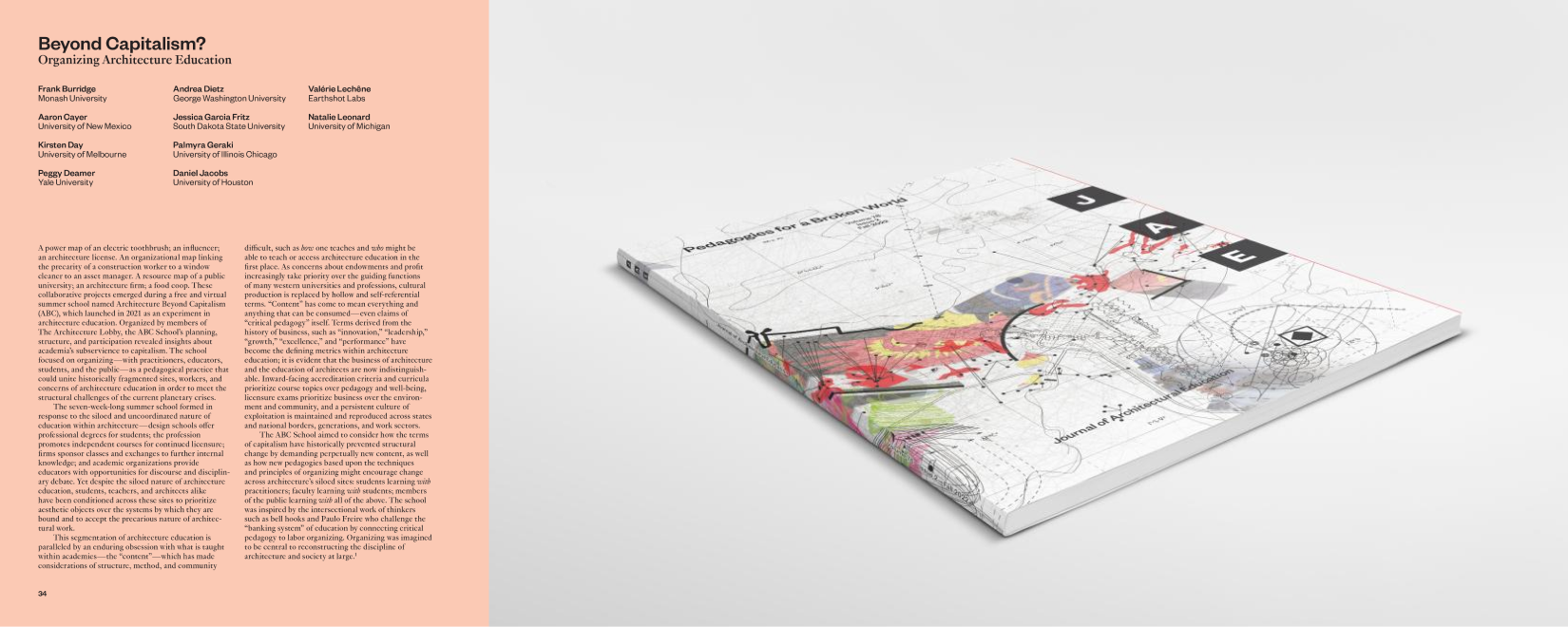
The most highly recognized journal in architecture education invited the ABC School organizing committee to publish an article about our program.
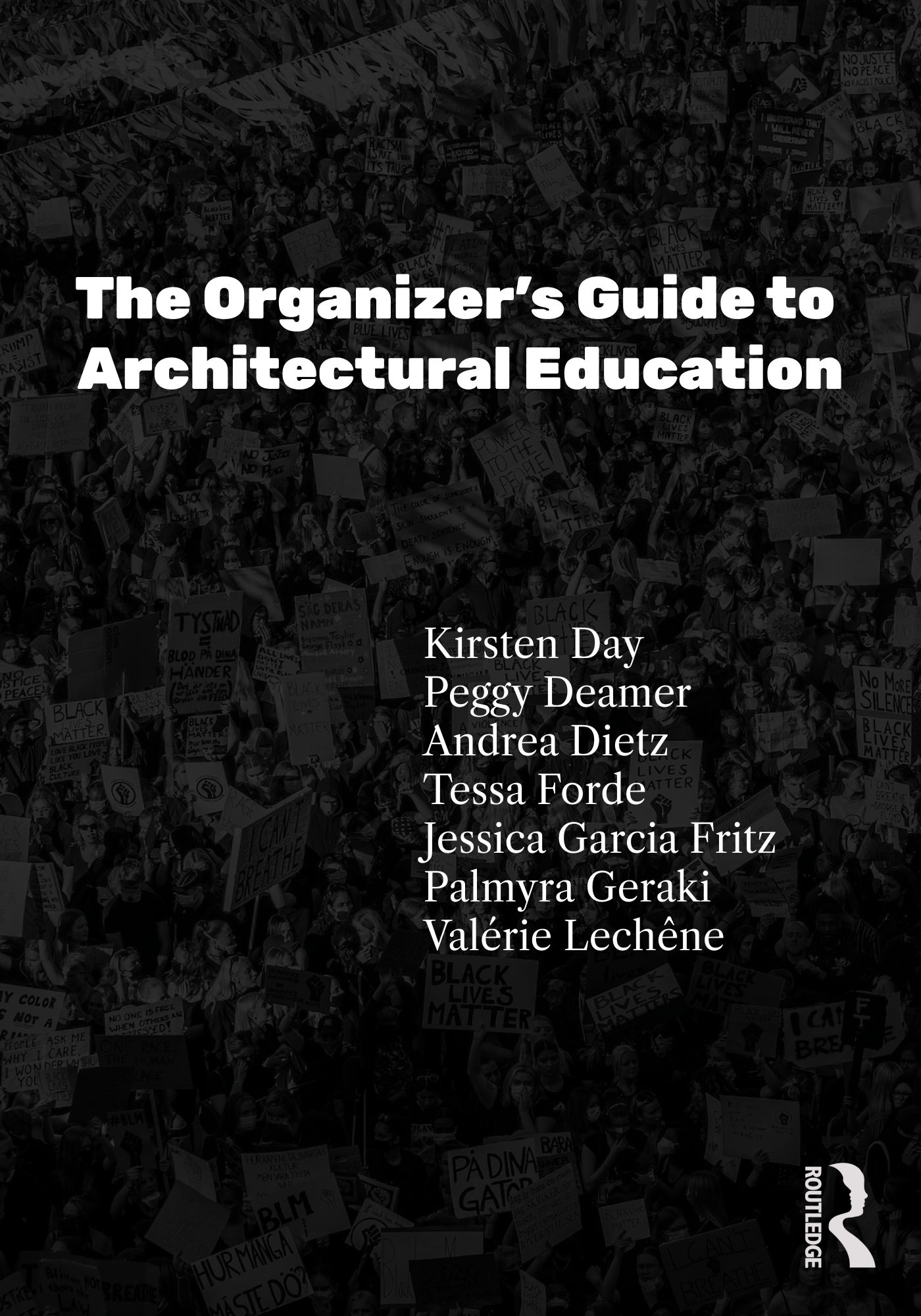
Routledge, the academic publisher, invited the group to coauthor a book on reforming architecture practice through critical architecture education.


'Le chêne,' pronounced [leuh-sheh-n' means oak tree in French, my native language.