Climate Resilience ● UX Research ● Interaction Design ● Product Design
The environment and the economy are really both two sides of the same coin. If we cannot sustain the environment, we cannot sustain ourselves. — Wangari Maathai
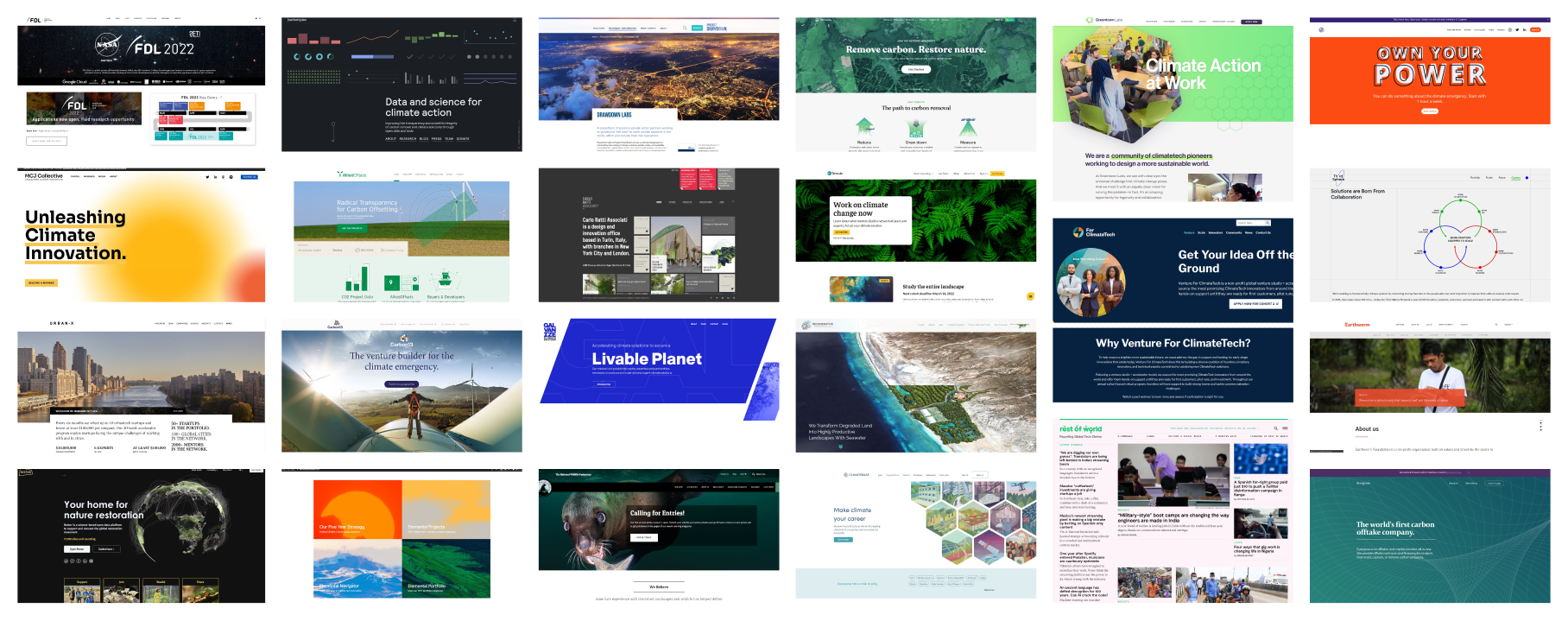
To stay in budget and focus on speed and address community needs in a timely manner, I implemented a lean UX research process.
My process started with gathering insights through one-on-one interviews with members of the open community. My main queries focused on:
1. What works?
2. What doesn’t work?
3. Questions?
4. Ideas?
These conversations allowed to accumulate rich insights about the nature, composition, modes of interaction, and pain points of the research community. It also provided the momentum to plan and hold a community workshop.
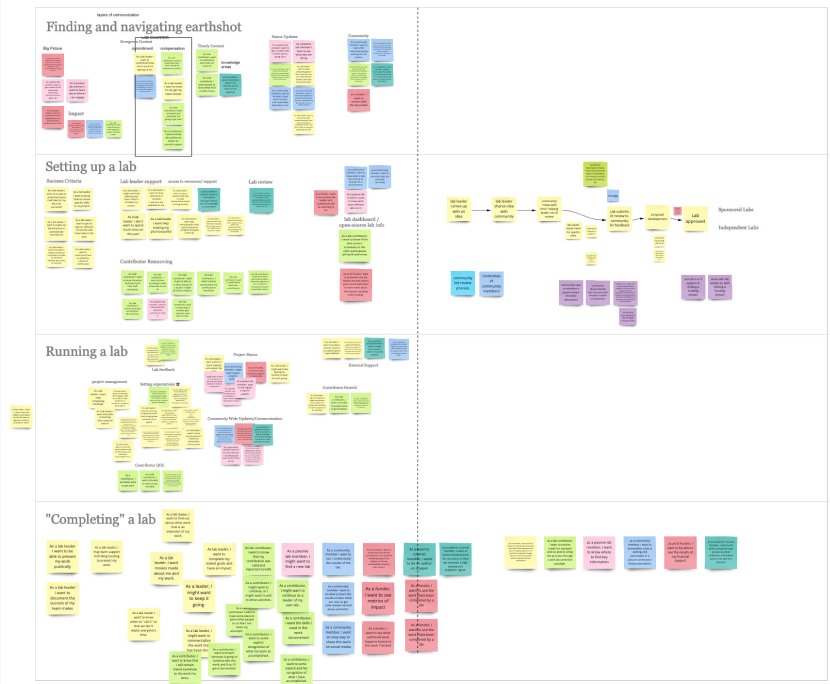
My goal was to understand further the current state and document specific user stories for various key personas.
I defined four theme based activities to drive our time together:
1. Finding and navigating E.I.
2. Setting up a lab
3. Running a lab
4. "Completing" a lab
Many valuable insights were generated from this exercise, facilitating a robust representation of the community structure at that given moment, and pointing to where it needed to go.
It also defined driving questions for E.I.'s larger organizational design.
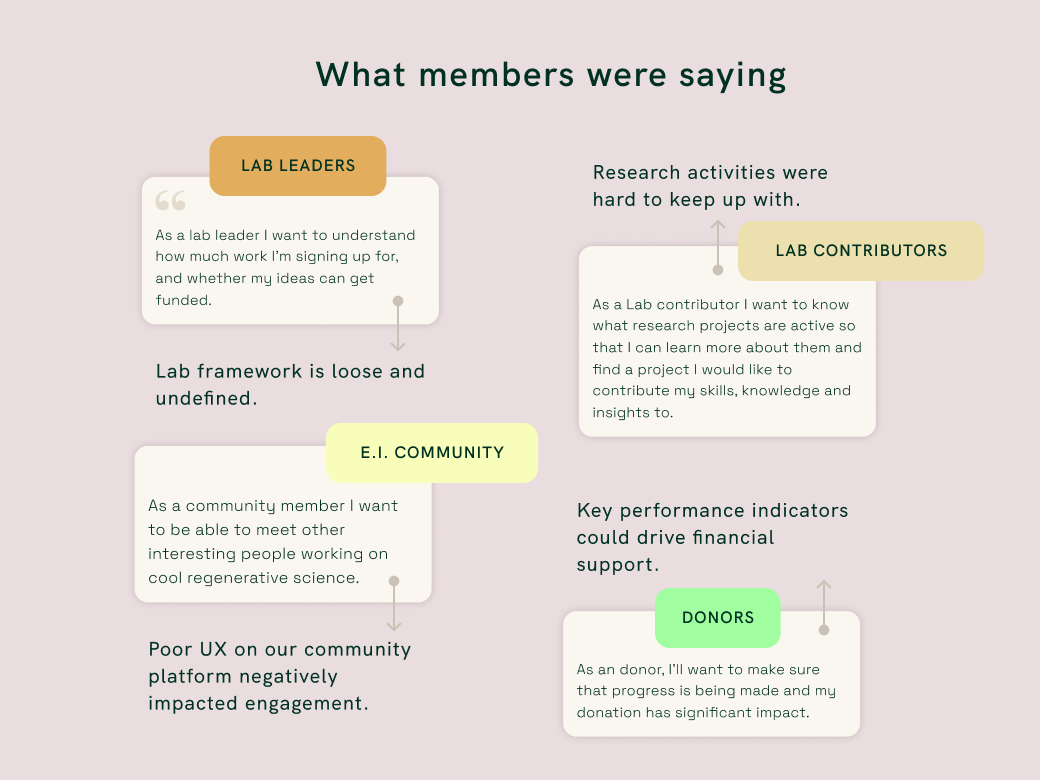
The experiences documented throughout the workshop became the foundations of the strategic approaches driving the development of the Earthshot Institute organizational platform of which the Open Science Lab System became the backbone. The long-lasting growth of the community would be fostered by a set of carefully specified persona clusters with defined roles, tasks, and precise prompts to participate in the open community.
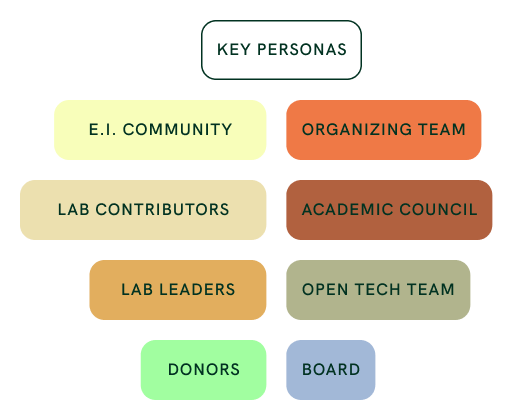
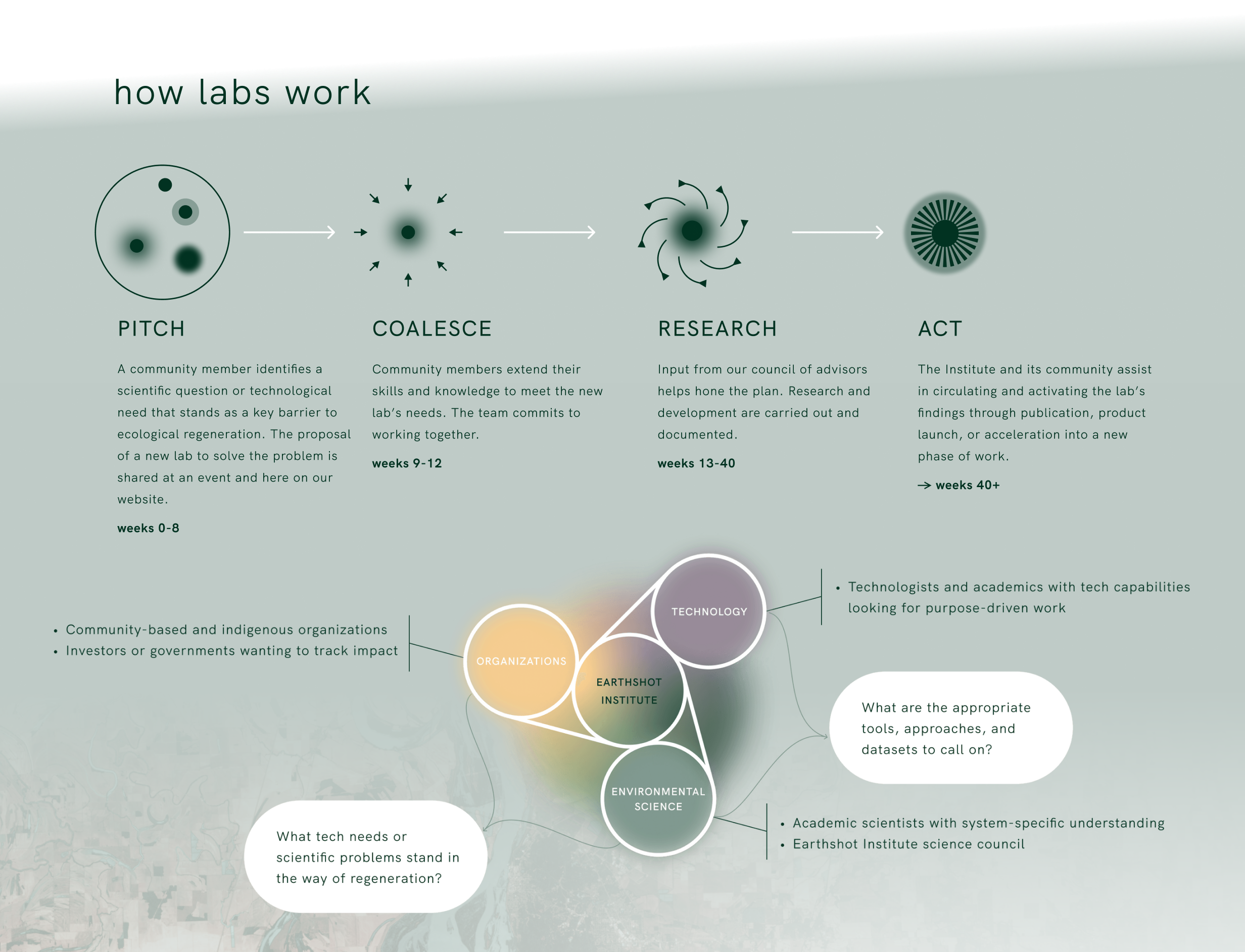
Pain points directly and indirectly relate to the lack of expectation in the original generating structure. A streamlined lab framework put forth a clean, cohesive version of the Earthshot Institute offerings that simplifies and enhances the experience of current members, facilitating member retention.
Entry points were greatly clarified, allowing a great increase in impactful engagement. New community members can easily identify how to contribute their skills and resources towards a co-designed regenerative interventions. Expectations, impact, and rewards are straightforward from the get-go and throughout.
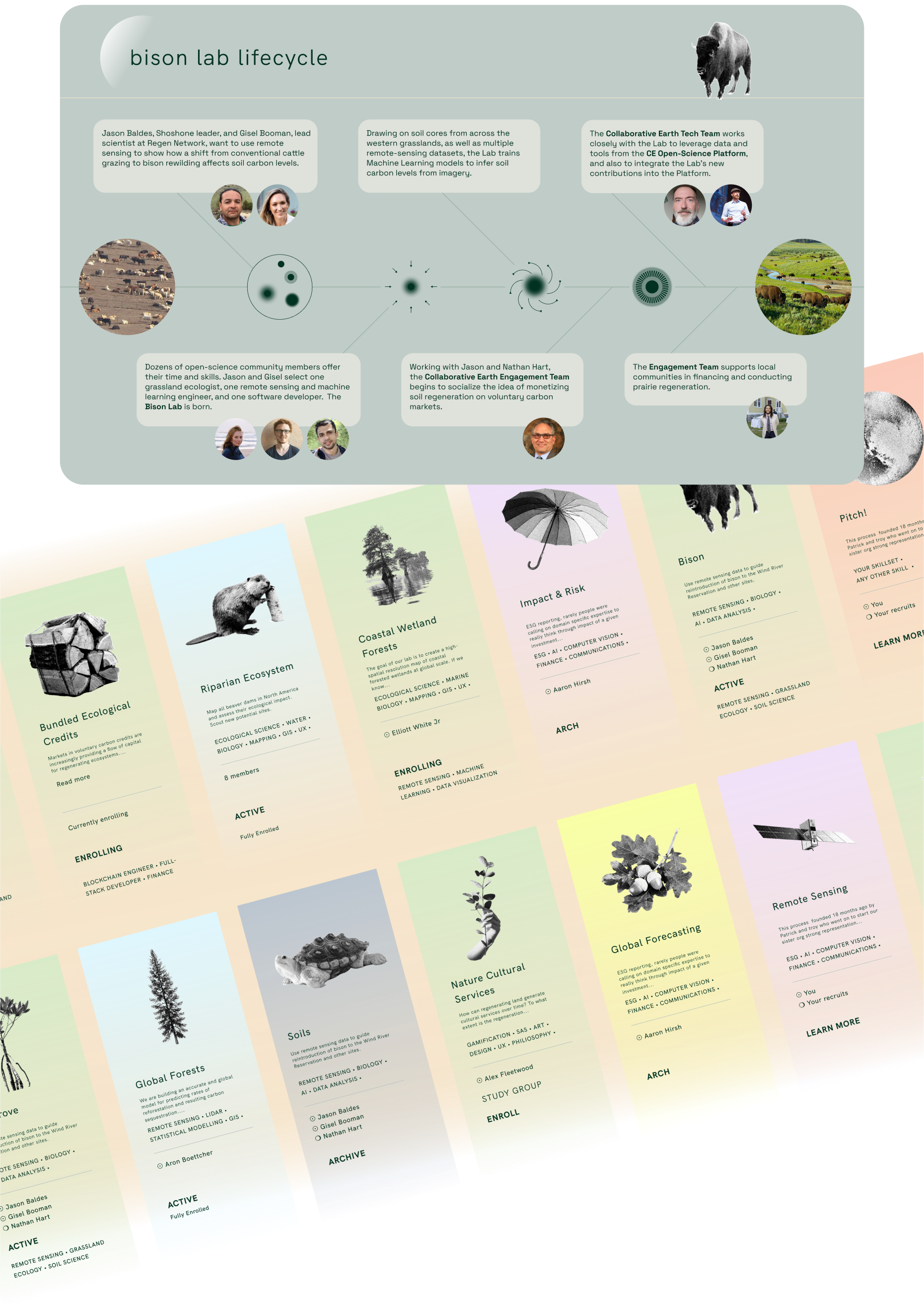
Earthshot Institute labs are conceptualized as living organisms, with a starting stage, successive recurrences characterizing its growth and maturation, a reproduction configuration, and a late honorific stage. The lifecycle of a lab is strategically enshrined through infrastructural products, contractual documents, and step-by-step methodologies.
E.I Labs funnel participants into regenerative operations by bridging traditionally siloed modes of action: academia, the tech innovation sector, and diverse organizations with impact on the ground.
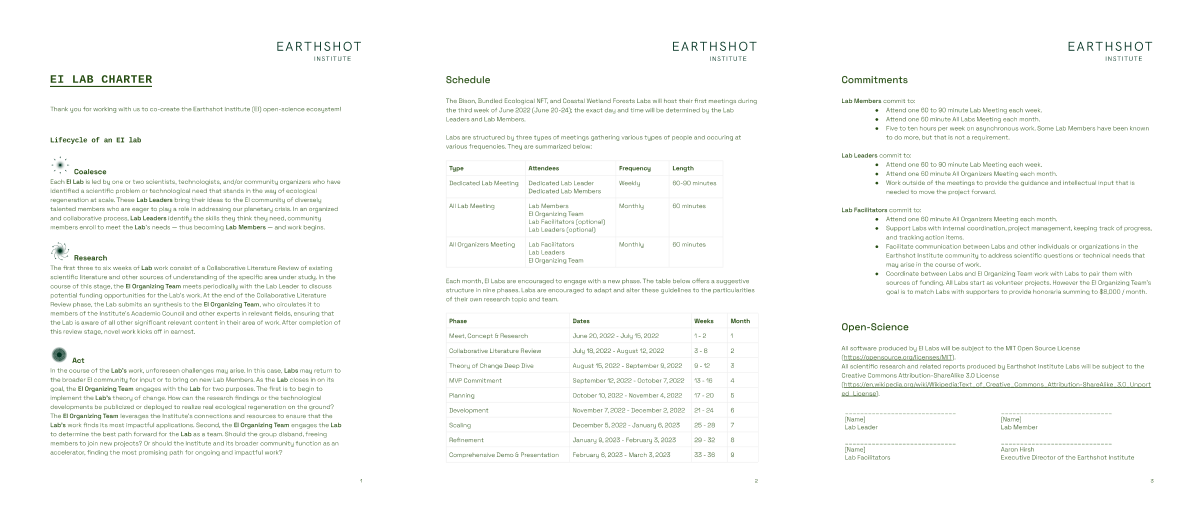
A charter signed by all members of a lab enshrines the roles, temporal frameworks, steps, and open science research methods into a common contract. It served to define a calendar and email integration prompting labs to follow a common schedule and sync up for org-wide updates.
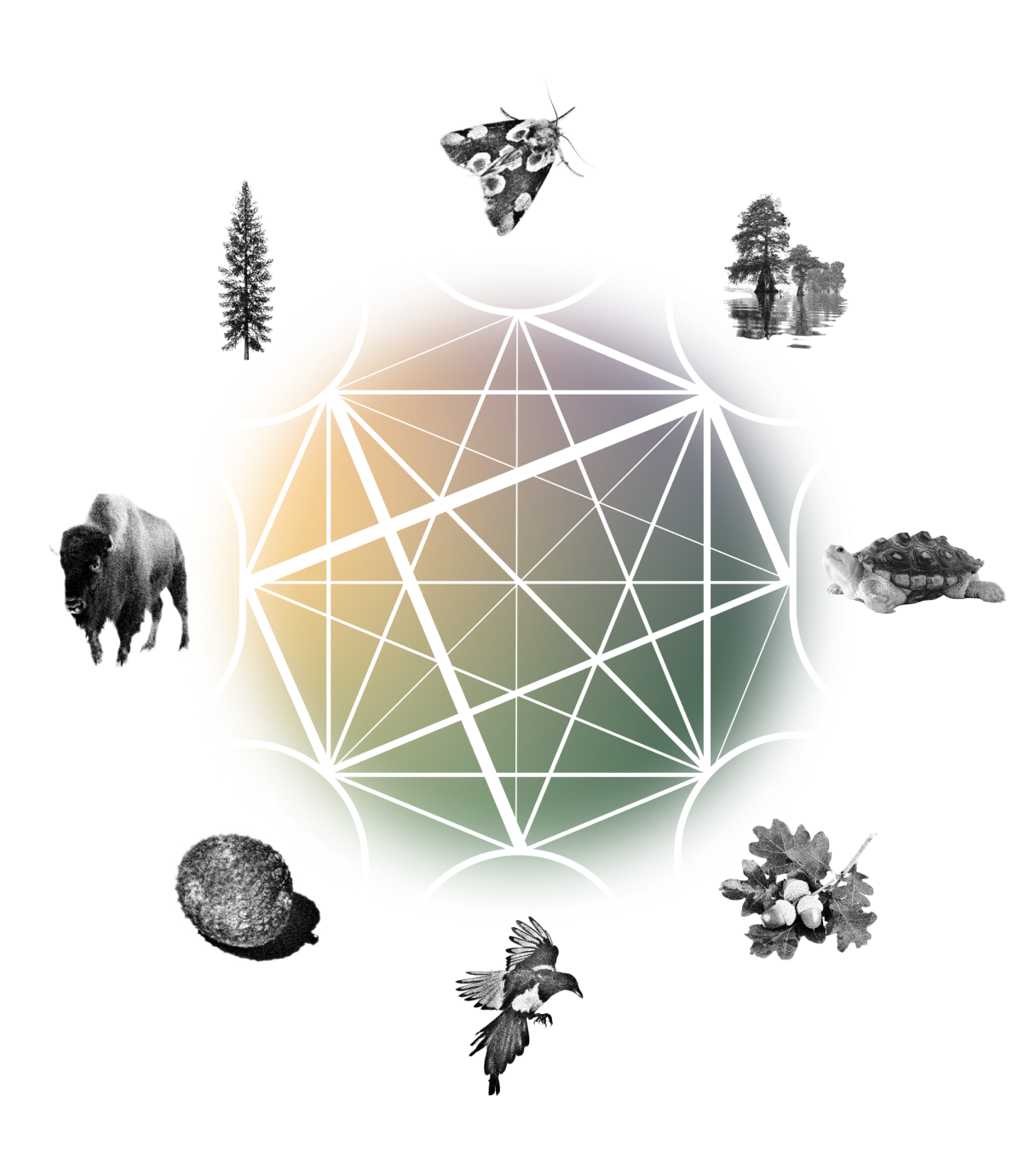
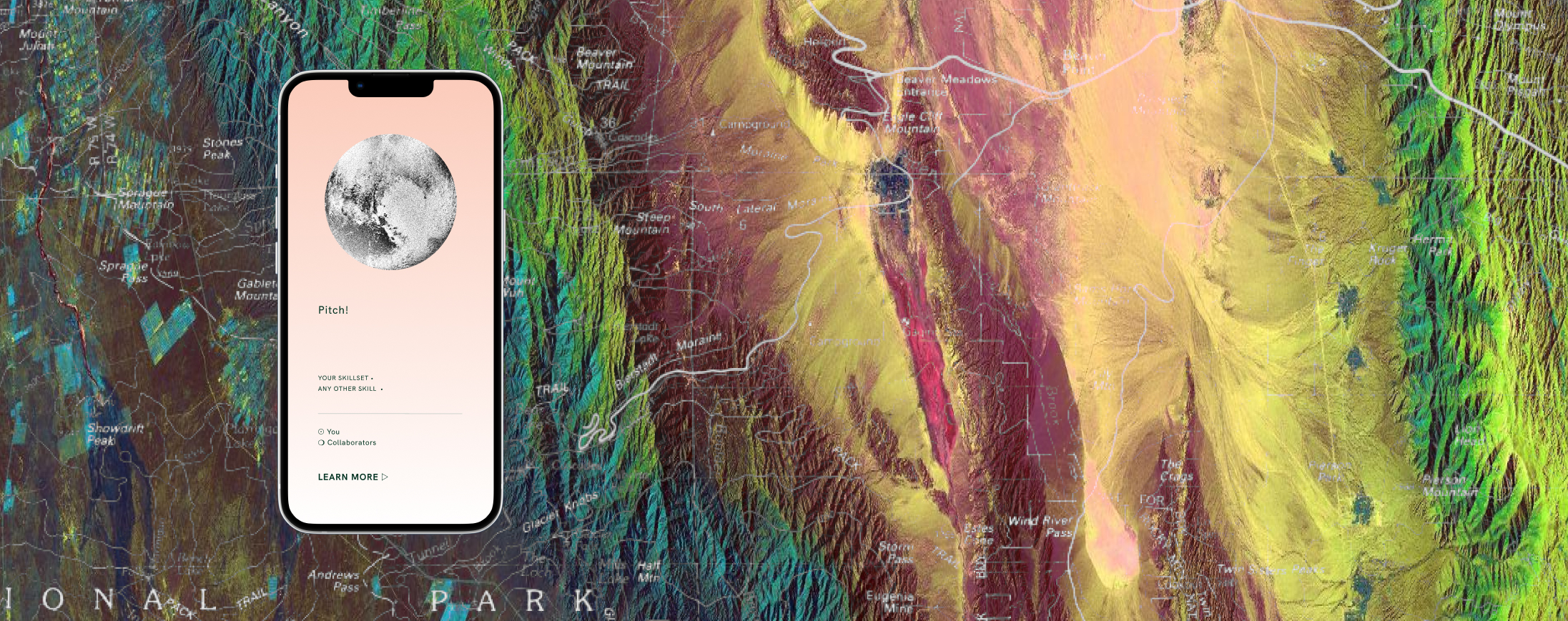
I created an emblem library to quickly identify labs across various collaborative platforms (website, google drive, slack, github, notion, etc). The black and white cutout with a highly grained texture was meant to be reminiscent of old scientific textbooks.
Each lab dives deeply into a specific ecosystem, collecting knowledge, datasets, and models relevant to the larger interconnected system. "How can these dataset be made available to serve other endeavors?" was a question that had come up during our one-on-one conversations and community workshop. An open science platform aggregating and integrating datasets from various labs seemed to be a strategy tackling these questions.
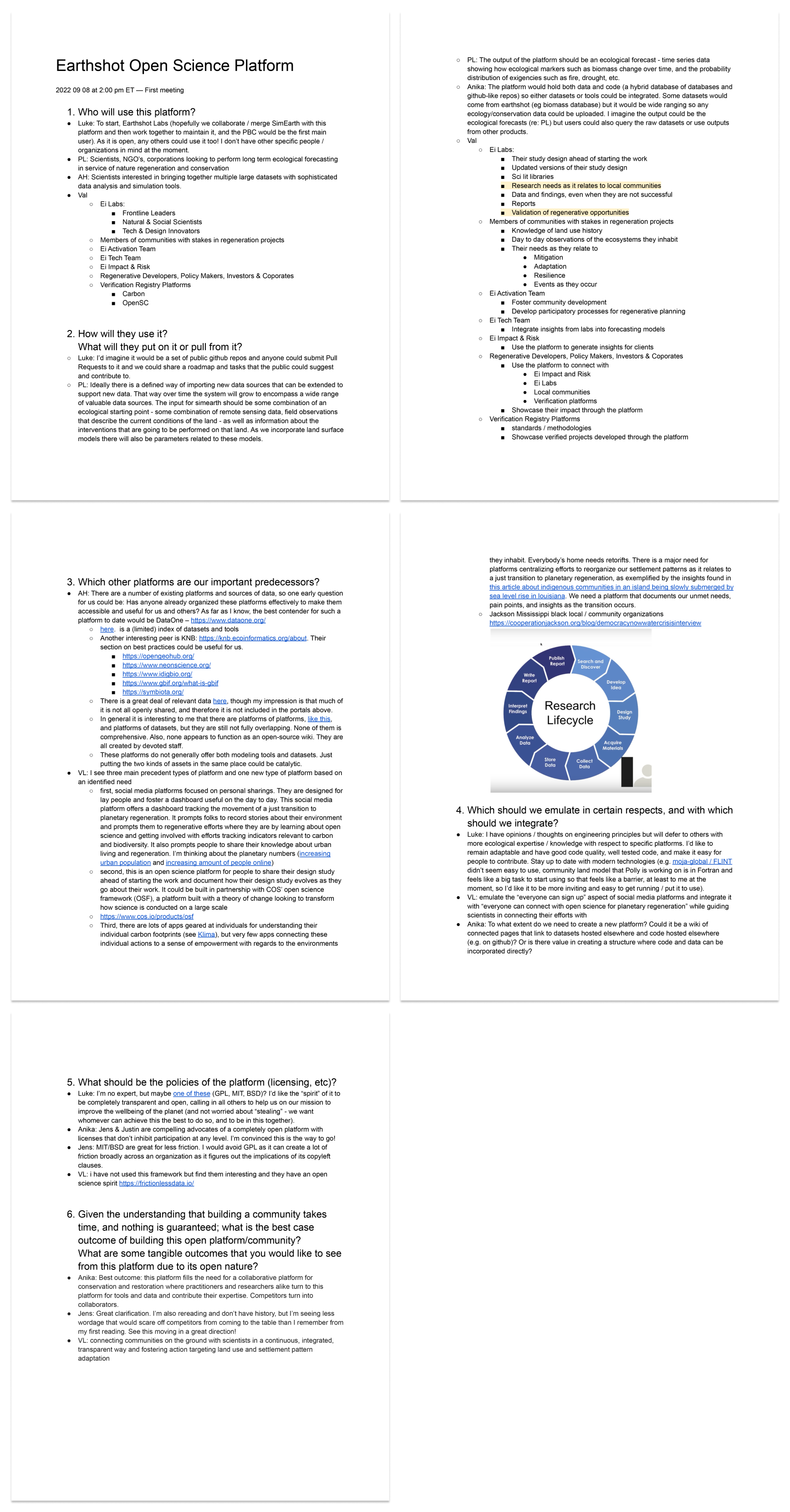
Together with Luke Madera, I designed a form distributed to our organizing team to guide us in beginning to answer some of these questions.
Community members with specific knowledge were invited to asynchronously provide answers to these questions. They were discussed through a facilitated group session.
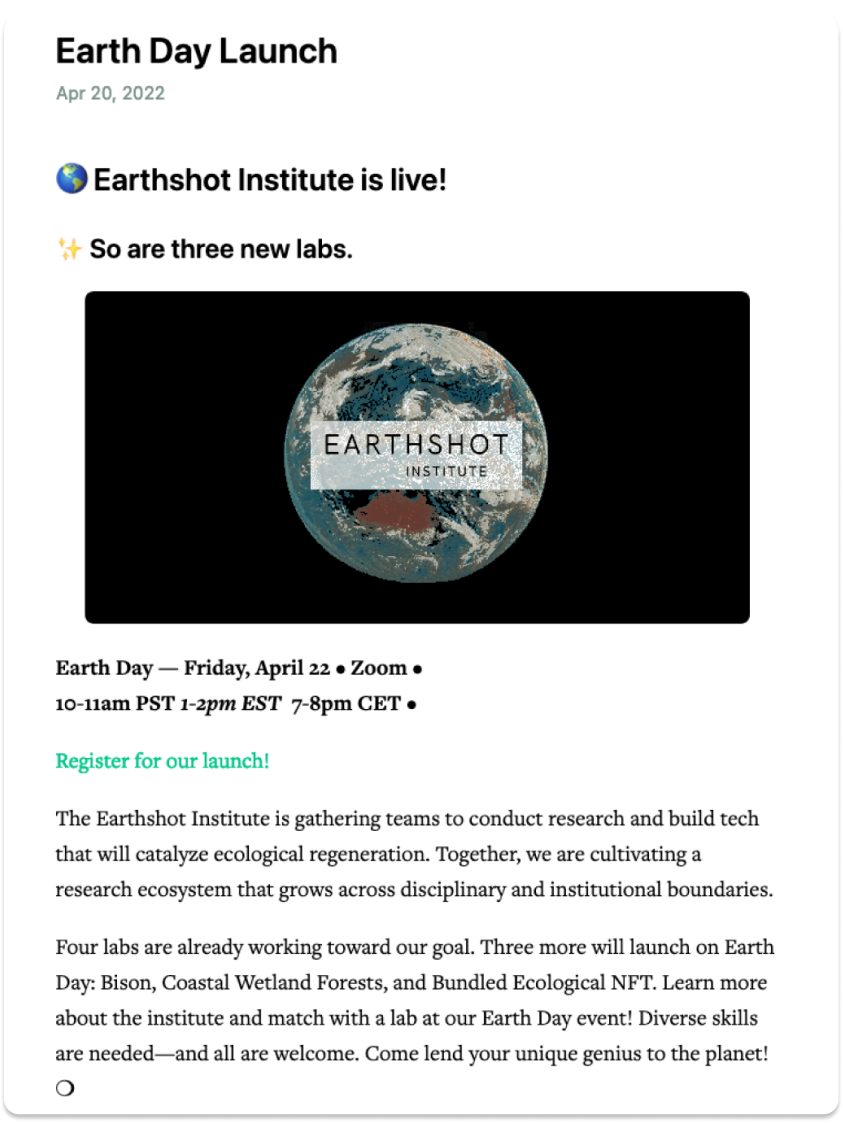
The lifecycle of a lab was launched via an online live event on Earth Day 2022.

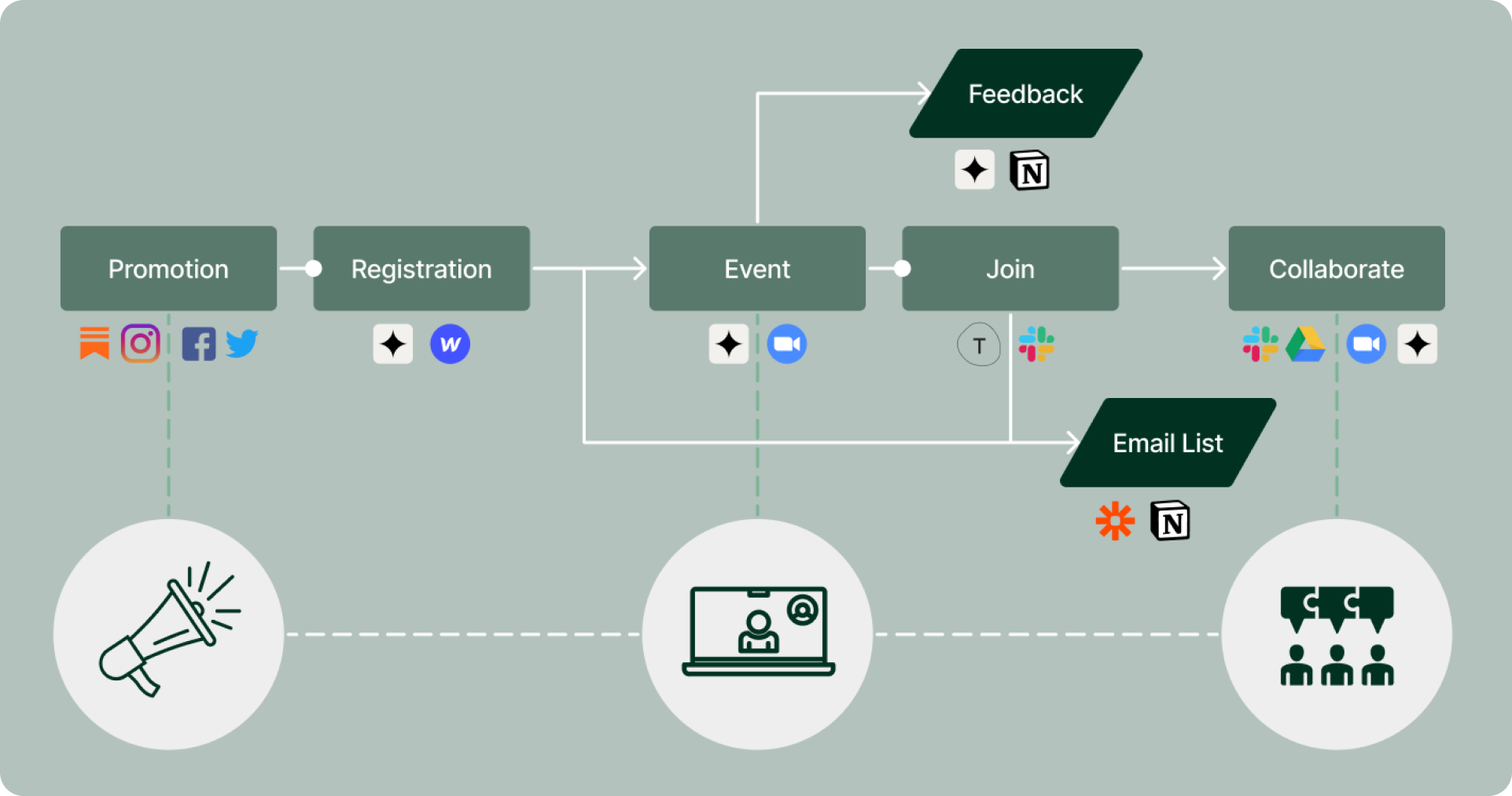
An onboarding form strategically integrated across platforms allowed to funnel event attendees towards becoming members of the Earthshot Institute community as well as contributors in specific labs. These processes were studied through an onboarding flow and built with Zapier.
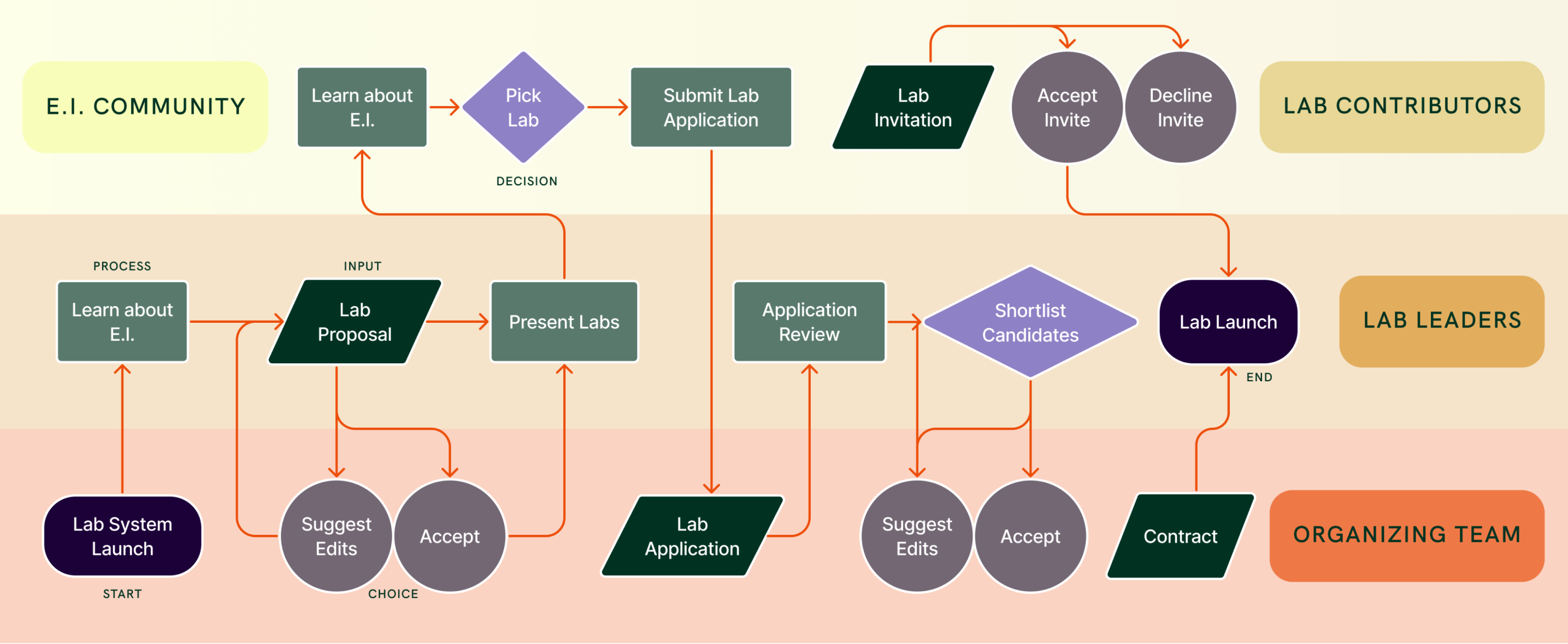
Once the labs in motion, gathering feedback from lab leaders, lab contributors, and advisors from the academic council and open tech team was key. A monthly all hands meeting prompted reflection on recent work as well as opportunities to share feedback on the lab lifecycle framework. Anonymous surveys shared over slack regularly queried insights from member of the Earthshot Institute community.
As the labs progressed, it became clear that the open science platform needed a more robust foundation to allow the Earthshot Institute to serve as an intelligent repository for these data, aggregating them as single modules into a larger, intelligent whole — an open science platform for big data models and machine learning drive simulations.
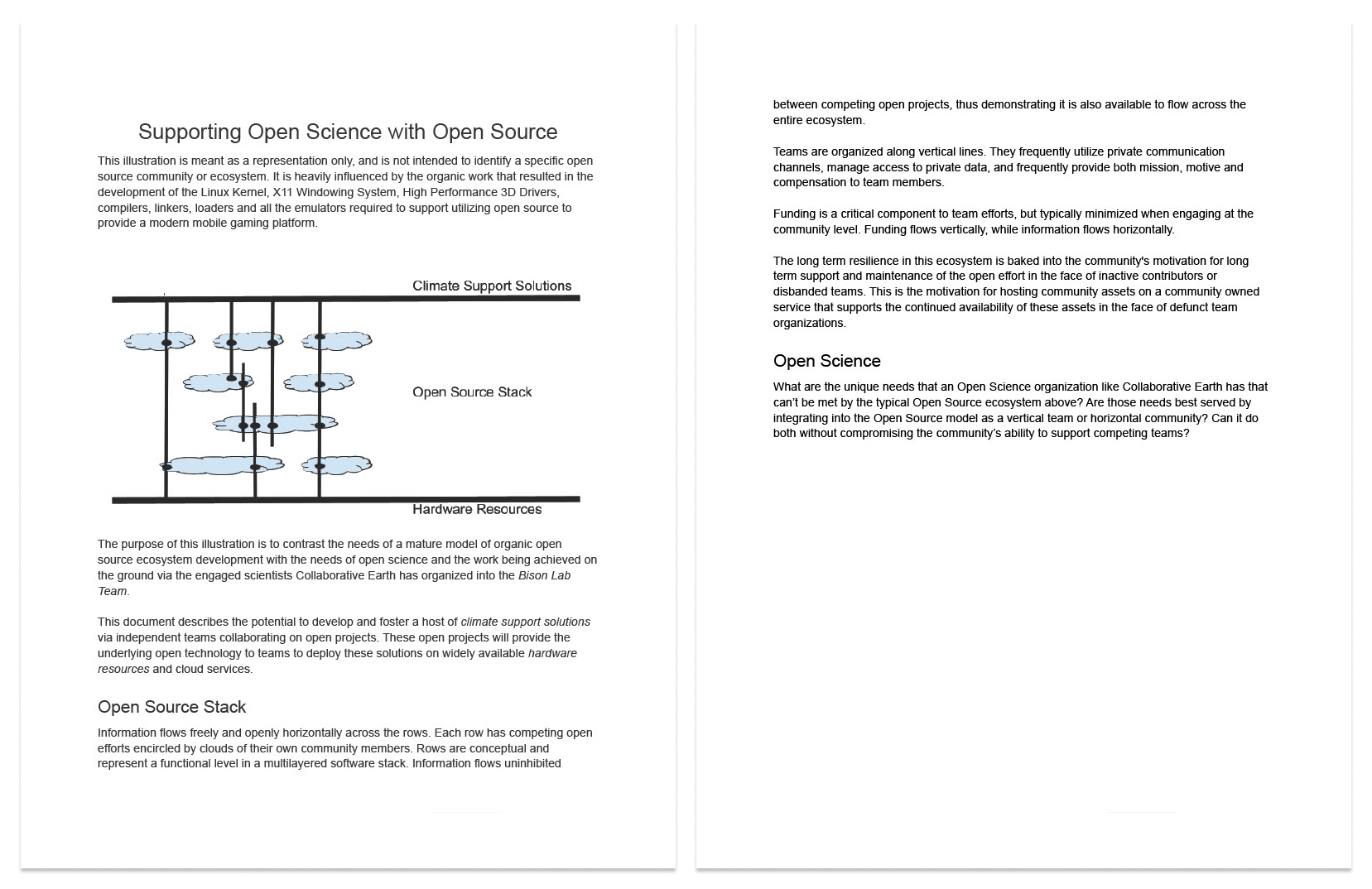
Through group discussions, an interest for supporting open science with open source emerged. We drafted a paper to further discuss this extensible platform intended to provide a tool for understanding how impacts cascade through ecological systems, providing vital guidance in a range of fields, from ESG investing to policy and legislation. It builds both the socioeconomic case and the practical capabilities for planetary regeneration.
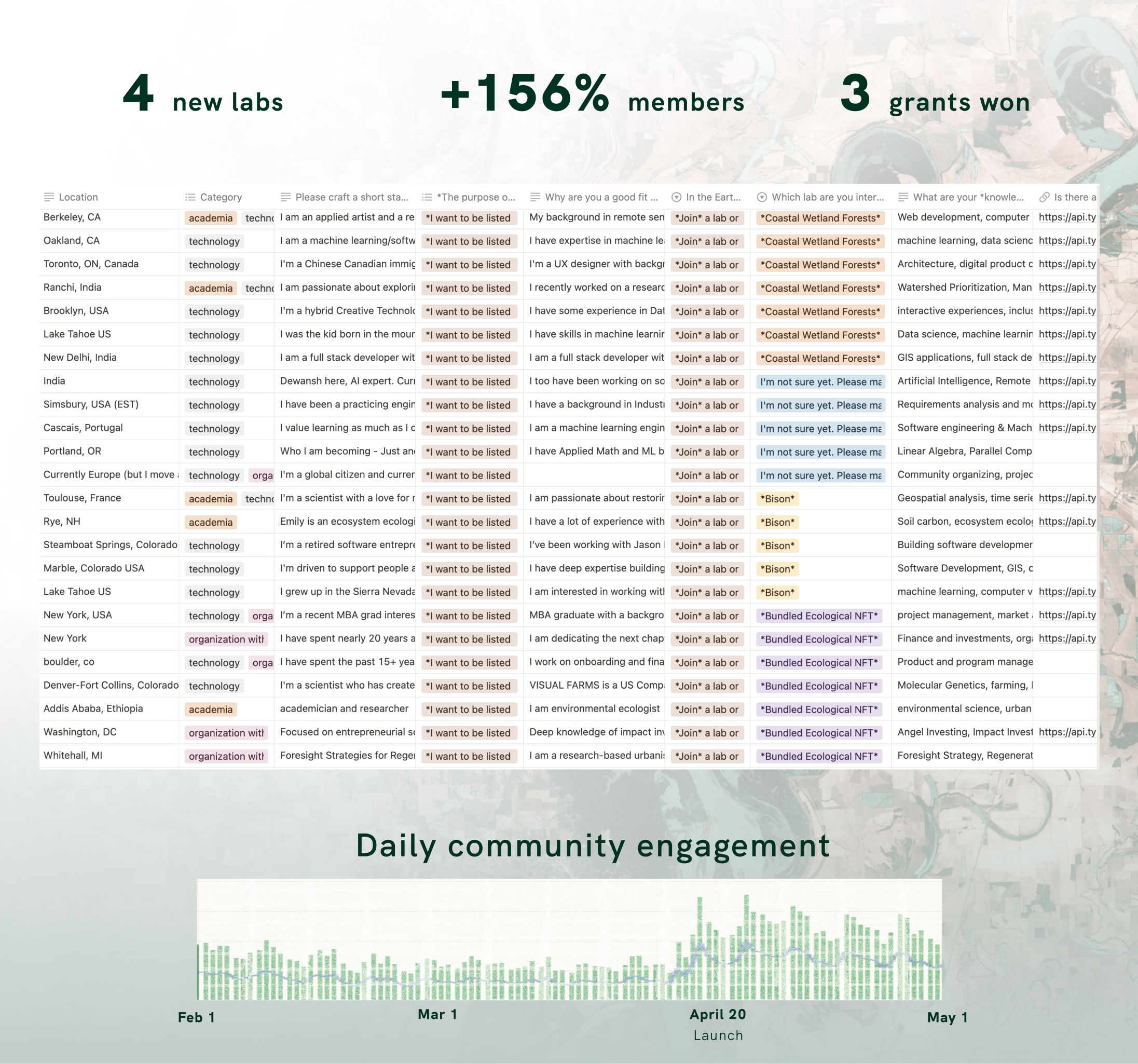
With the clearly defined lab framework and a continued graphic language throughout an integrated community platform, the Earthshot Institute scaled significantly, and daily community engagement grew
Testees quickly intuited the product mix, found the right level of information at each step, and arrived at the account creation page without any uncertainty around what they were getting into.

'Le chêne,' pronounced [leuh-sheh-n' means oak tree in French, my native language.