Transdisciplinary Research ● Strategy ● Product Design
"I'm a great designer" is not a value proposition.
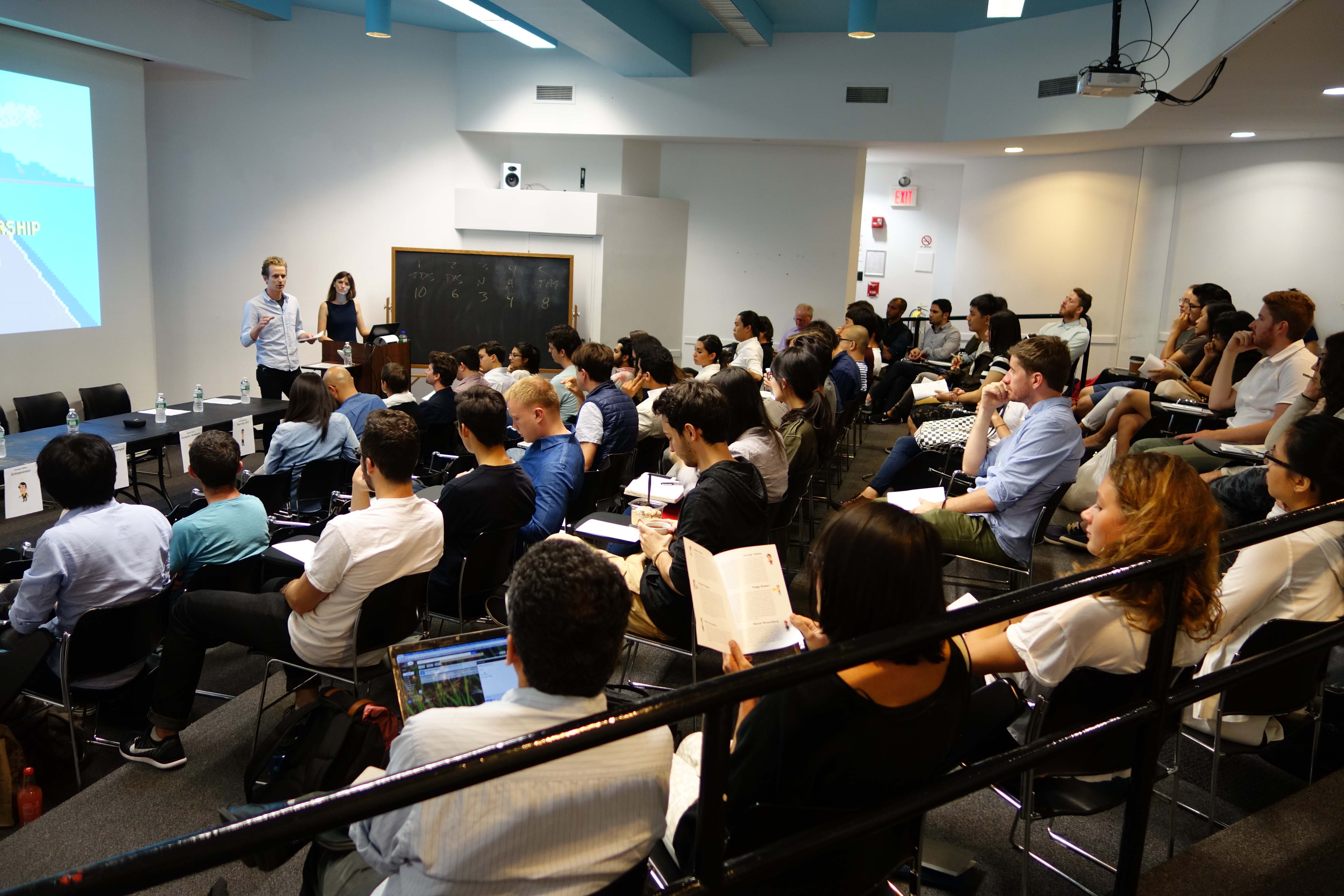
This event is about the state of entrepreneurship within the architecture profession. To gain an understanding of the illusive term, let’s start by thinking about the world outside of architecture.
We all know that technology is changing our relationship to the economy, the nature of employment, and working conditions in many fields of practice. Entire industries have been subsumed by the invention of digital apps, and mobile devices have disintegrated the separation between life and work. Co-working offices, makers-spaces, and incubators are now de facto working environments for an increasing number of people who work within the knowledge economy.
WeWork, one such co-working franchise, accommodates these self-employed, temporary, freelance, and remote working lifestyles. It provides a space where hopeful entrepreneurs share ideas and resources in an environment that offers an array of amenities, from meditation zones to arcade games. In just a few years, the market value of WeWork soared to $10 billion – eclipsing companies like Whole Foods and Autodesk.
In this sense, anyone with a laptop and an idea can join the ranks of the self-styled startup entrepreneur. We have to look no further than the popular HBO satire Silicon Valley to see how established entrepreneurship has become a cultural phenomenon. But what is different about this recent wave of entrepreneurship?
Let's briefly touch on two conditions of entrepreneurship today, to foreground our conversation:
The first, as described by Michel Feher, is a shift from employer to investor working models. The entrepreneur does not seek revenue based on employment business models, but searches for venture capital that can only be provided by elite investors. Instead of working for an employer, entrepreneurs are working for a relatively small group of people who get to determine the best ideas, which are overwhelmingly based on their ability to make a financial return.
The second condition brings us back to the role of digital technology – especially social media platforms that allow us to design, advertise and market our individual subjective identities based on a certain skill or persona. One’s resume is no longer a document typed and printed, but a long thread of images and text that directly or indirectly come to define ones’ economic product. These forms of self-promotion that blur life and work have drastically changed our relationship to employment.
So what does this mean for the field of Architecture?
As designers we are asked to explore ideas, solve problems, invent new systems, and question methods – but we rarely interrogate how money or alternative forms of value can dictate the applicability of our ideas. Our design prompts in school, for instance, are completely devoid of any consideration of budget, economic viability, or alternative financial strategy. This institutionalized pedagogy is predicated on a modernist separation between design and business. It goes like this: Art is pure - money is bad. Architecture is an art which should not be made impure by the influence of business, which is an extreme irony because our profession is still overwhelmingly represented by high-profile designers who demand huge budgets. This is the illusion of individual artistic genius – the belief that developing one’s signature style is the highest form of professional success, and that architecture can be the product of a single visionary. It is the prevailing ideology of our profession and it prevents us from thinking about alternatives.
Take BIG, for example. We all know Bjarke Ingels as the charismatic young design innovator. We don’t, however, talk about Sheela Søgaard, the businesswoman who is largely responsible for the exponential rise of BIG projects throughout the world. Sheela, a businesswoman and former Mckinsey consultant, saved BIG from the verge of bankruptcy, an example of financial precarity that is all too common within contemporary architecture firms, but rarely talked about.
The point here is not to advocate a profit-oriented corporate architecture, but to look critically at the role business, economics, and collaboration play in the success or failure of an architecture office. Our goal is to move beyond business-as-usual architecture practice that results in low wages, long working hours, and a disappearing relevancy in the development of cities. There are many positive alternatives to which we can turn our attention.
Take, for example, a young architecture collective from London called Assemble. This group of 18 recently became the first architecture office to be shortlisted for the highly renowned Turner Prize, awarded by the Tate Modern in London. Assemble’s modest projects are human-scaled interventions that incorporate common or recycled materials. The group is composed not just of architects, but a diverse array of builders, philosophers, technicians, and educators who came together through common goals and made real projects happen with limited resources.
Tonight’s event is the product of a similar tendency taking form right here in the studios at GSAPP. Whispers of anxiety about our futures in architecture began to take the form of organized discussion and collaborative projects that exist outside establish curriculum. There is currently no space for these questions to be collectively addressed, so we are inventing a venue ourselves. For too long, money and economic class have been a taboo subject within the profession. It’s time we place it in the crosshairs of a critical debate that ranges from personal finance, to new business models, and the viability of capitalism as an economic structure.
To conclude, we hope this lecture will be the start of many debates to come. Through critical discourse, we hope to identify what entrepreneurship has to offer the field of architecture; which questions it can answer, which it cannot, and what challenges still need to be addressed. It’s not about catching architecture up to the trend of entrepreneurship, because in this case we are already very far behind. We believe it’s time for architecture to make its own bold propositions about our relationship to the economy.
Speakers/ Constituents
Peggy Deamer, Architecture Labor Activist
Quilian Riano, Incubator Director of Strategy and Research
George Valdes, Entrepreneur
Masako Ikegami, Business/ Financial Consultant
Dave Eisenberg, Tech Start-Up CEO
Facilitator
Manuel Shvartzberg, Architect & PhD Candidate

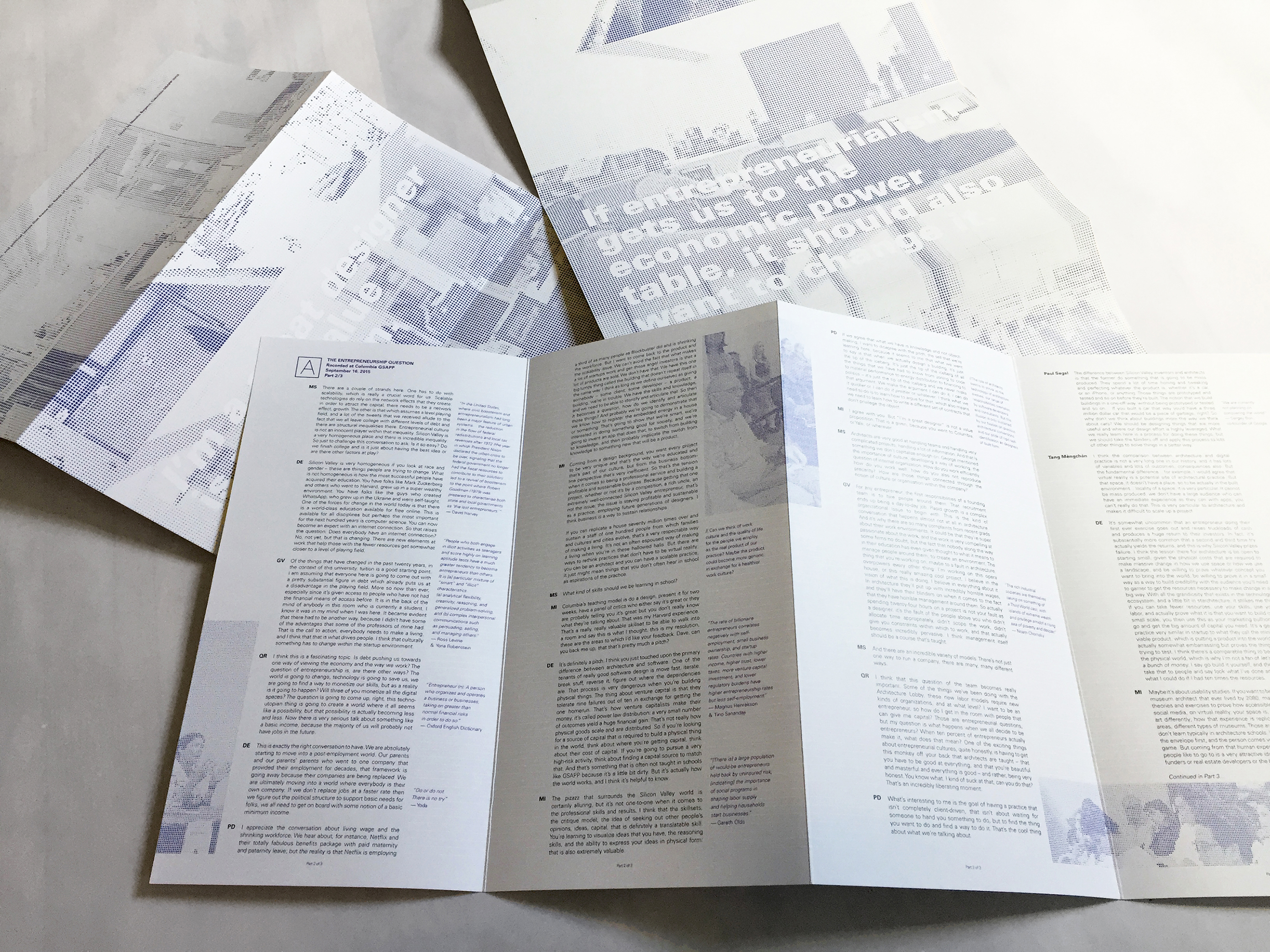
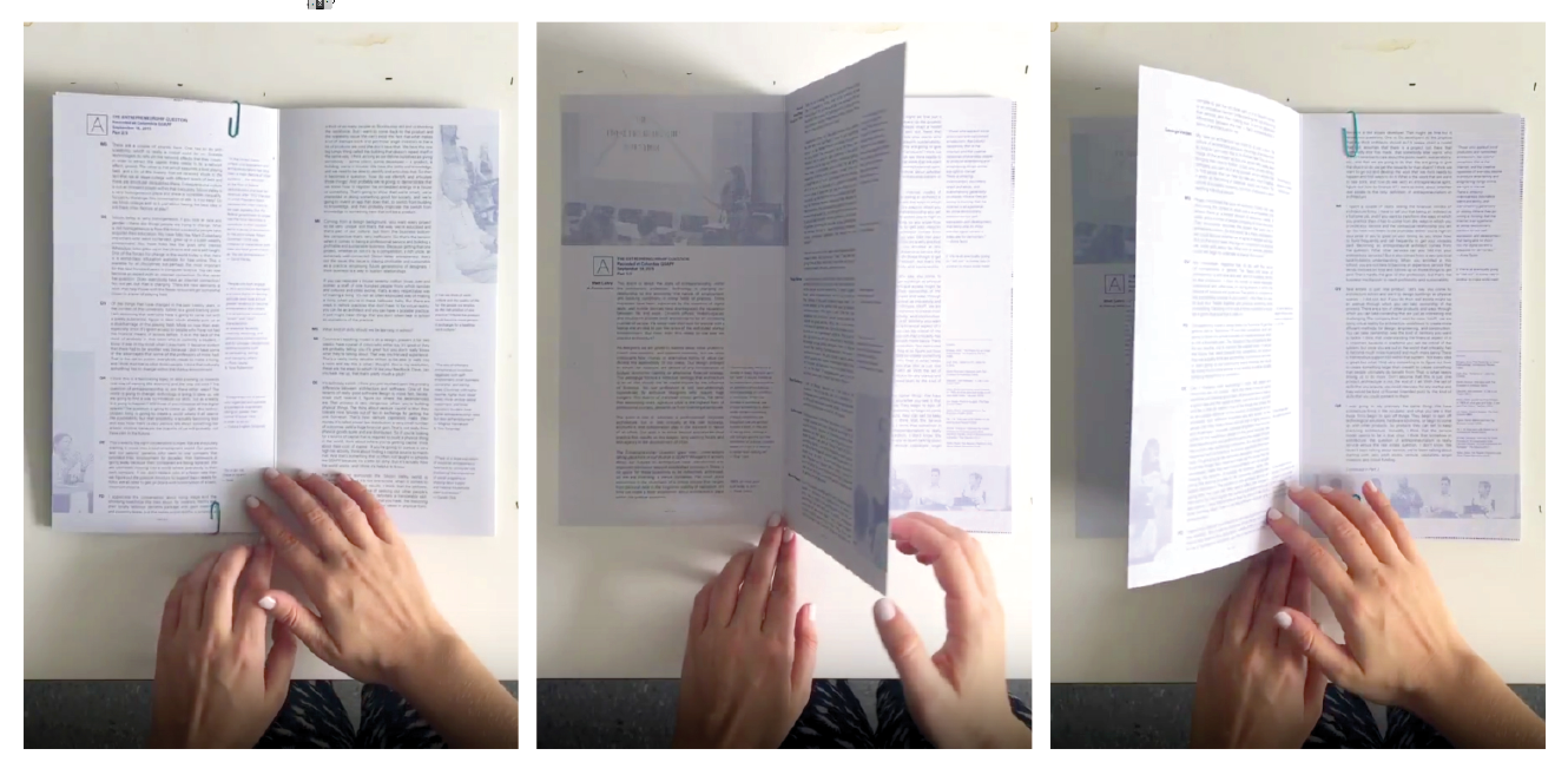
We developed a unique graphic approach. Three detachable pamphlets feature the transcribed text on one side, and a poster on the other. The posters, like the text, can stand alone, or be assembled into a triptic composition.
The text is displayed in columns over a background of ruled lines, inviting the reader to participate in the conversation by taking notes. The text is annotated with quotes, references, and comments curated by the editors.
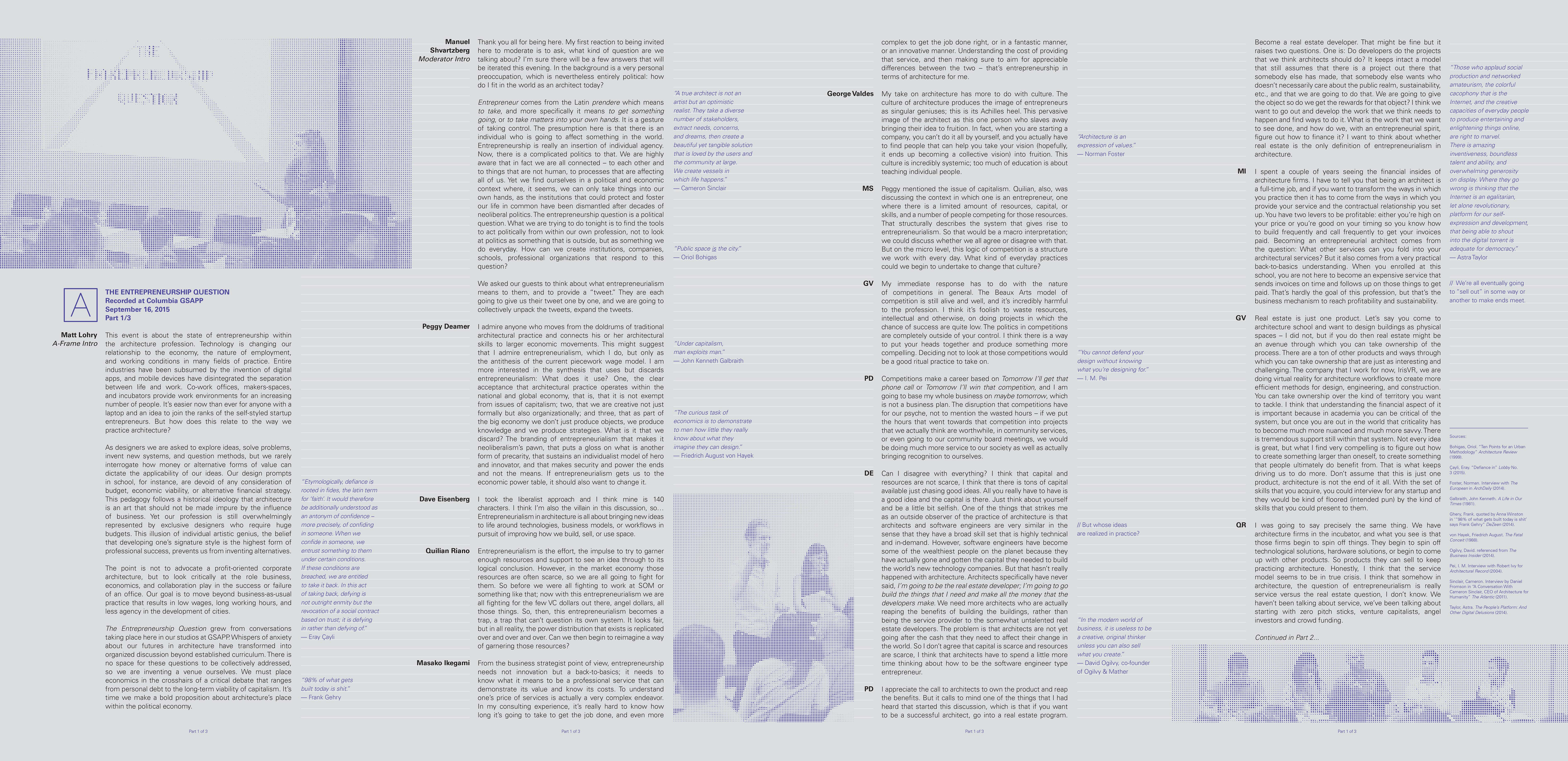
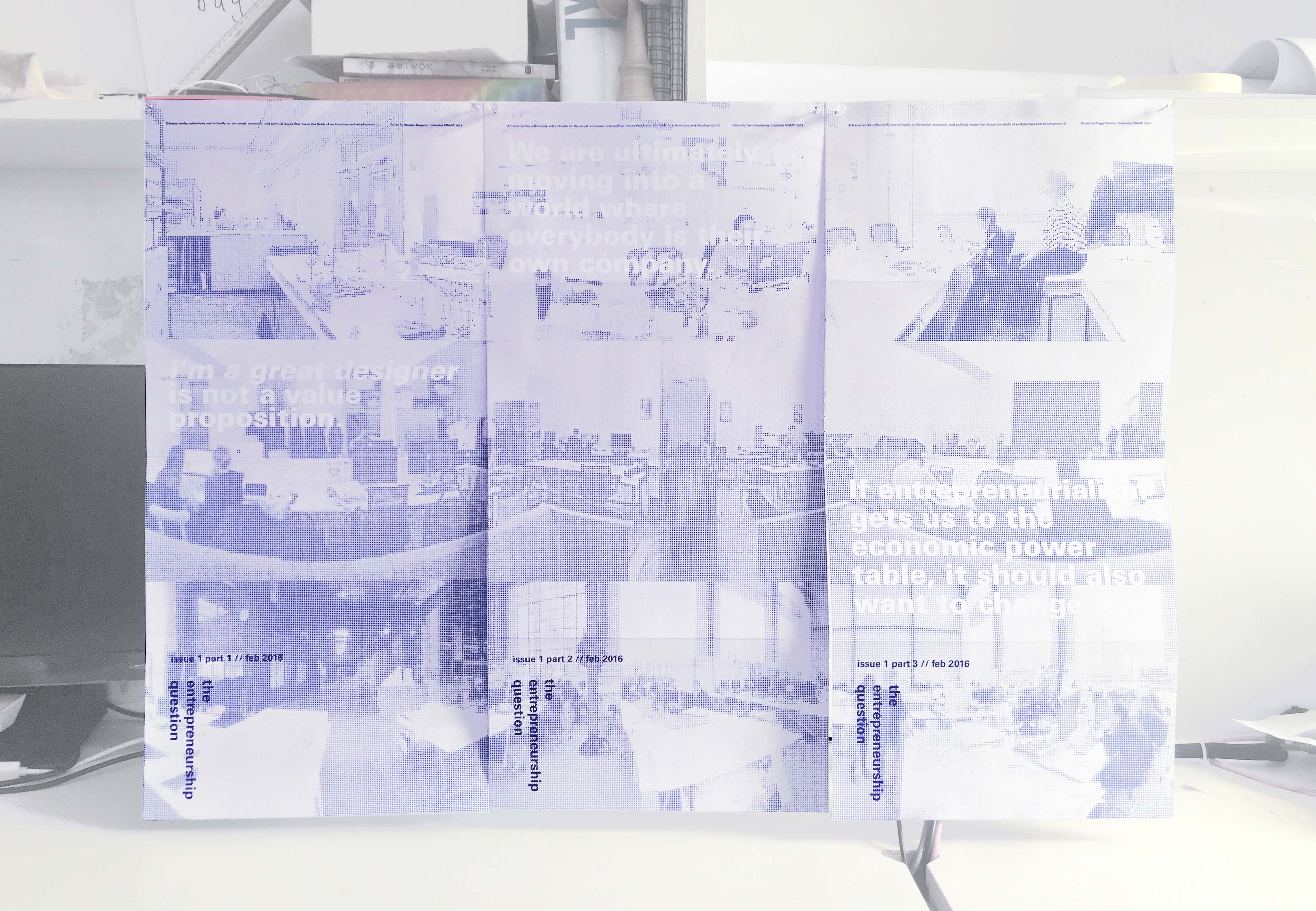
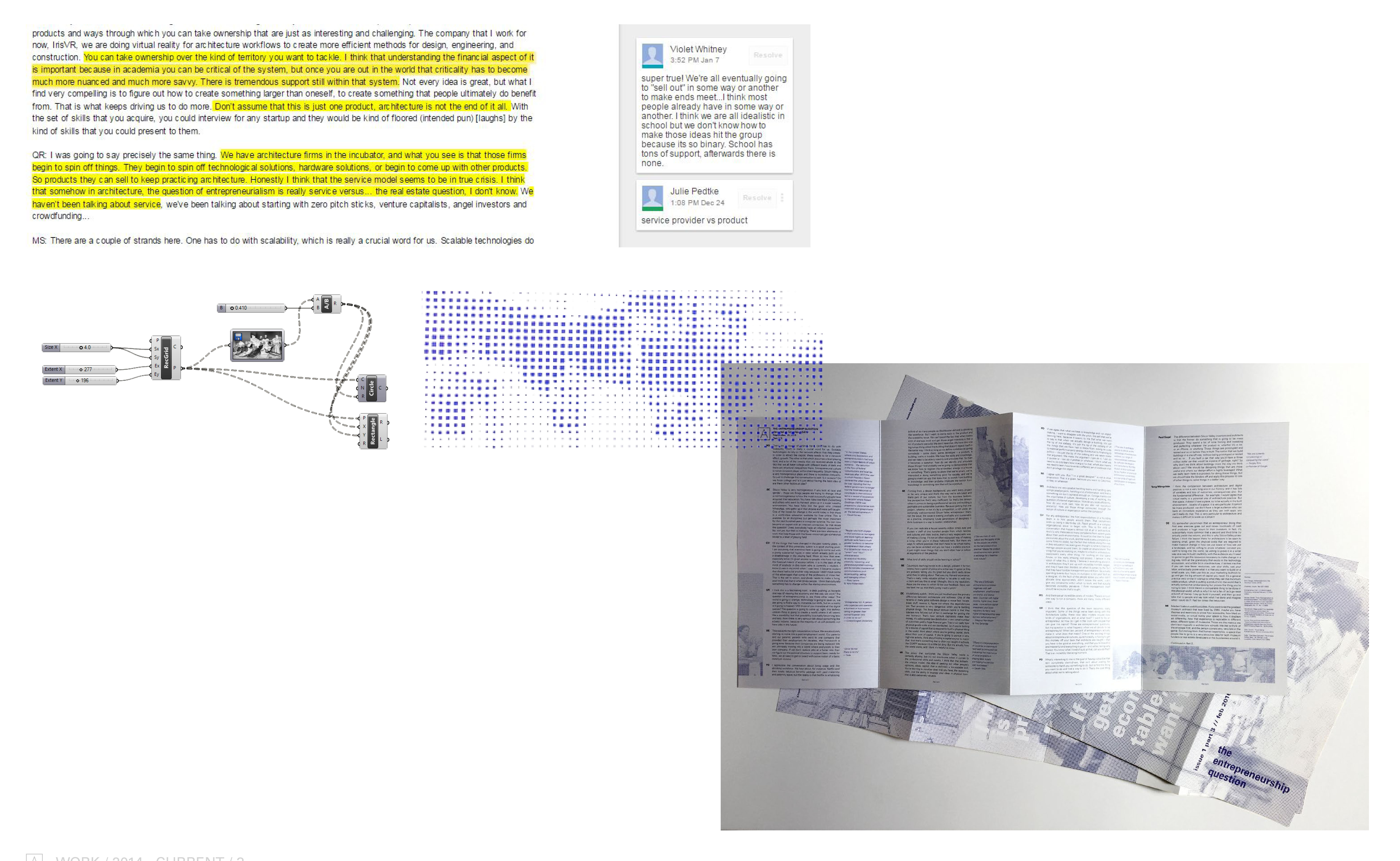
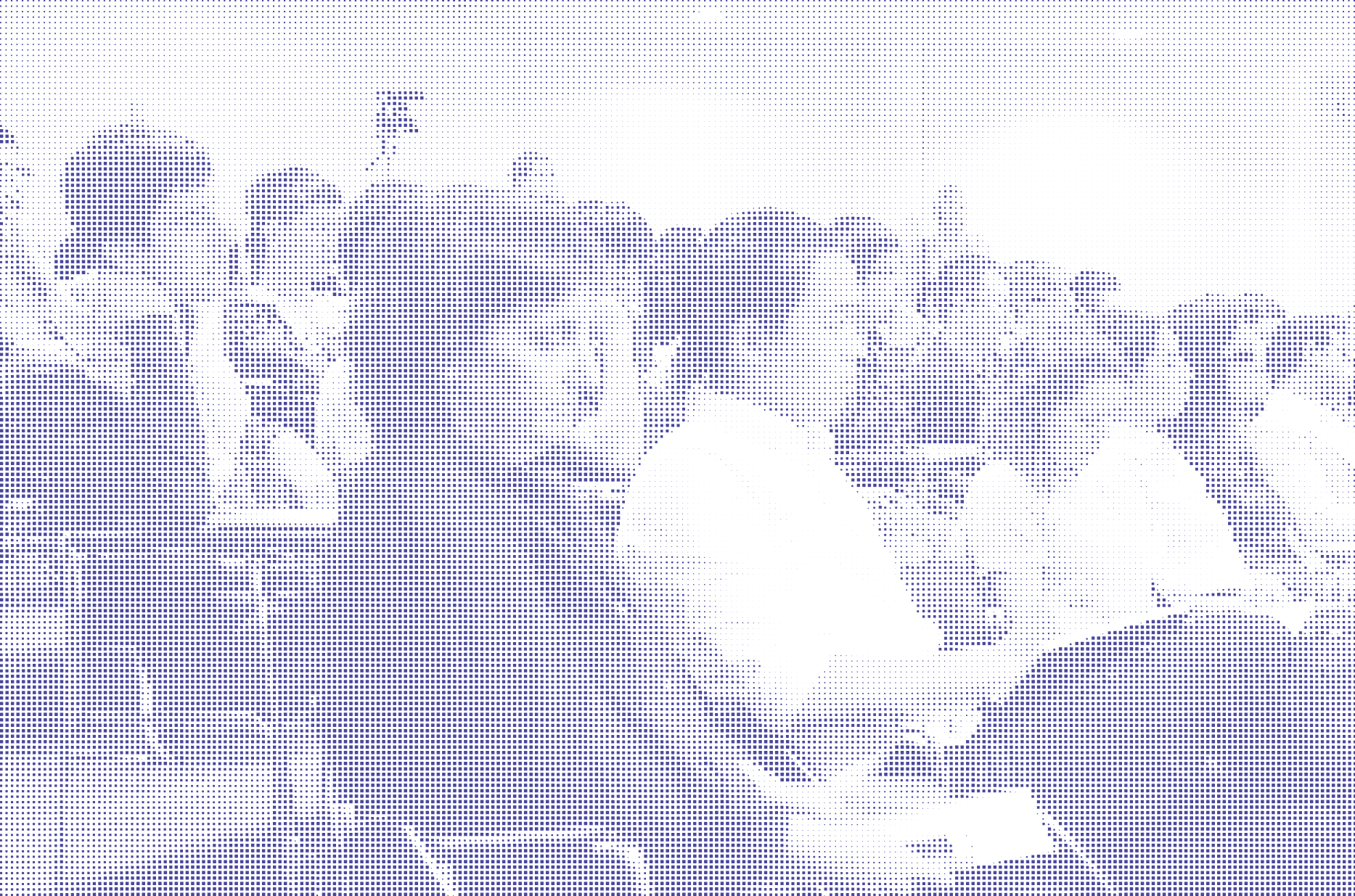
Photographs are fed through a custom tailored grasshopper script that translates the gray value of each pixel into a scaled square, giving the images a poetic digitized aesthetic.

'Le chêne,' pronounced [leuh-sheh-n' means oak tree in French, my native language.