Digital Product
The Architecture Lobby

RE- Interaction Architecture — digital overhaul.

Can a digital experience onboard people onto a social justice movement?

Project Lead ● 2 years

Organization Design ● UX Research ● Product Design ● Project Management

Overview

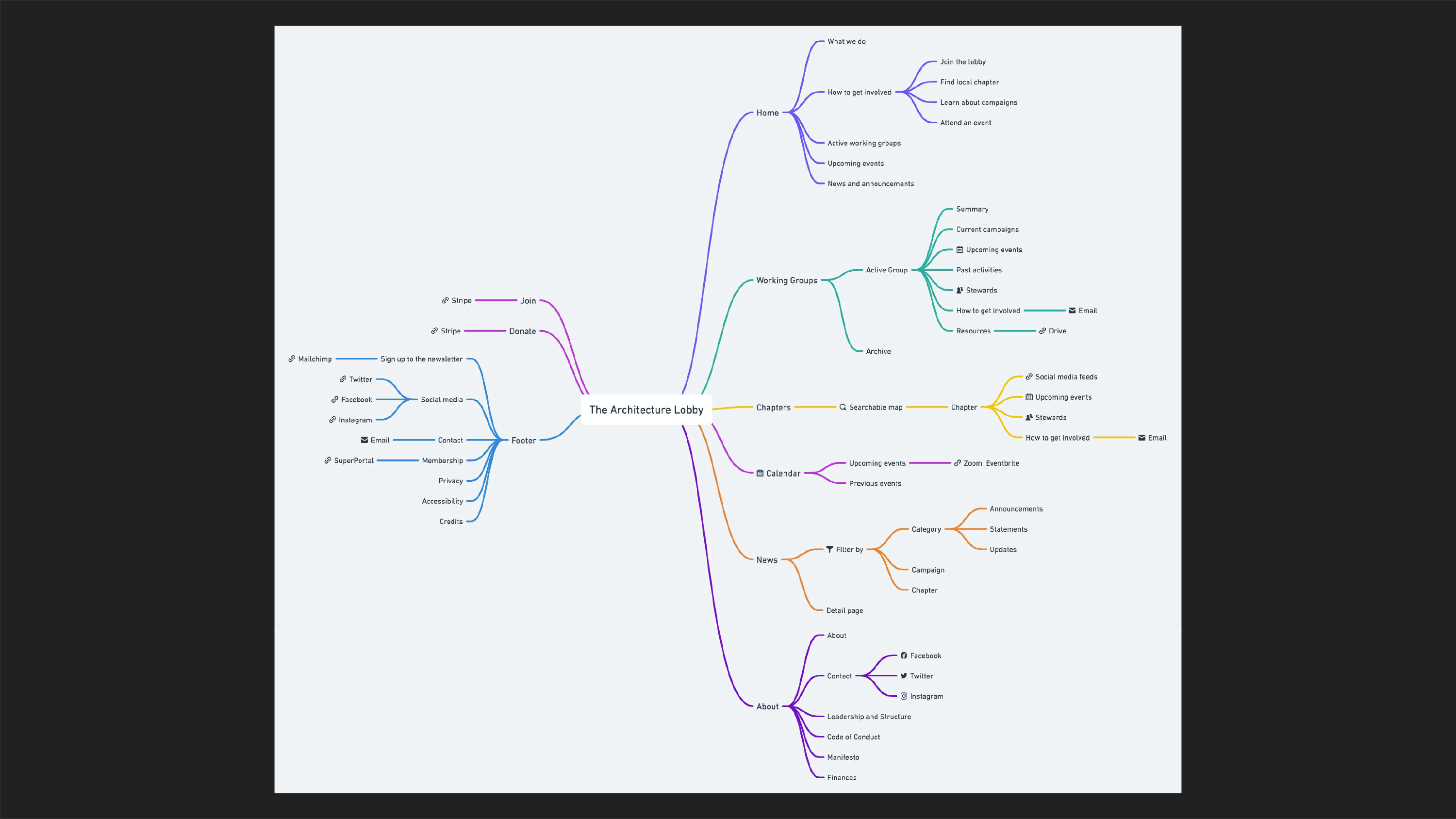
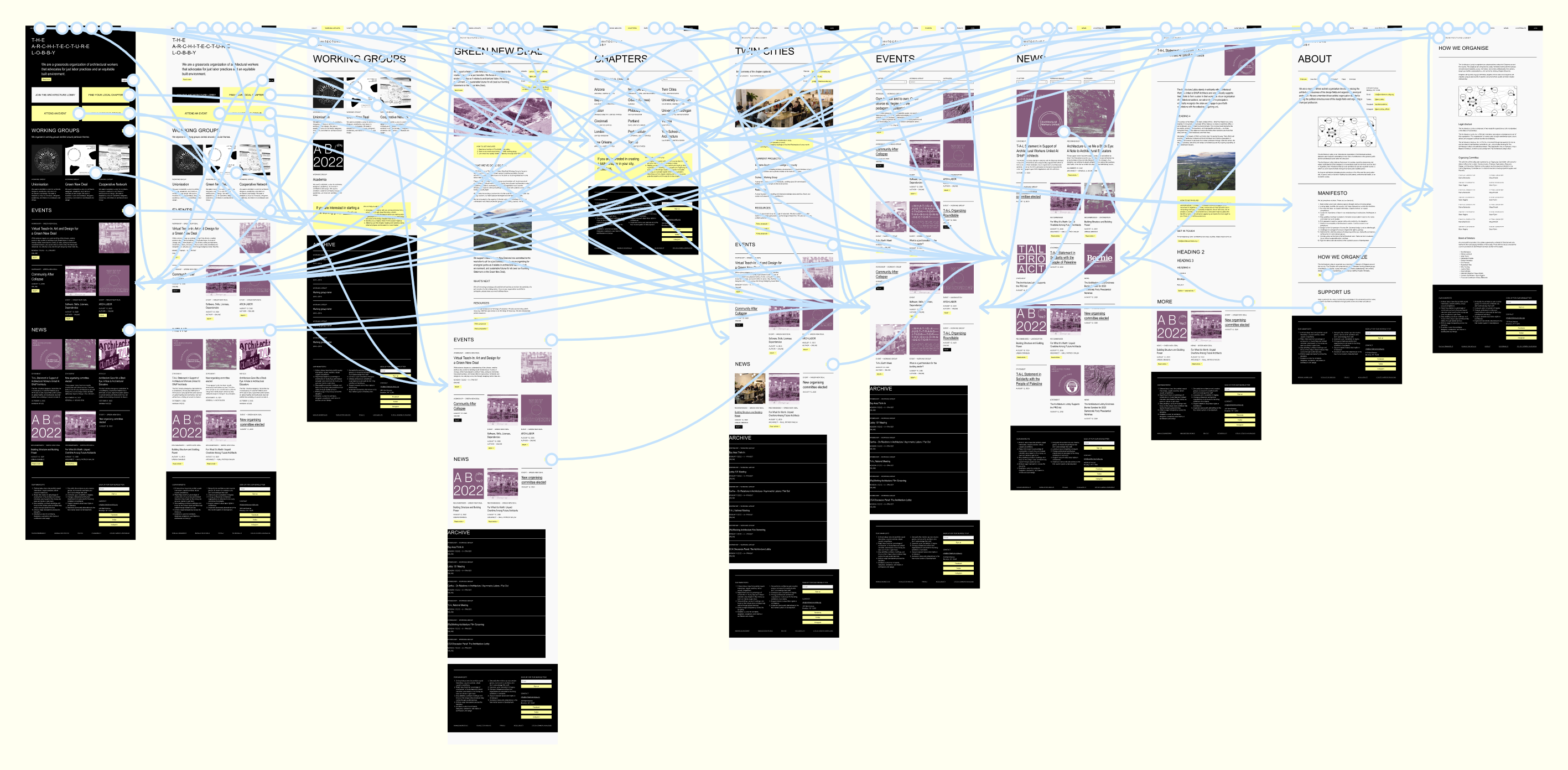
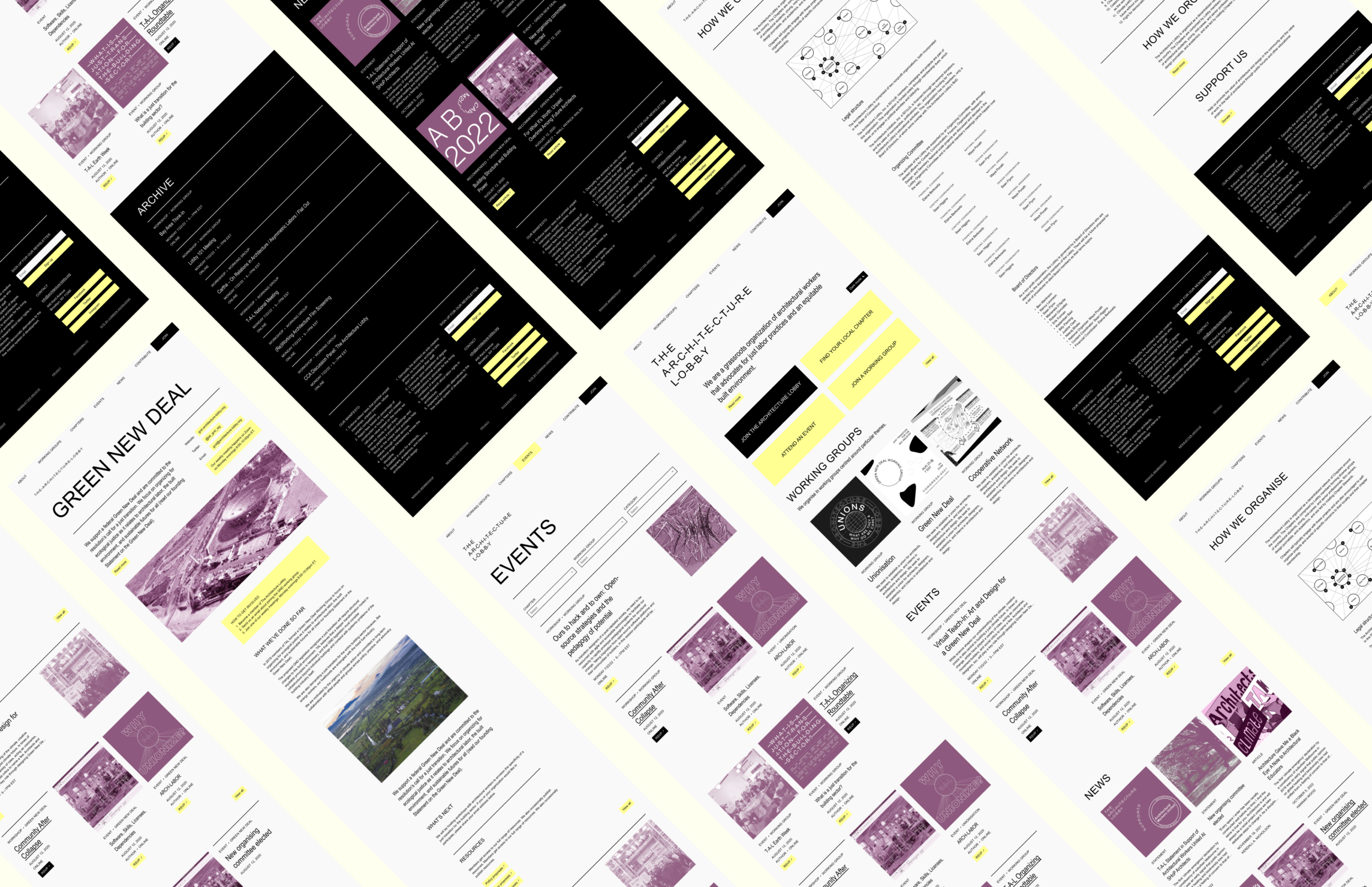
'RE- Information Architecture' is a complete digital redesign of The Architecture Lobby's interactive architecture. The project's key goals were to overhaul, simplify, and refresh external interfaces (e.g. website, membership onboarding) as well as internal ones (internal communication tools, integrations).

As the only product designer on the team at TAL, I was uniquely positioned to served as a co-project lead and lead design coordinator between Common Knowledge and TAL. This project was developed over a two year period.

VISUAL SUMMARY — 1 minute
OverviewStrategy and Key QuestionsFour PhasesDesign & Development
To win big, we have to follow the methods of spending very little time engaging with people who already agree, and devote most of our time to the harder work of helping people who do not agree come to understand who is really to blame for the pain in their lives. ― Jane F. McAlevey
Strategy and Key Questions

Systemic Design Framework

This project used the UK's Design Council's systemic design framework placing  people and planet at the heart of design.
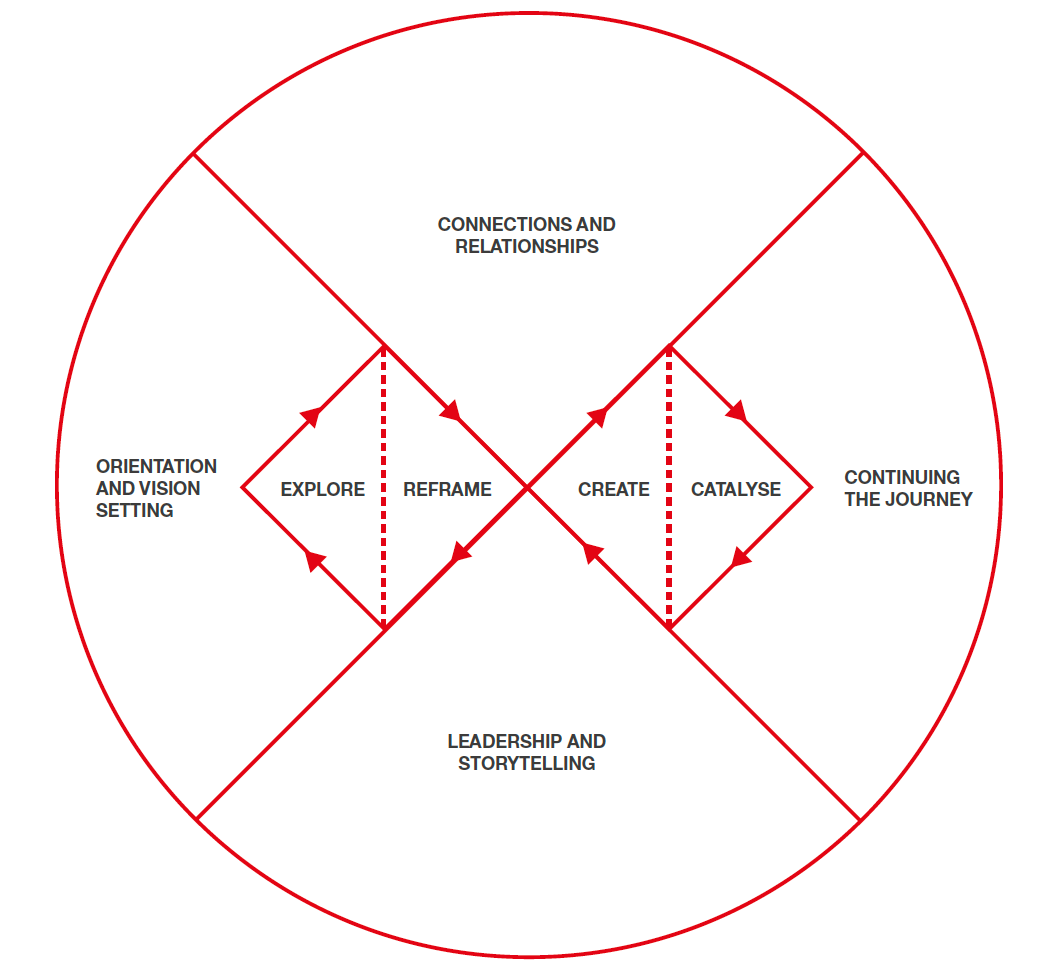
  • Six principles for systemic design which can be used to help people to develop or adapt new design methods and tools from their own practice. The principles are: people and planet centered, zooming in and out, testing and growing ideas, inclusive and welcoming difference, collaborating and connecting, circular and regenerative.
  • Four key roles for designers to play when tackling systemic issues: system thinker, leader and storyteller, designer and maker, connector and convener.  
  • Types of design activities. These are: exploring, reframing, creating and catalyzing.
  • The enabling activity that goes ‘around’ the design process, including orientation and vision setting, connections and relationships, leadership and storytelling, continuing the journey.

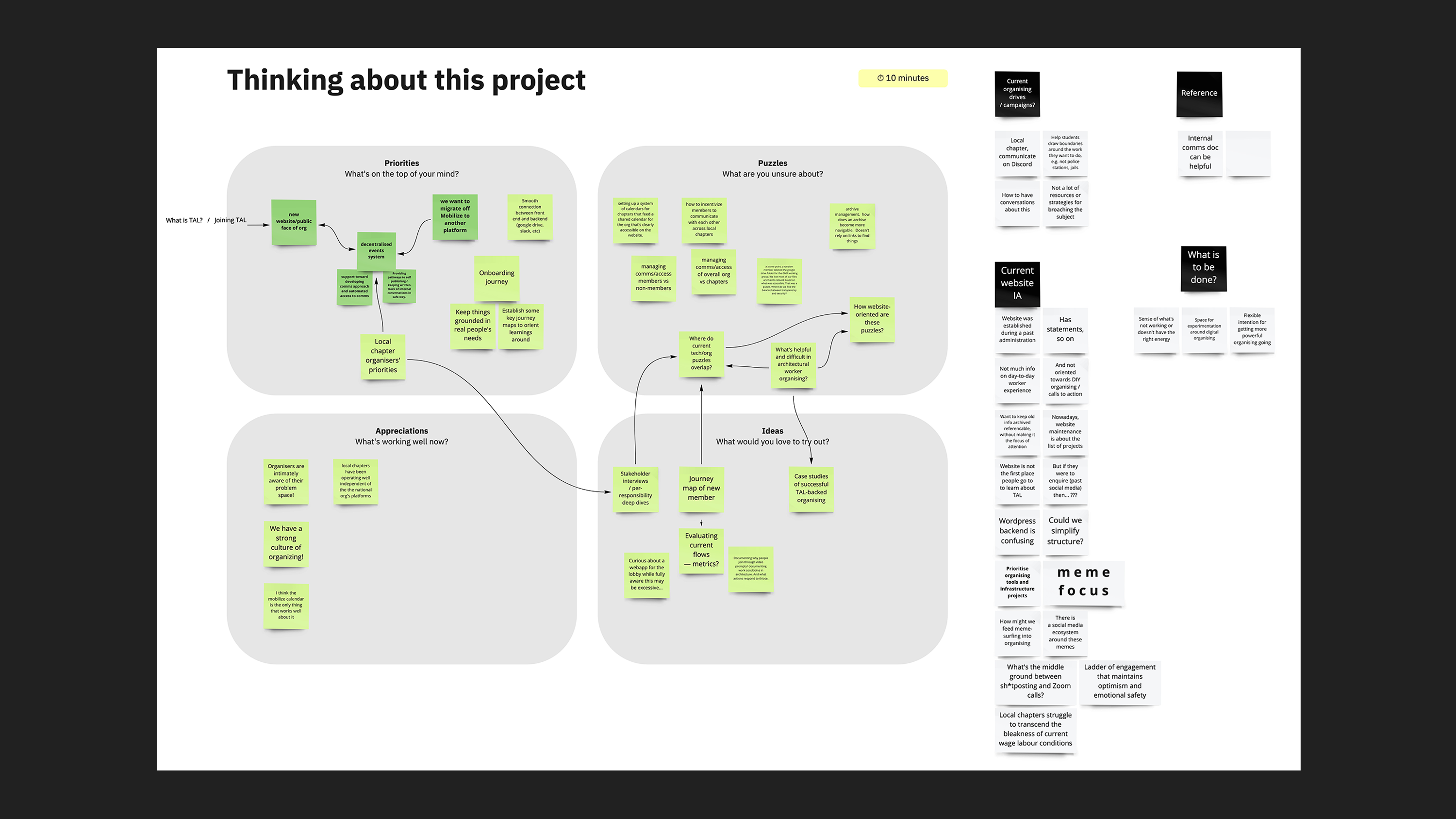
KEY QUESTIONS

What isn’t working about the current website and digital infrastructure?

How can they be improved to support rather than hinder our organizing?

How can what TAL is and does can be more effectively communicated?

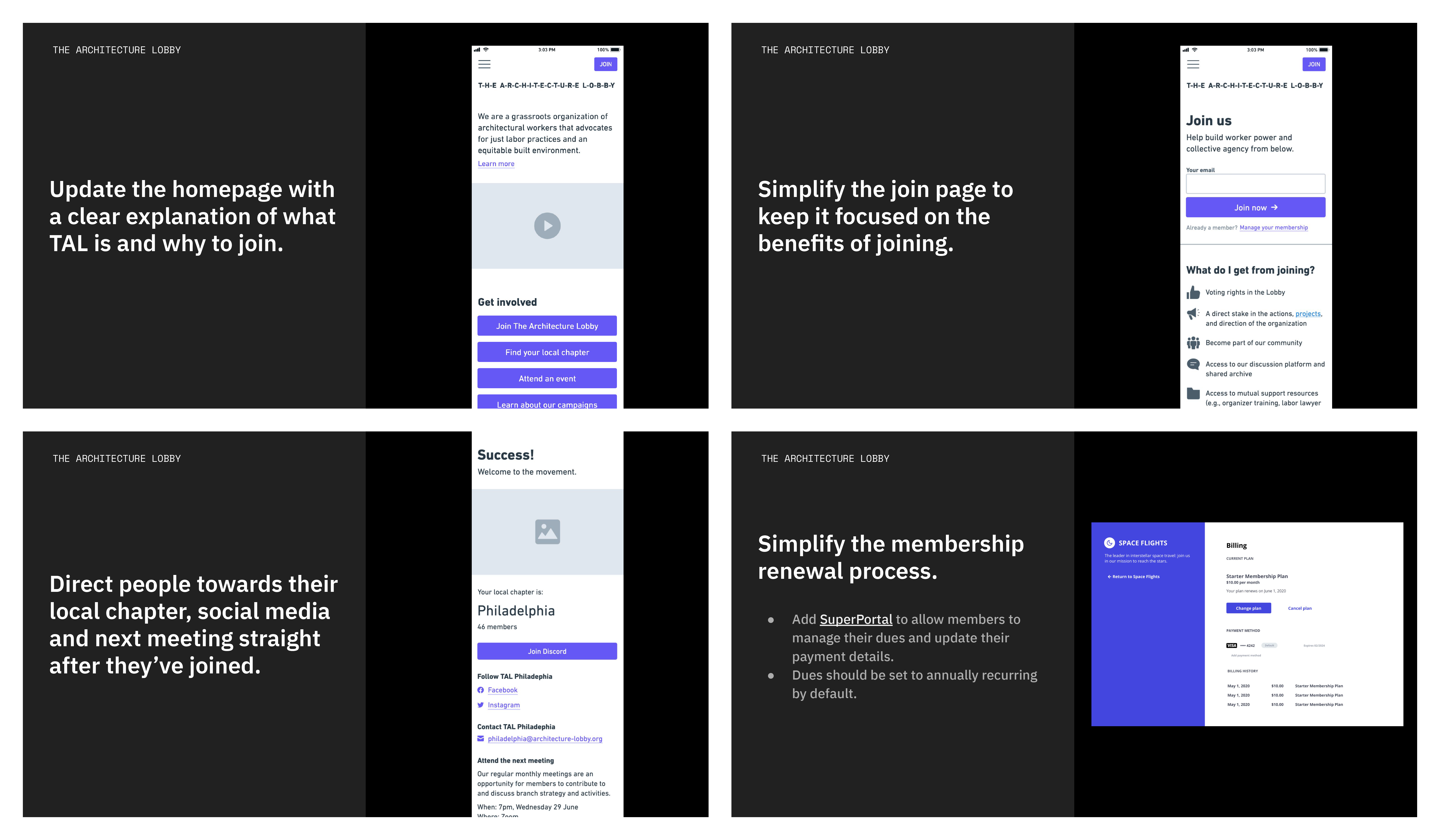
How can the onboarding experience be improved for new and prospective members?
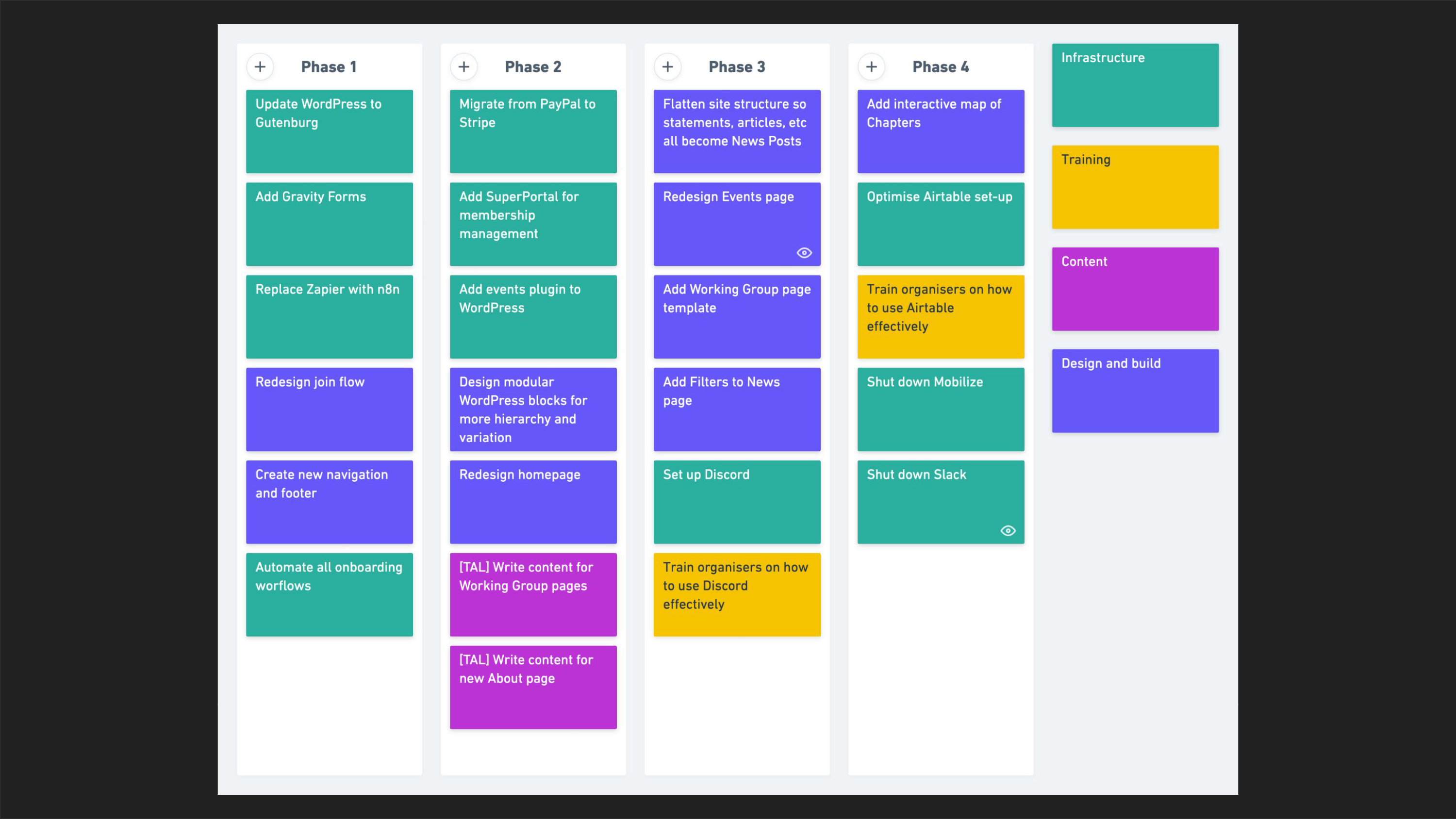
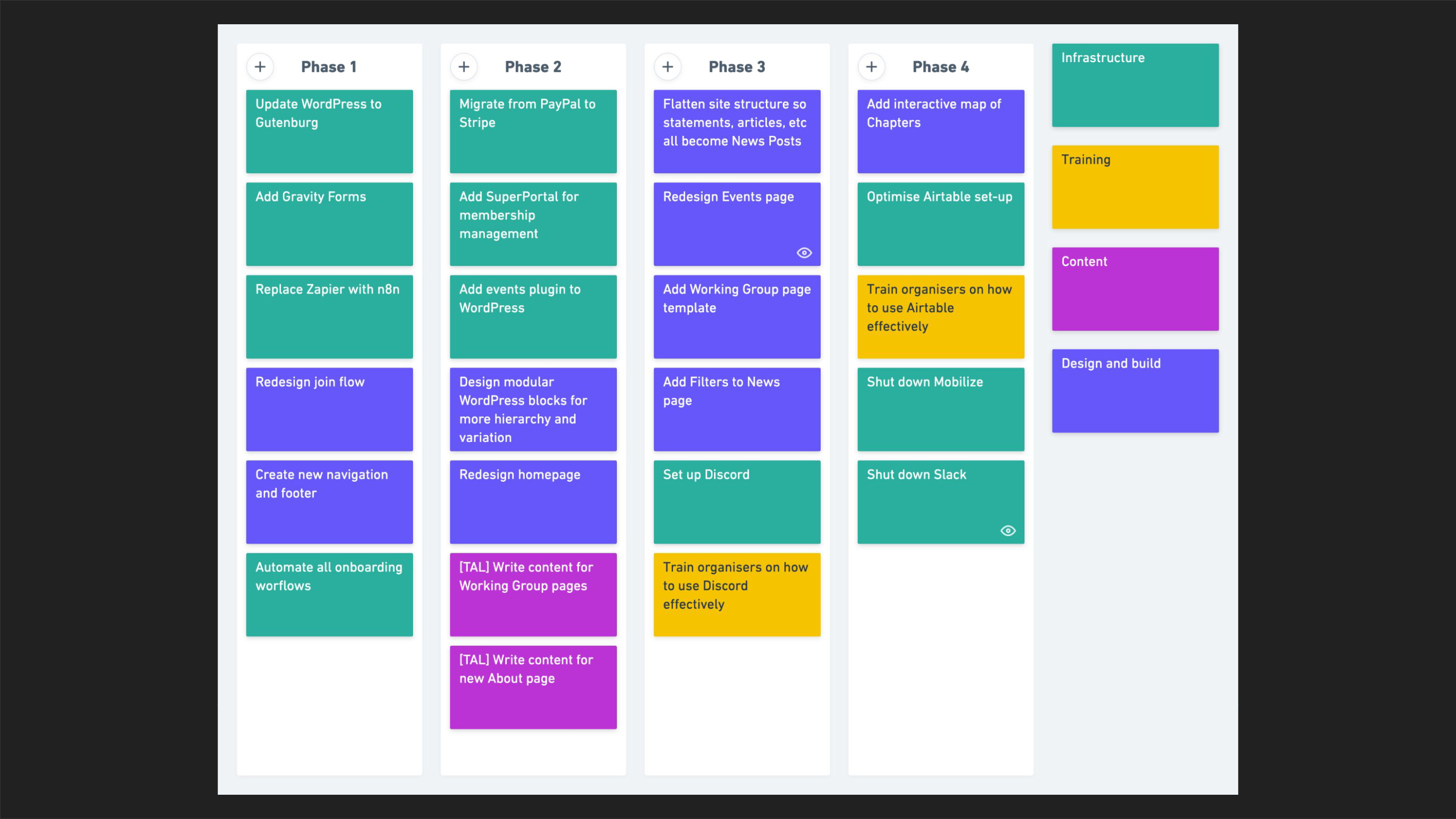
Four Phases

Design & Development

INTERACTIVE HI-FI PROTOTYPE

THE END
Thank you for your time and attention. Here are other case studies.

THANK YOU FOR TAKING INTEREST IN MY WORK

Let's connect!

Drop me a note at v.lechene@columbia.edu.

RE- Interaction Architecture
Strategy and Key QuestionsFour PhasesDesign & Development