Spatial Design ● Product Design ● Design Research
Can software create new economies of scale for architects?
Architectural work is infamous for its long hours and low pay. Building design is laborious because it is customized for each building site. In a typical architectural practice today, design happens at two levels: (1) the building massing and (2) the building system. Based on this framework, this project is focused on the following question: What if software could adapt a given building system to a massing tailored to a given site? This would enable to use a building system on multiple occasions, creating economies of scale for architects, which hopefully will reduce labor.
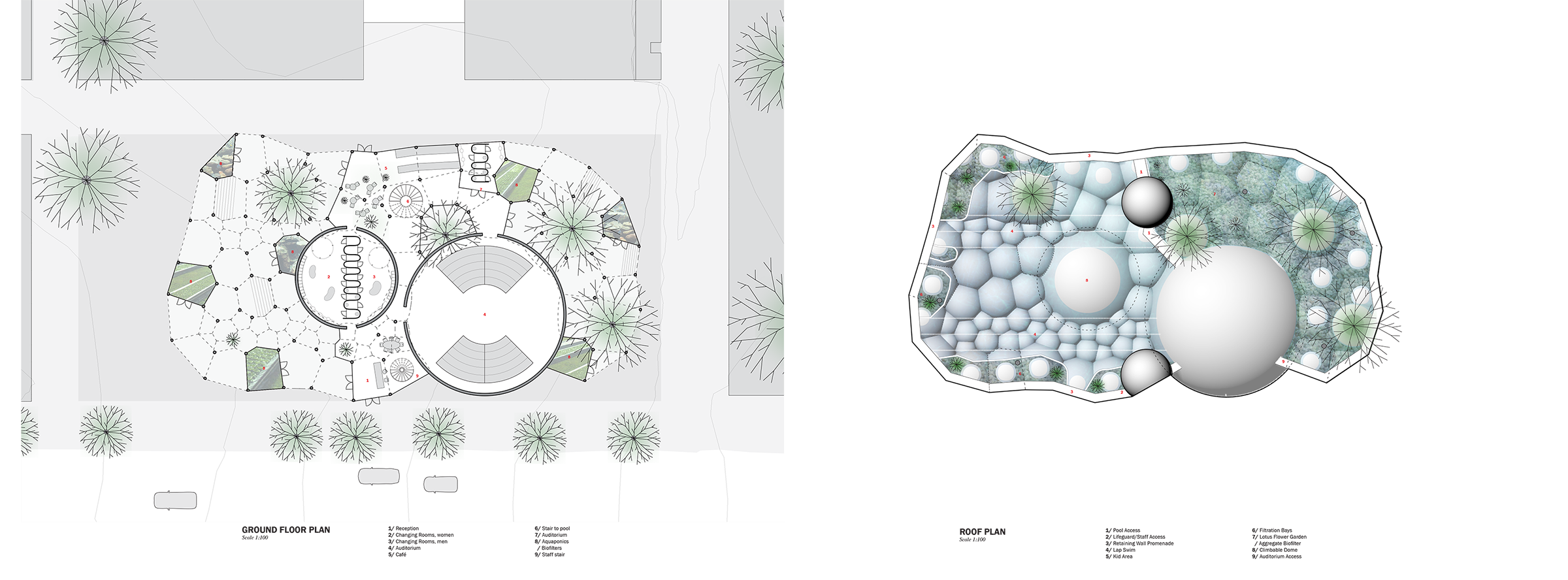
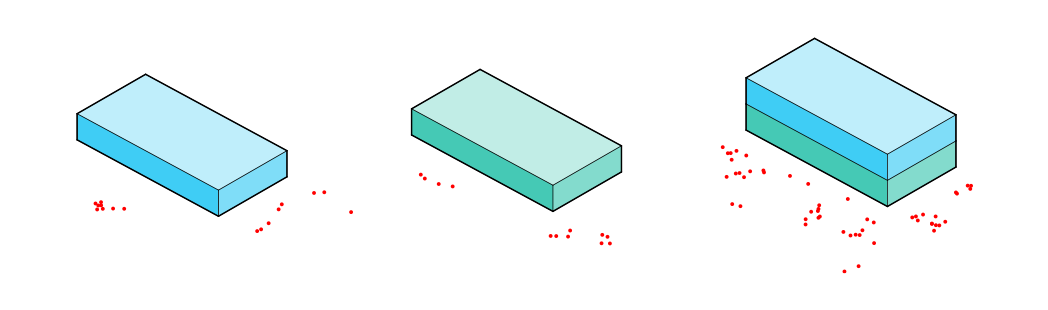
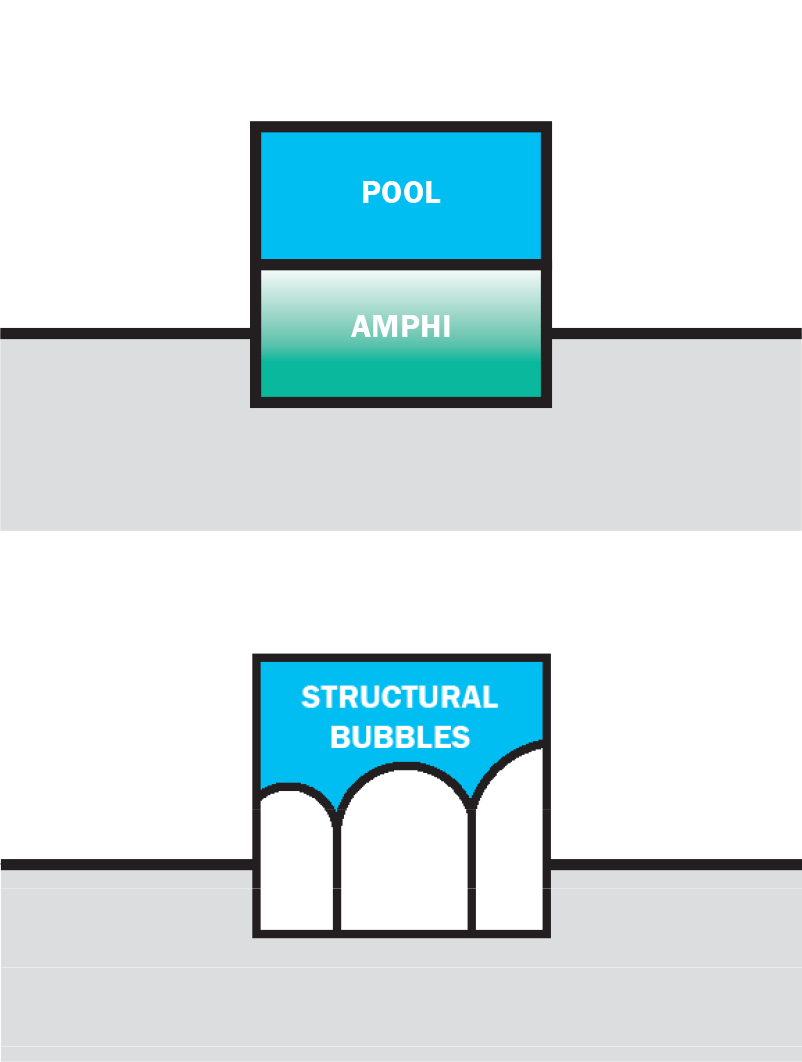
I decided to work with a building system I had designed under the mentorship of Paula Tomisaki, which I had named "Bubble Sphere Pool." The system consists in stacking a pool over an amphitheater. The roof of the amphitheater is also the ground of the pool. This shared structural layer is called 'membrane.'
I was interested exploring a topographic membrane that accommodates vibrational acoustics for the amphitheater and depth variation inside the pool. Domes are well known for their vibrational qualities, creating echos and whispering chambers. In addition, domes are often used to signal communal space, which the auditorium and the pool both intended to be.
Domes are describes by spheres. When many spheres aggregate, they appear like bubbles. Because the membrane becomes the driving concept for the skeleton of the building, it is refereed to as structural bubbles.
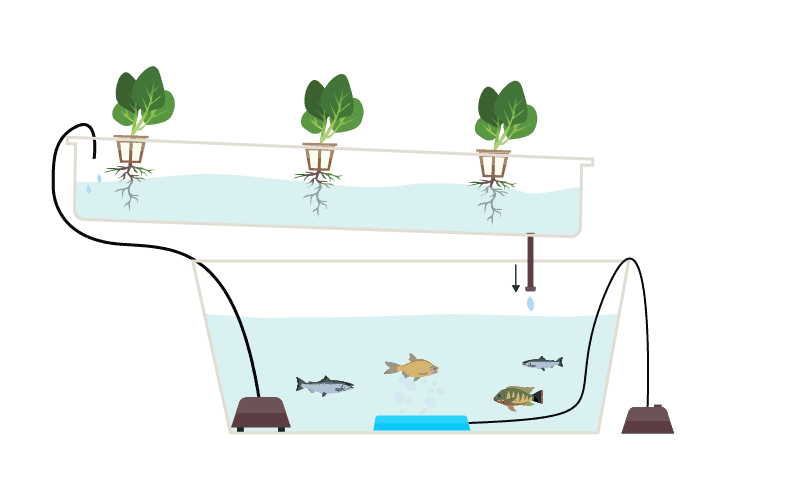
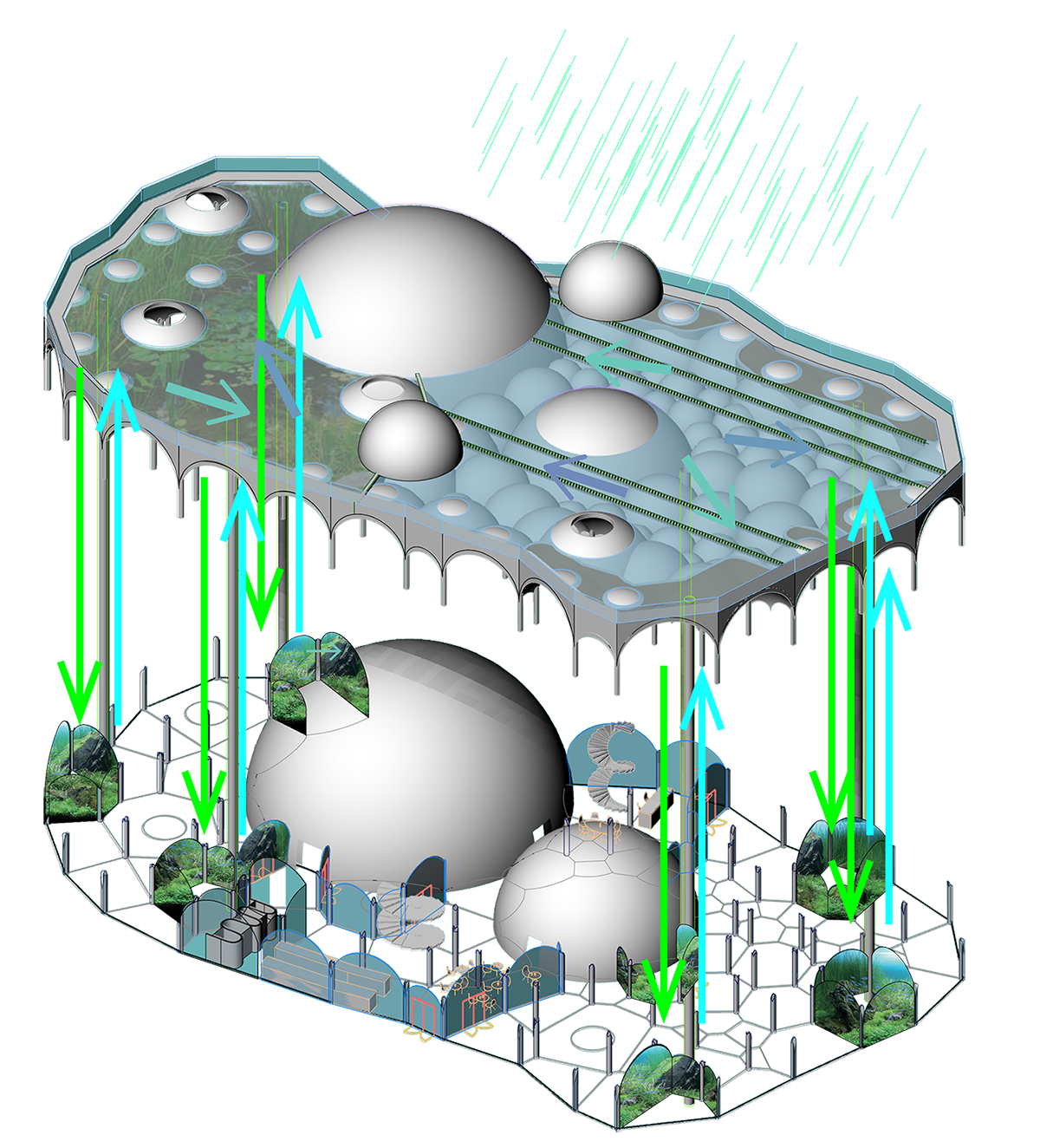
The pool water is kept clean with a plant filtration system ("natural swimming pool.") The water is also paired with aquaponics, a system of aquaculture in which the waste produced by farmed fish or other aquatic animals supplies nutrients for plants grown hydroponically, which in turn purify the water. The aquaponics are located at the auditorium level, creating some diversity in the program that will occupy the ground floor and connect to the street.

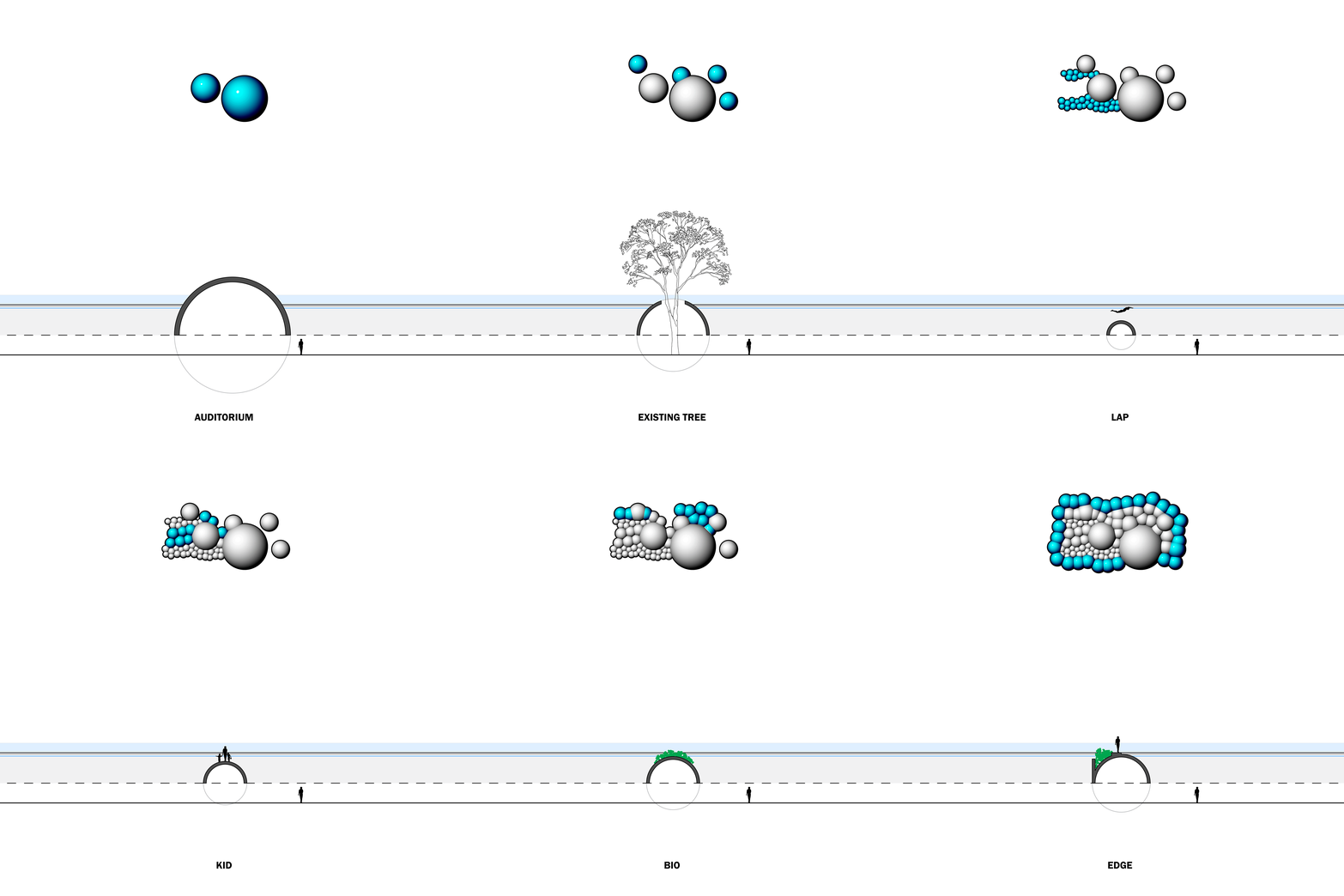
The topographic membrane is defined with a systemic methodology. Pool programs are paired with a pool depth. Lap swimming requires more depth than kid area. Plant area also have specific requirements, and the big auditorium dome creates an island that emerges above the water. Existing trees can be kept on site and accommodated by Finally, an edge enables swimmers to access the pool and keep the water contained.
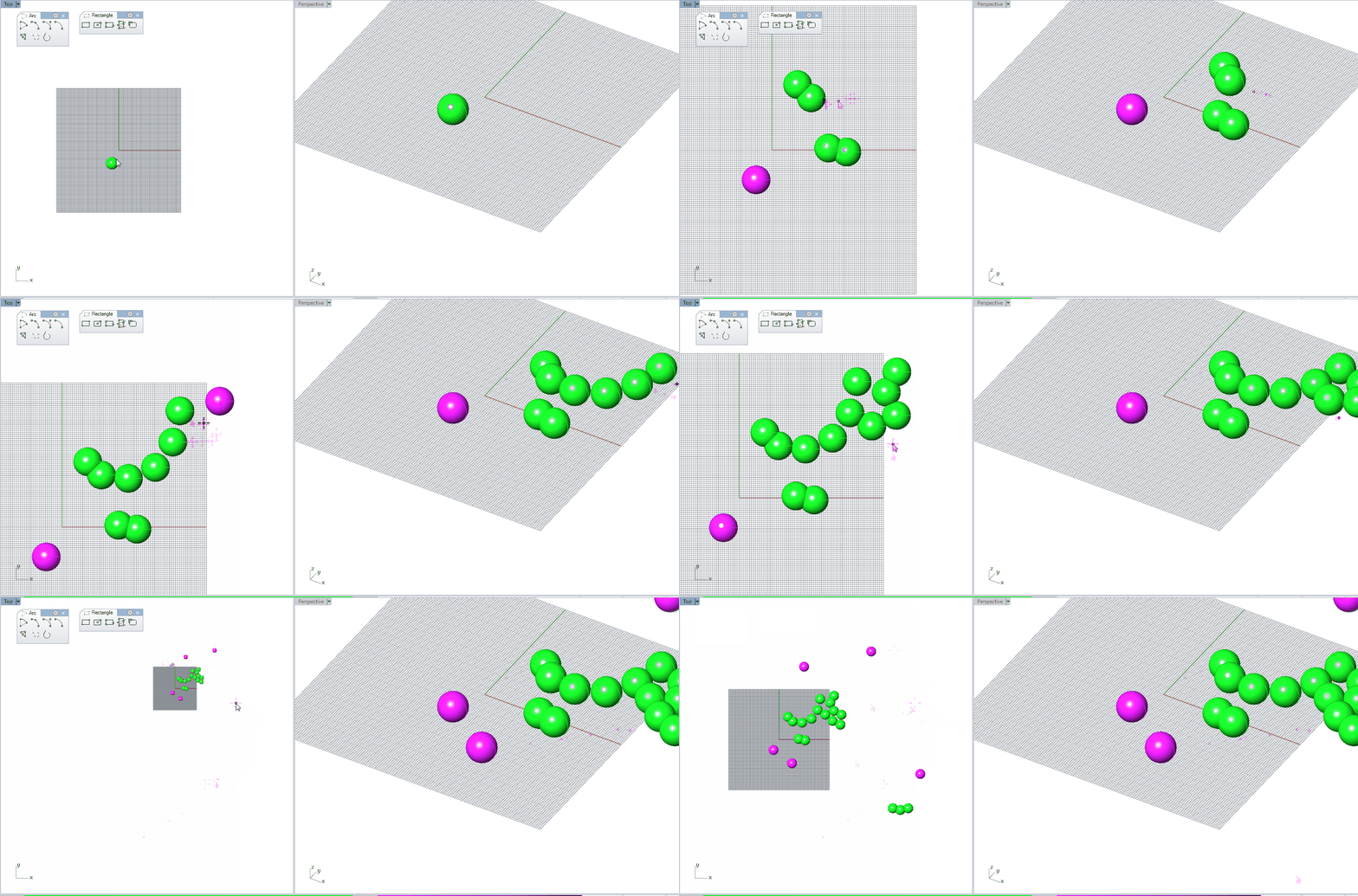
The spheres are aggregated based on site dimension and program requirement. The animated diagram below illustrates aggregation process.
The system integrates with the local environment's water flows, fostering biodiversity in its surroundings. The drawing below shows one massing iteration of the building system, with a plant filtration system and aquaponics.
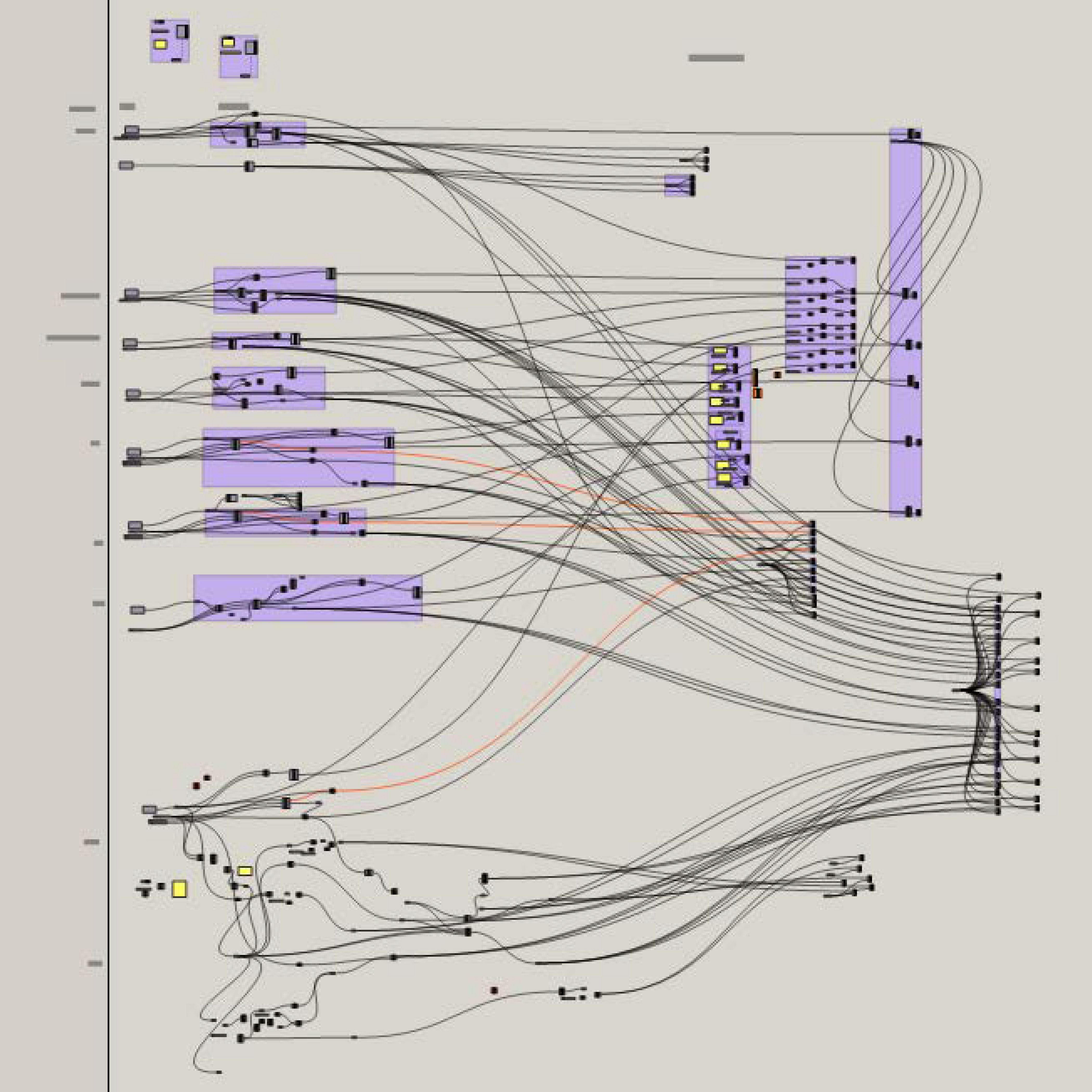
The series of sphere sizes are scripted into a software with Grasshopper for Rhinoceros. The software enables to accommodate the bubble sphere building system into any massing and thus site. The animated diagram below illustrates this idea.
The software displays various data layers of the building system.
The three rendered views display the building in orthographic projection in plan and elevation, as well as a perspective.
The green spheres provide live-feedback to the software user -- if spheres are pink, they are too far apart or too close to other spheres. This feedback loop guides the user in the design process.
The multi-colored diagram on the top right displays program type for each sphere.
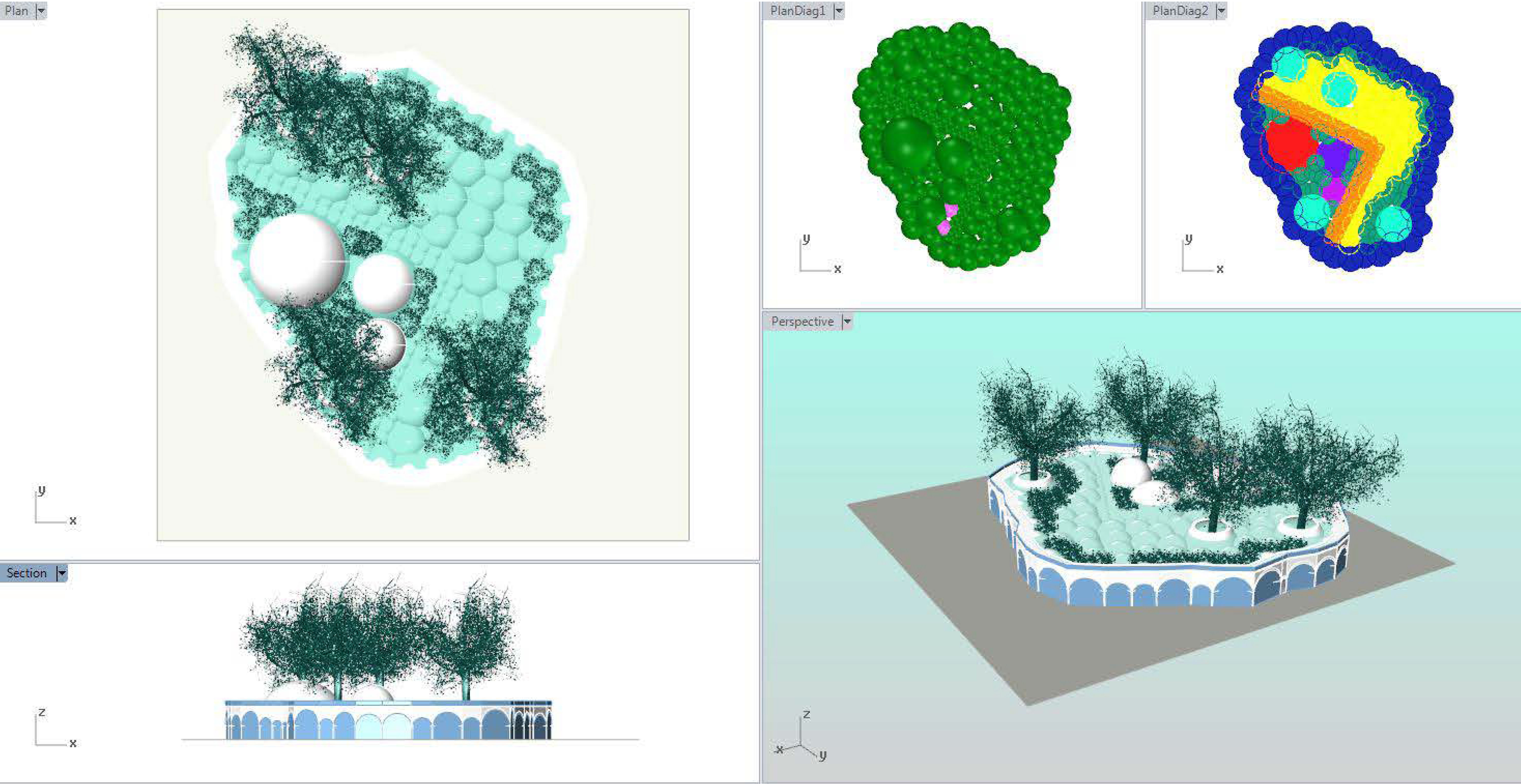
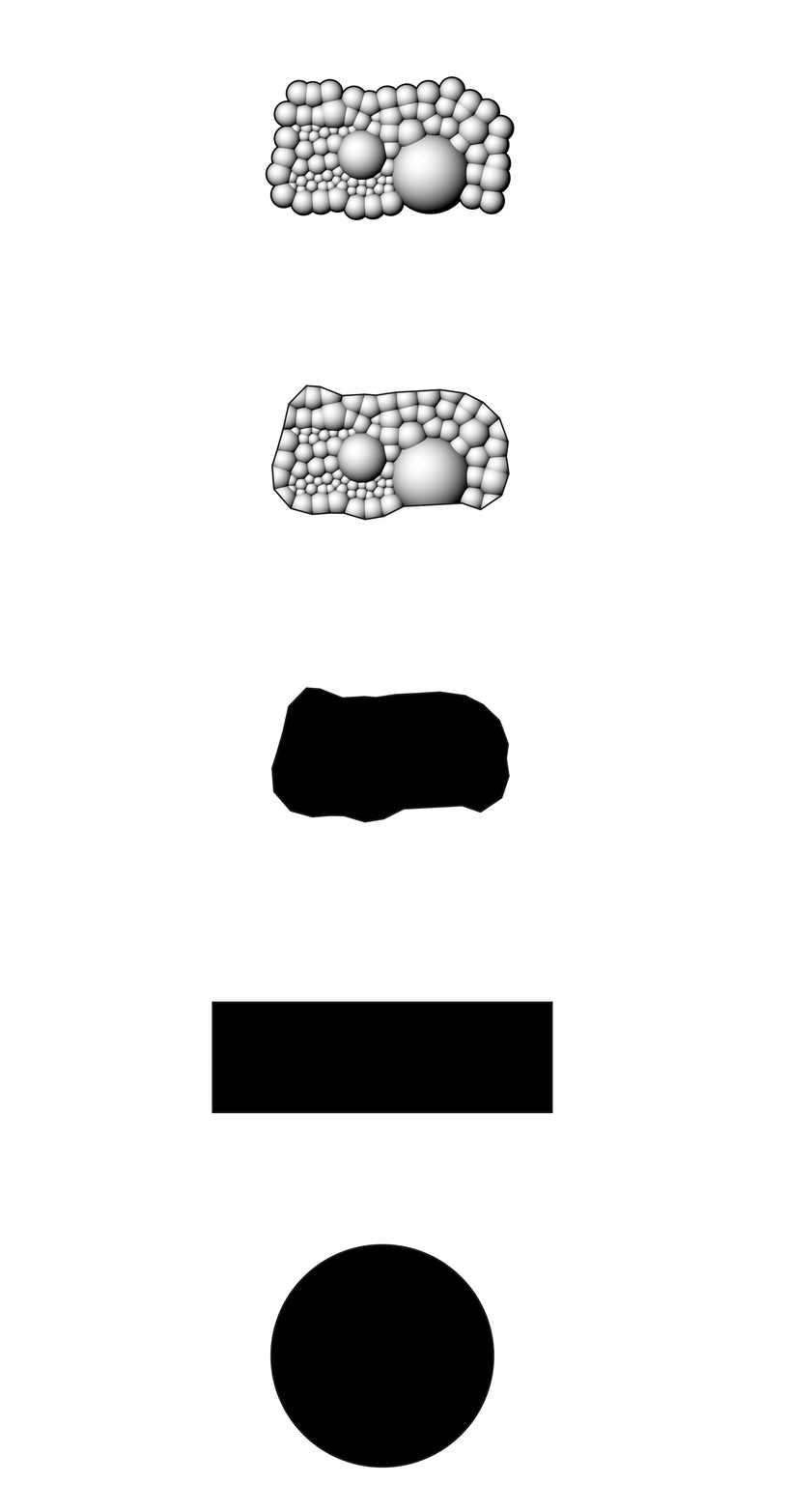
Below are different massing iterations designed with the same building system. Amorphous shapes and geometrical shapes are both accommodated by the system.
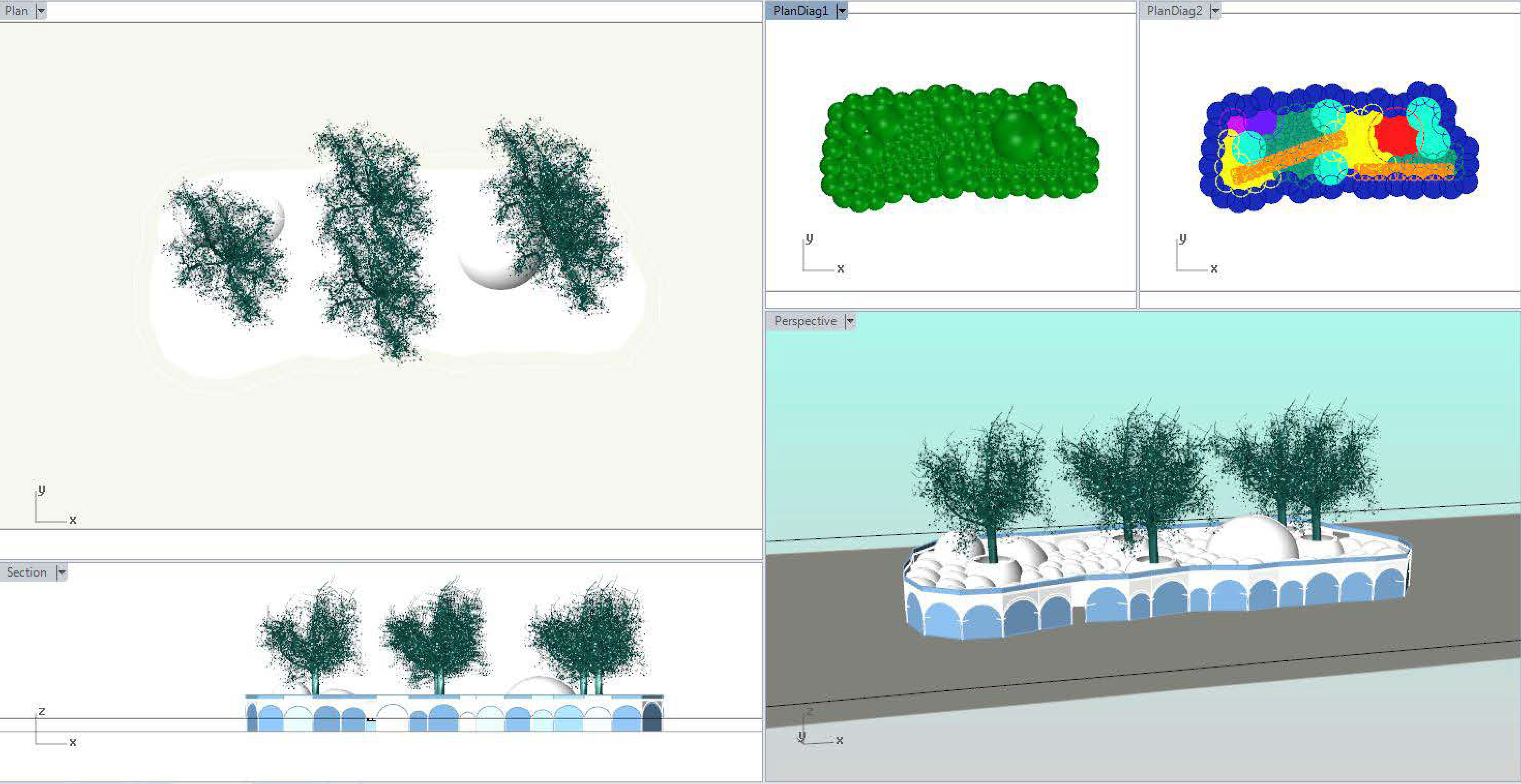
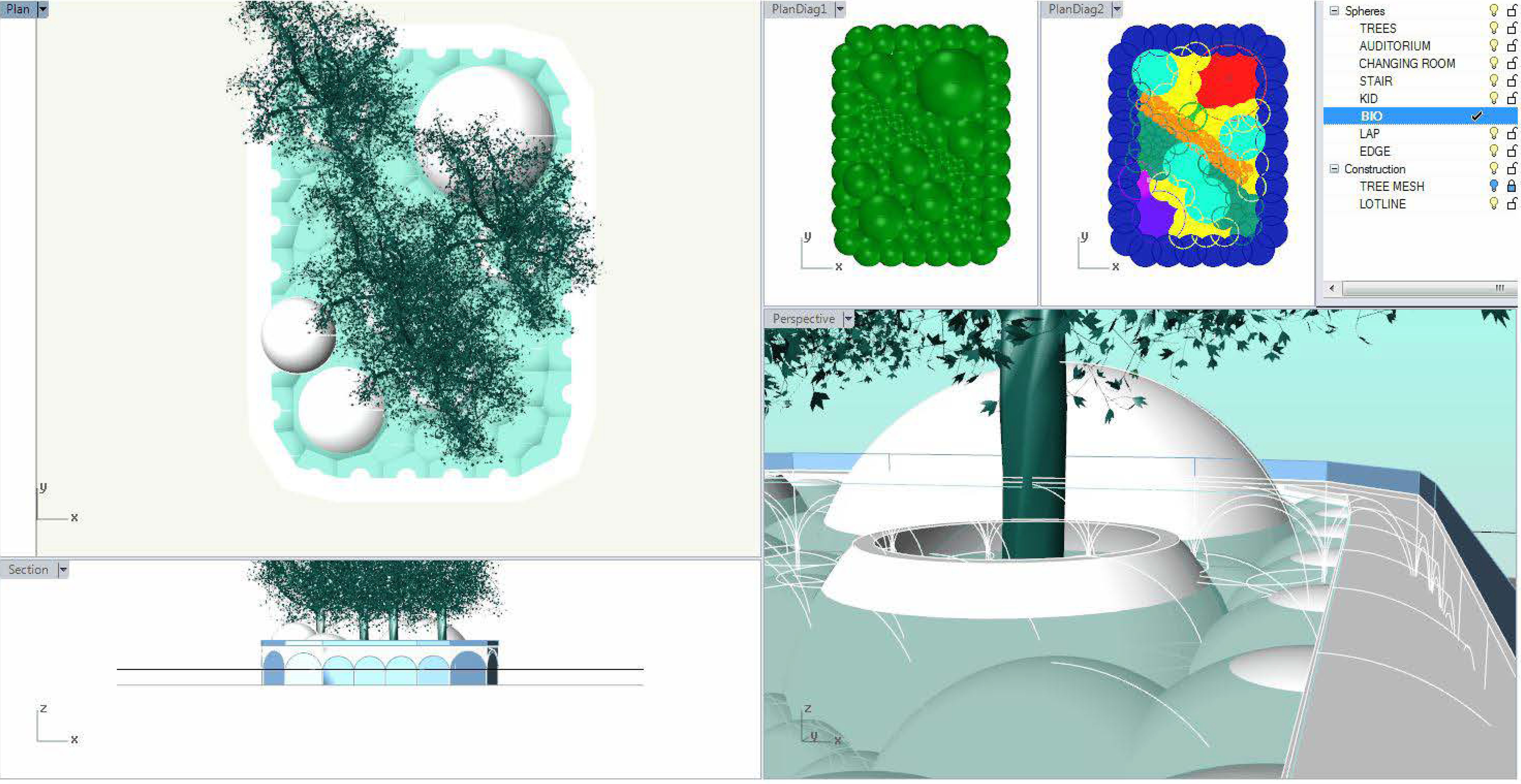
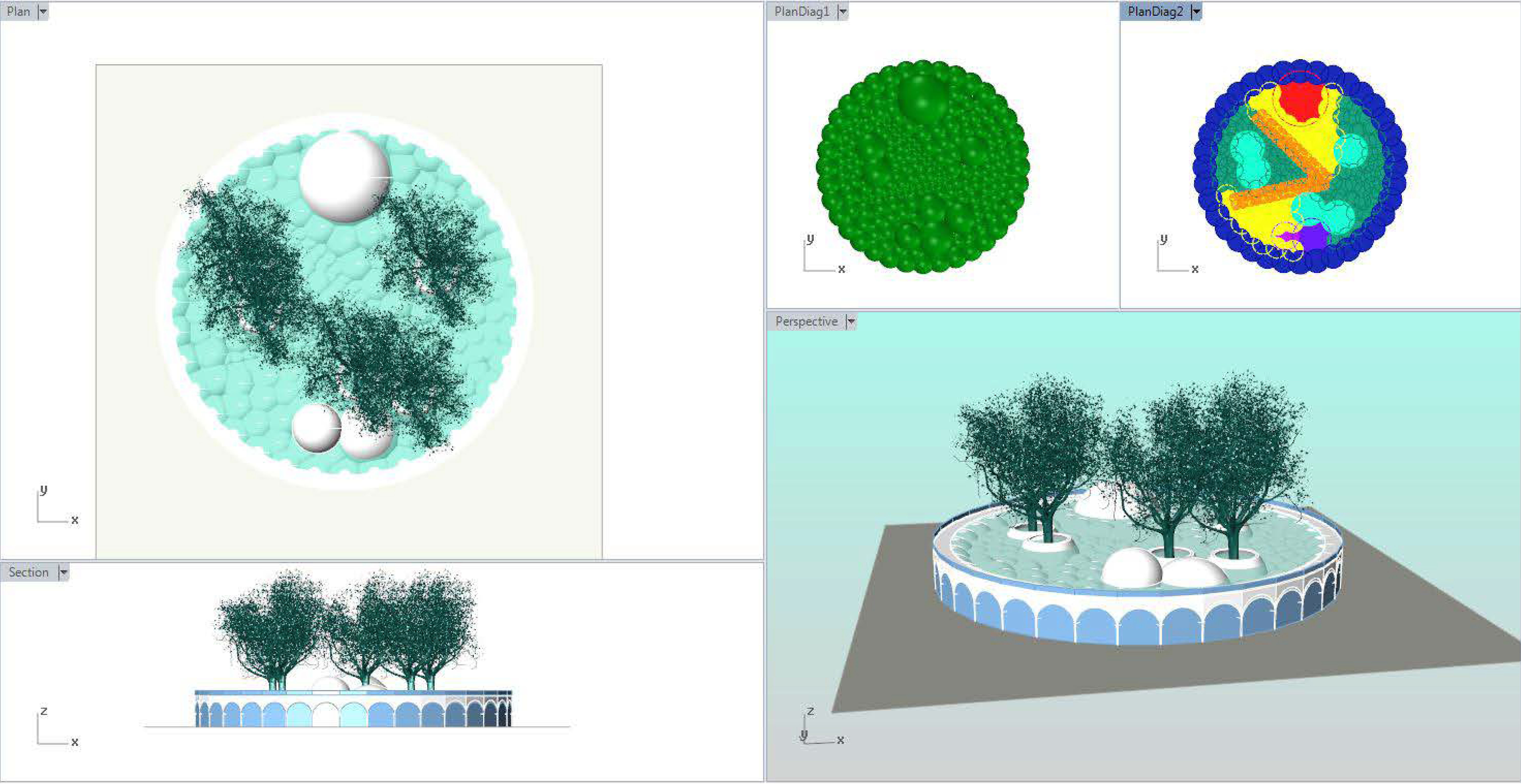
The two one minute videos below demonstrate how a specific building is assembled using the Rhino interface.
The images in this section are the result of research that lead to the interface previously described. They display tools that were eventually integrated into the software.
The Distance-to-Color tool indicates when sphere are too close together or too far apart. When the distance is just right, the spheres are green. When a sphere is badly positioned, it turns pink.
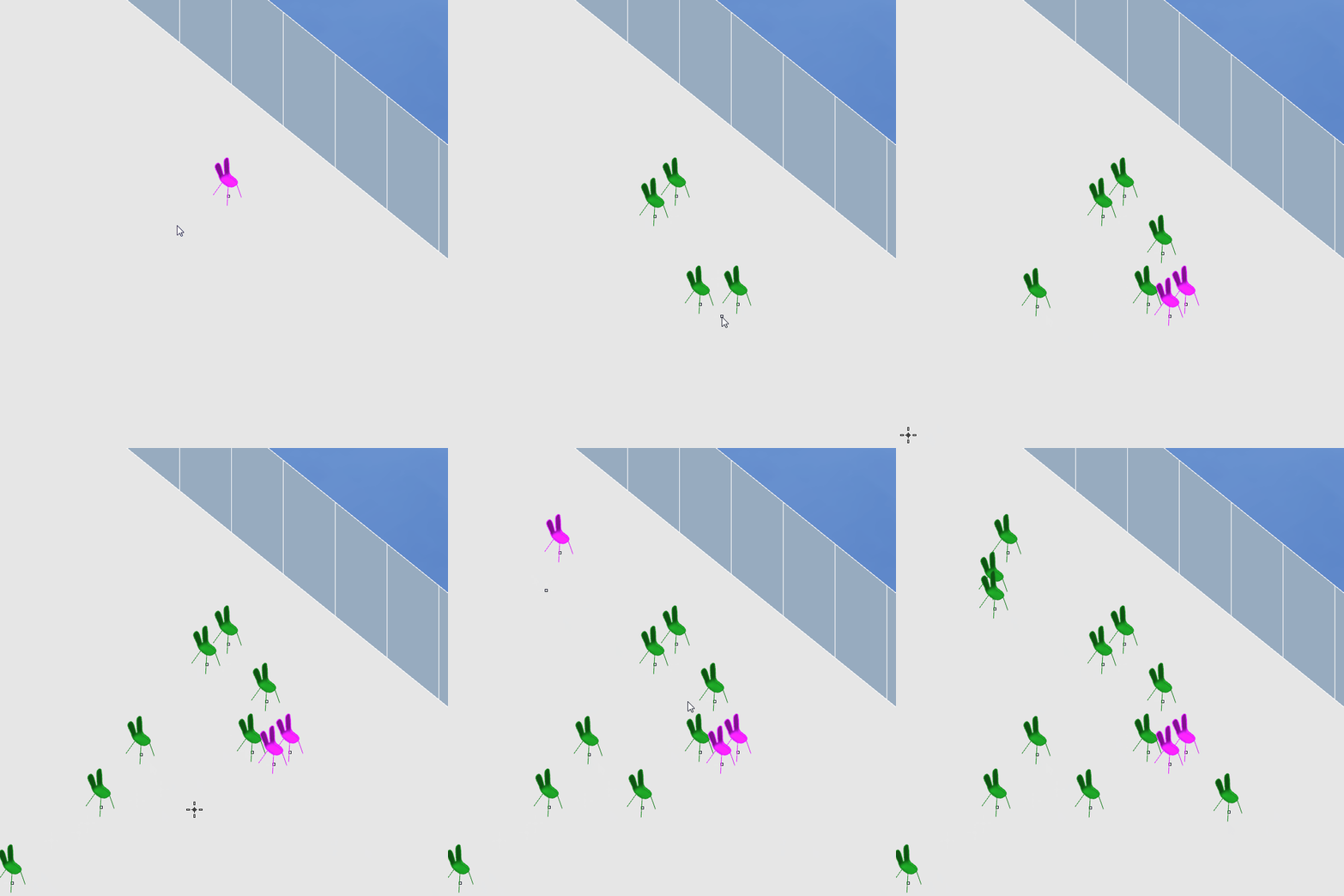
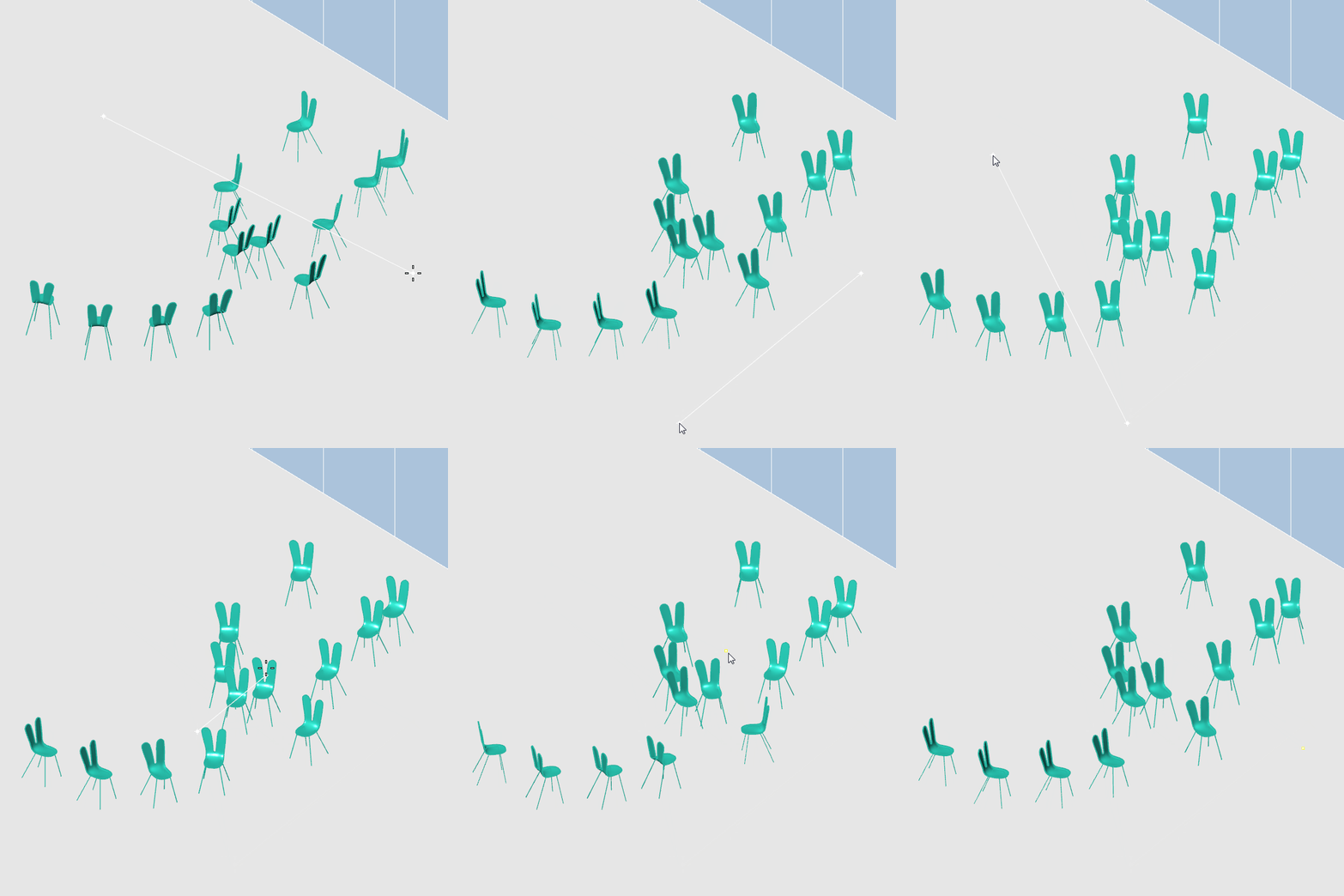
This tool enables to populate a space with objects and for there objects to be systemically oriented. Useful for rendering.
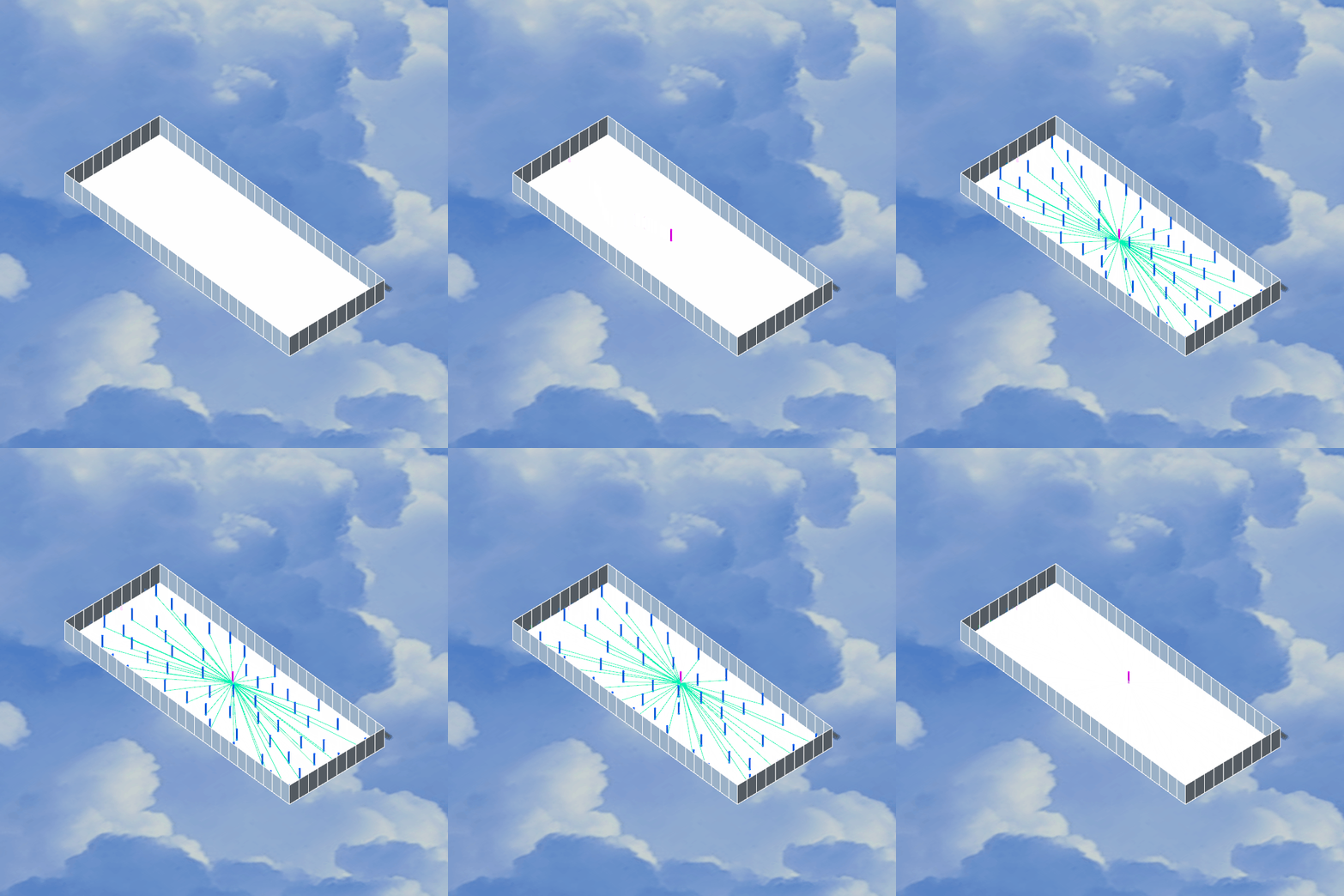
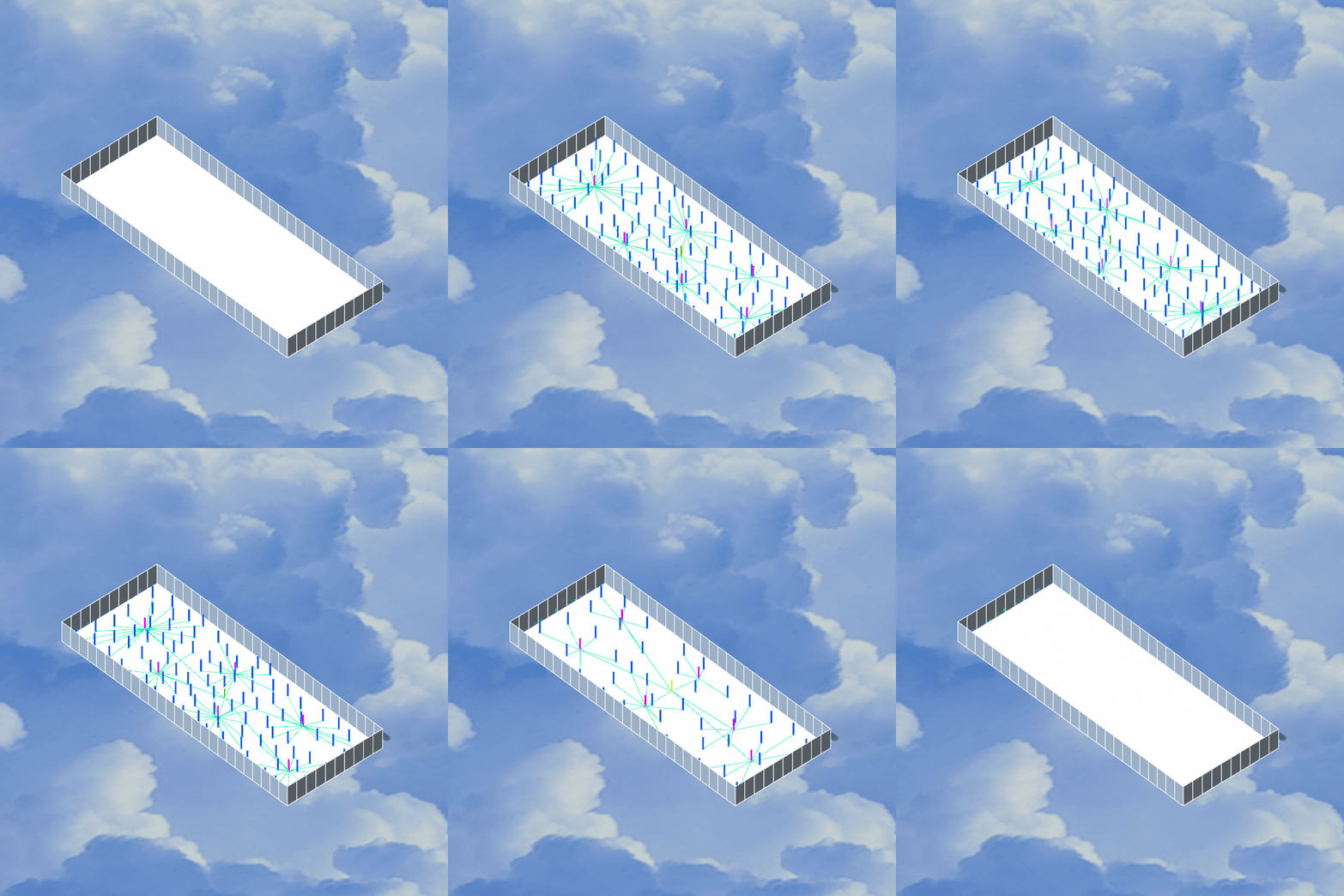
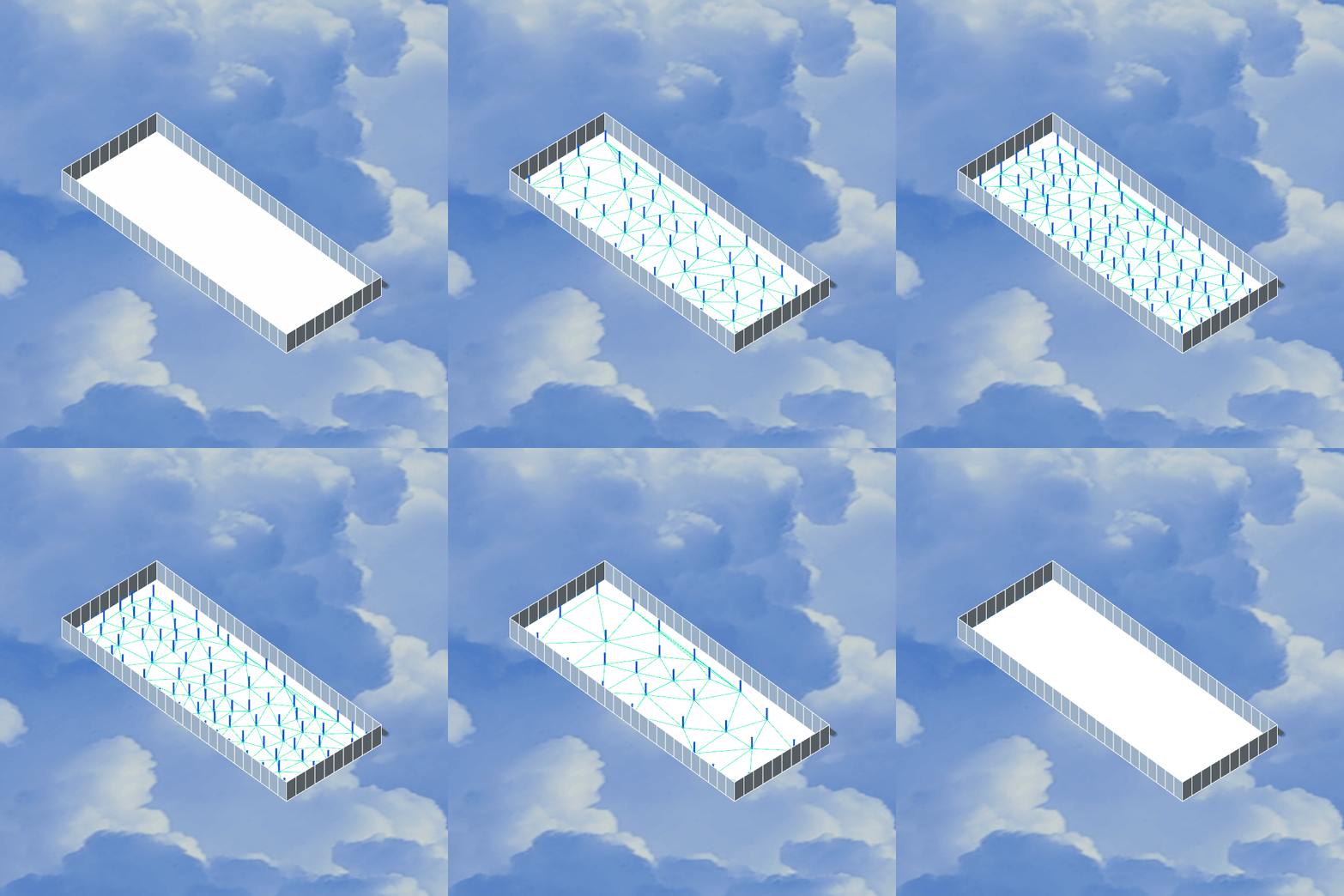
The three diagrams below revisit the three famous network typologies in three dimension.

'Le chêne,' pronounced [leuh-sheh-n' means oak tree in French, my native language.