Design Research ● Spatial Design ● Urban Design
Criteria that may have first appeared incompatible are harmonized through metric-tracked iterative research.
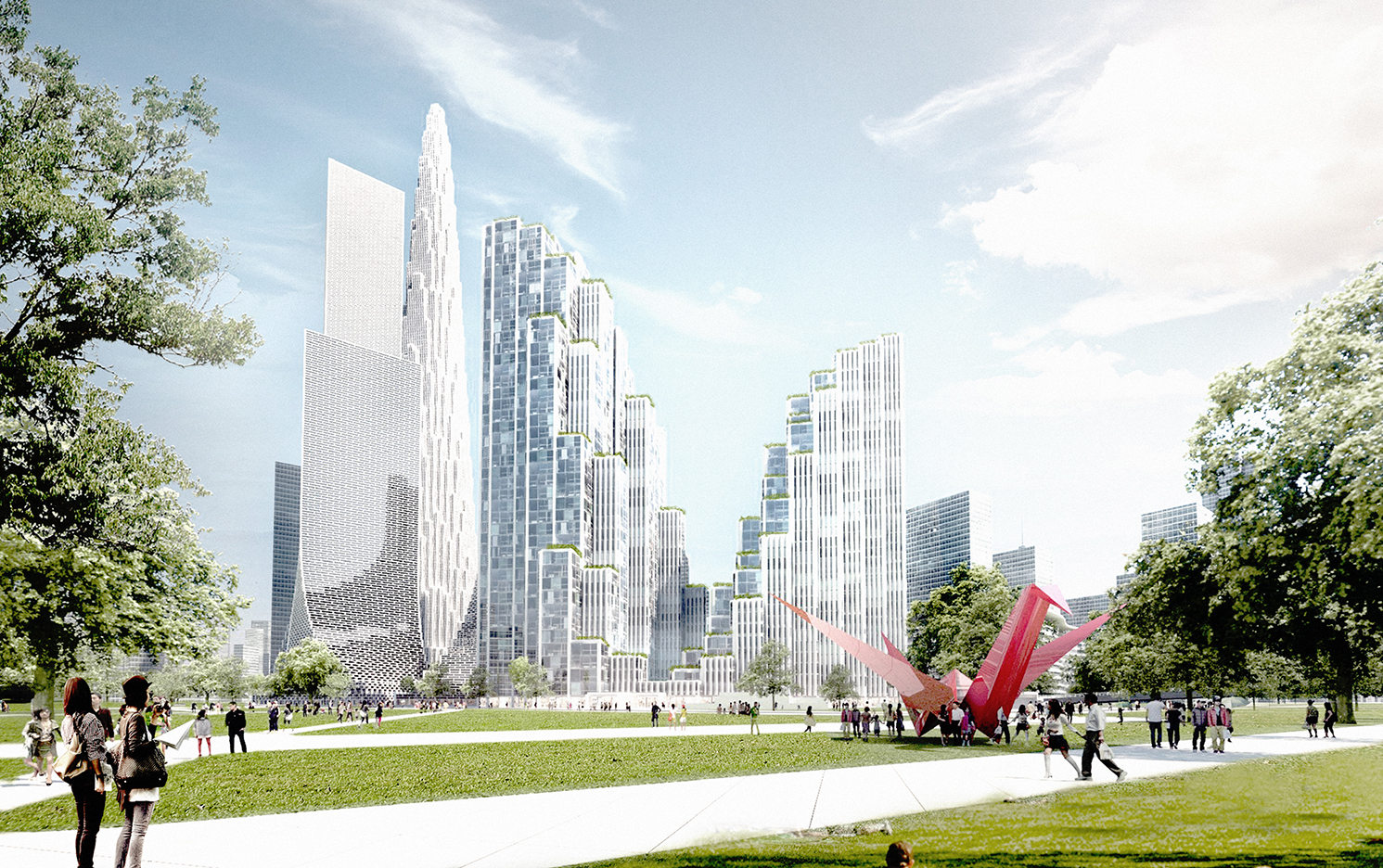
At the intersection of several major urban elements, namely the Rockefeller Financial Center, the Tianjin riverfront, a park, and Convention Center, Plot 31 seeks to create a landmark in which people want to live.
The challenge is to generate an urban form that strikes a balance between seemingly incompatible design criteria: dense Floor Area Ratio, high-level sustainability target, careful insertion within context, and most favorable condition for each housing unit. The whole is optimized so that each apartment has a minimum of two hours of direct sunlight on winter solstice, in addition to views to either the waterfront or the financial center, cross ventilation, and exterior space access.
A multi-step process enabled to find a form responding best to the program requirements.
It consisted in:
1) Generating several dozen concepts;
2) Filling the forms with modular apartment types;
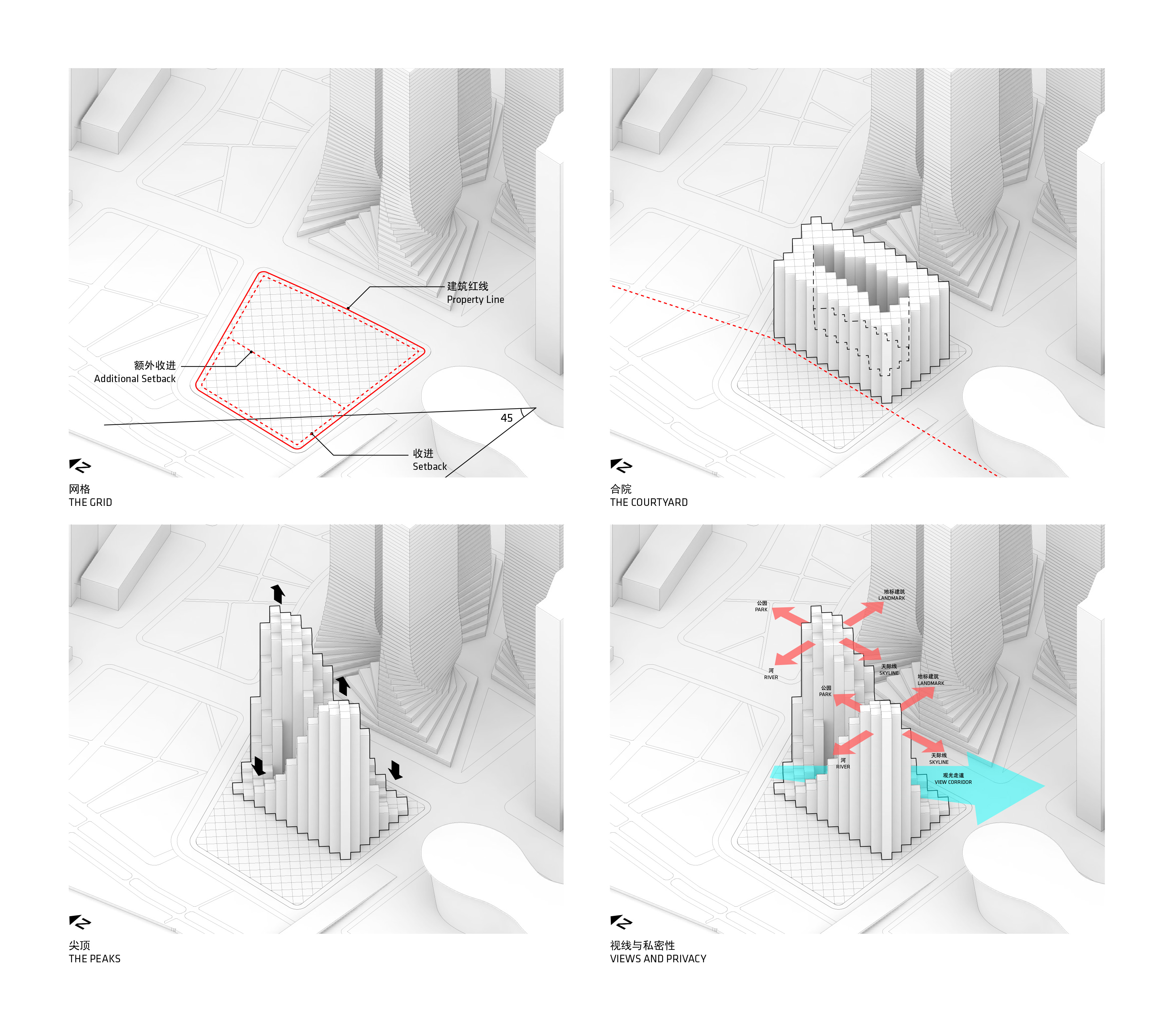
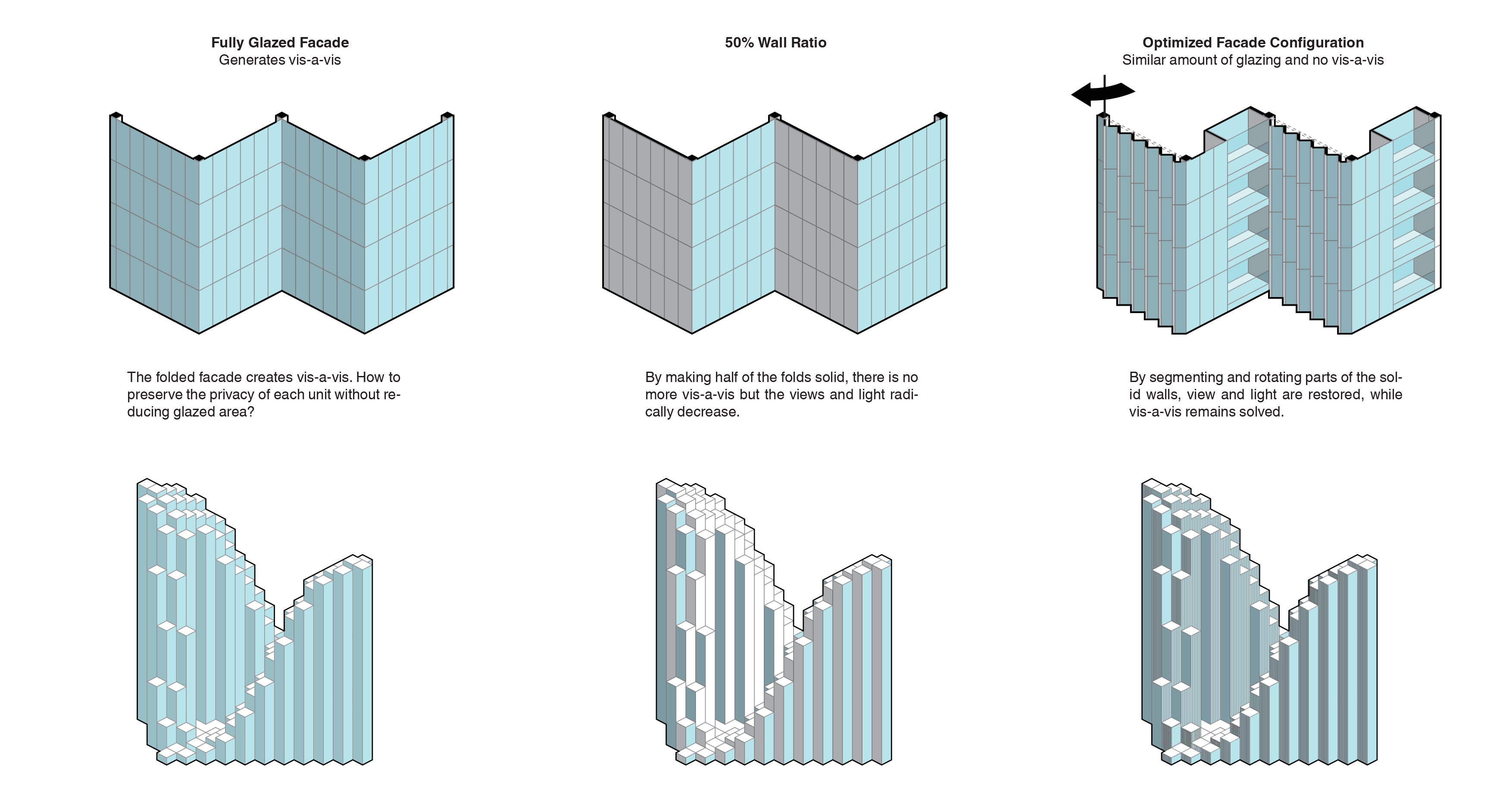
3) Testing and optimizing them versus sunlight criteria; 4) Optimizing views and vis-à-vis by folding facades.
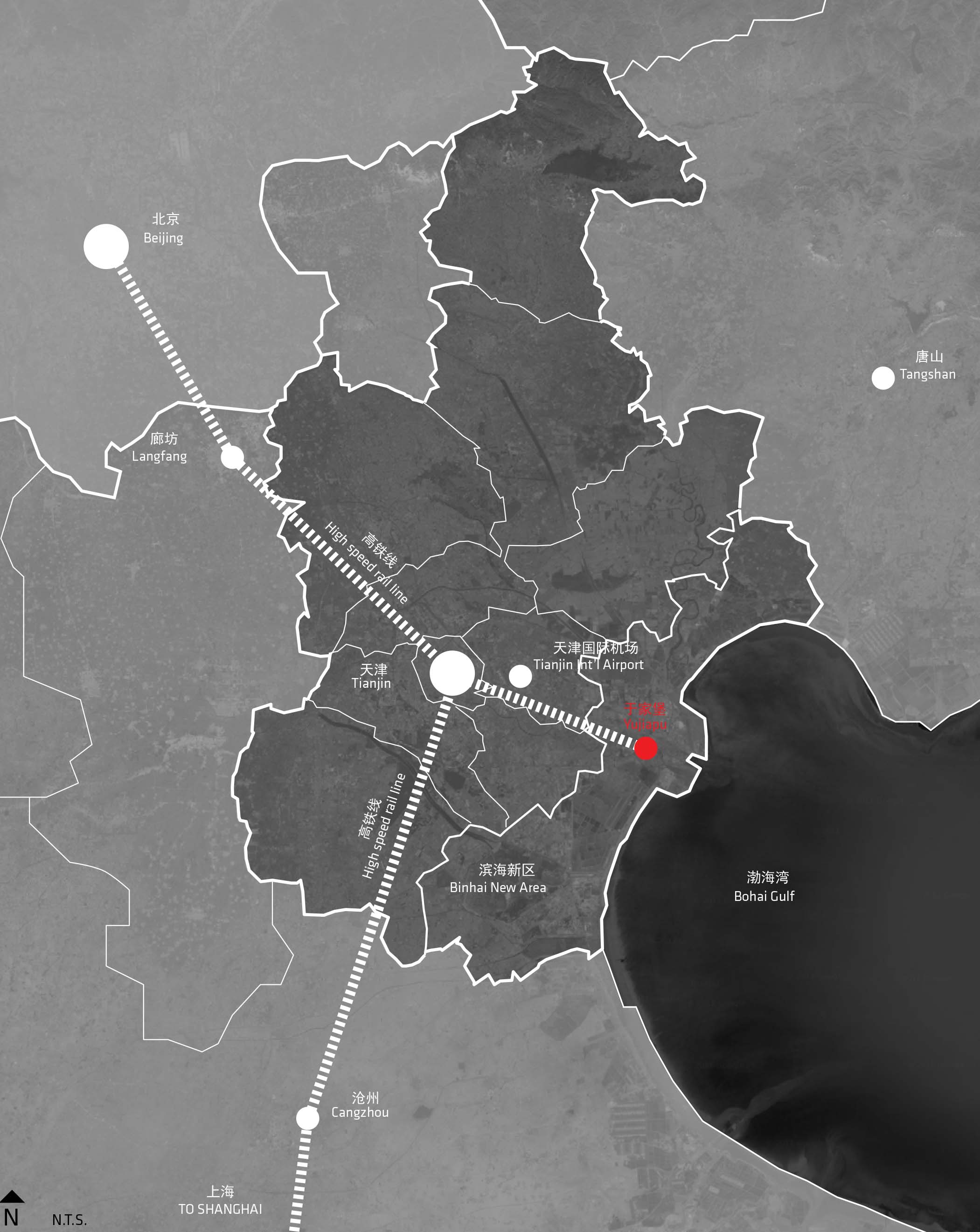
The site is one hour away from Beijing with the high-speed rail.
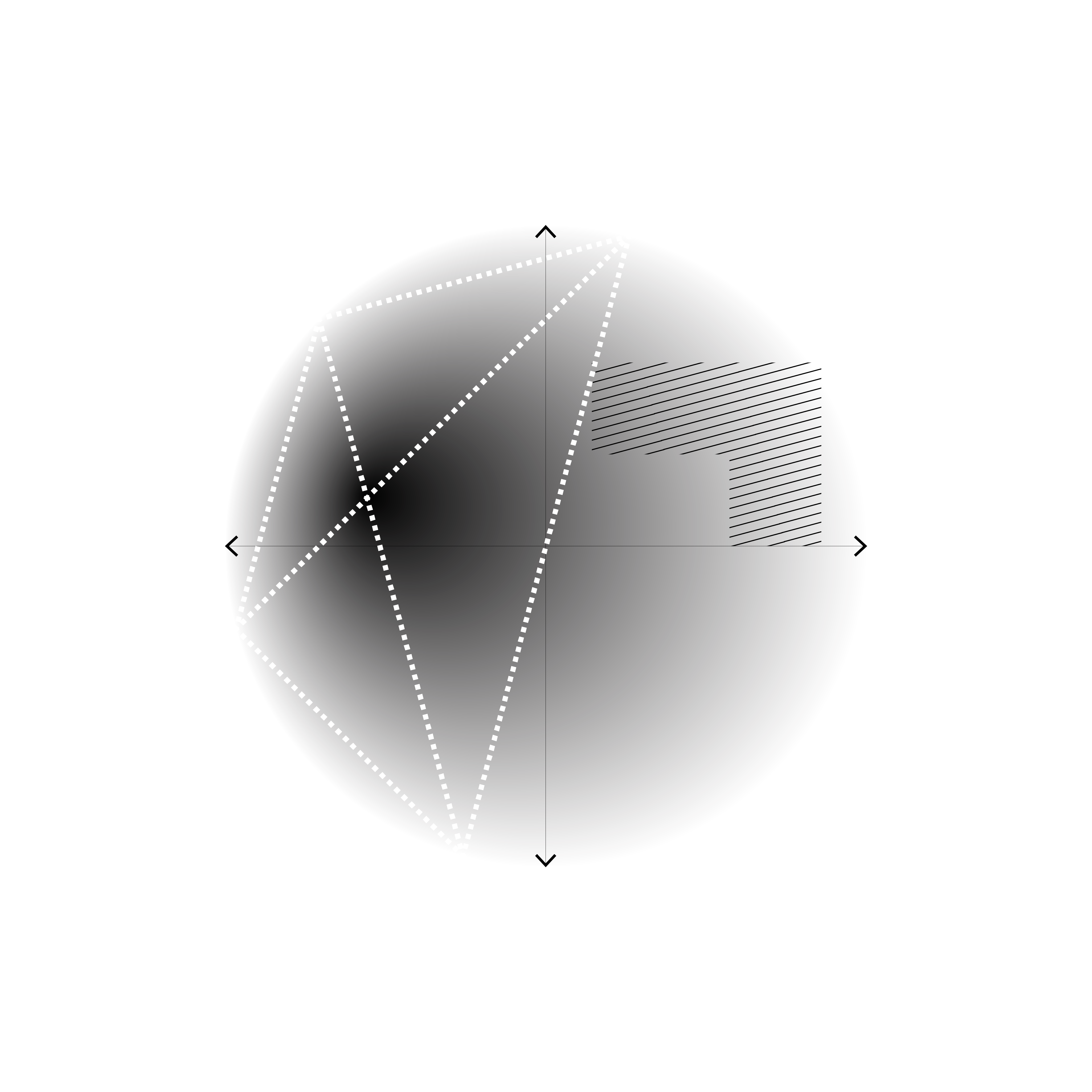
Over fifty iterations were modeled for the Plot 31 site. Exploration was guided by metrics such as floor-area ratio, sun exposure, and unit type.
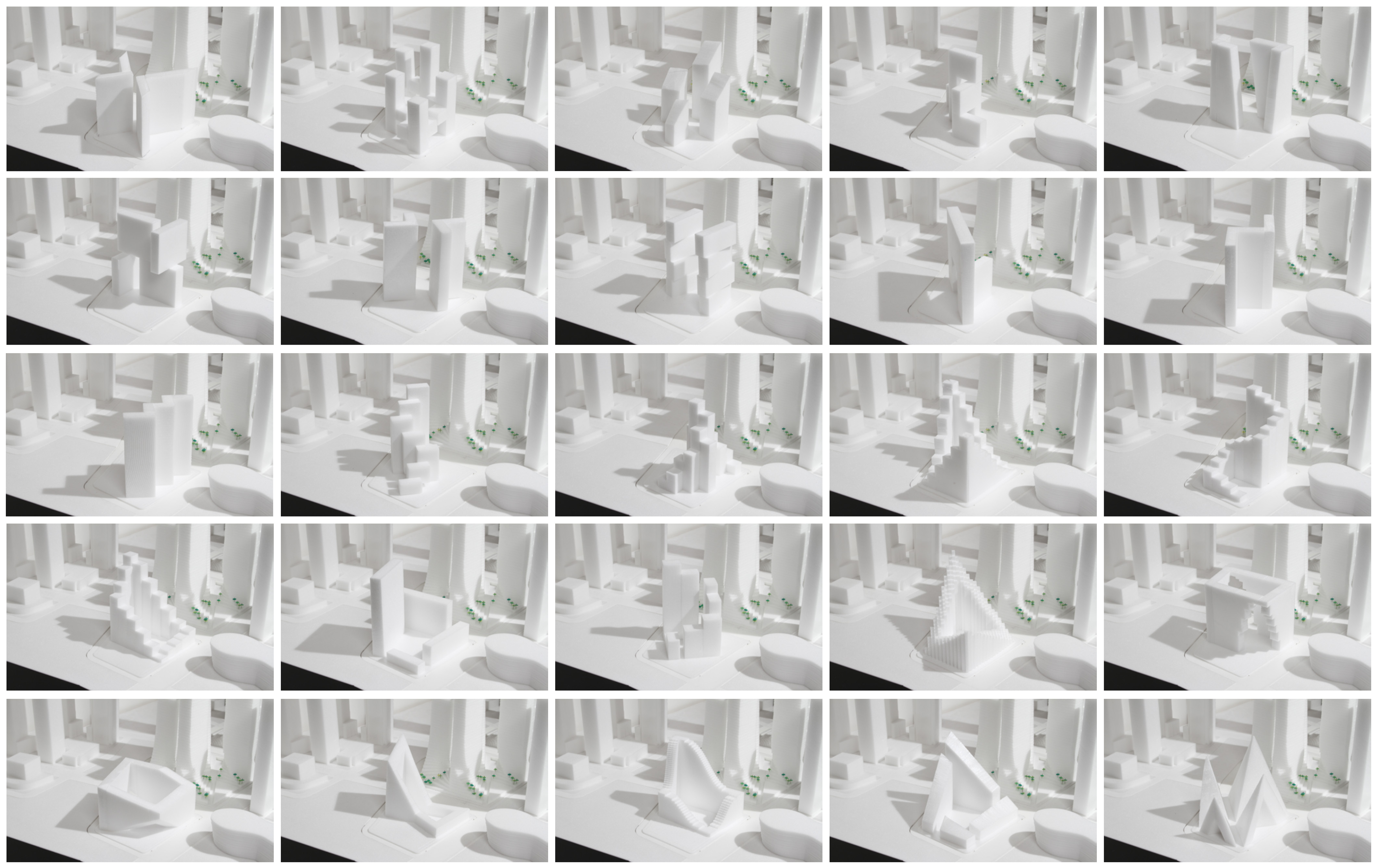
Out of this myriad of identified possibilities, three of the most enticing volumes were selected using intuition and interpersonal reasoning. The most promising volumes were studied in more detailed using data based approaches. They were given names to foster discursive exchange among the members of the team together with project critics.

Hours of sunlight were computed via Ecotect and the massing was adapted to ensure each apartment has 2 hours of direct sunlight on Winter solstice was adapted to ensure each apartment has 2 hours of direct sunlight on Winter solstice.

The "Twin Peaks" massing was kept for its ability to offer maximum flexibility of unit type while ensuring access to open air and daylight year round. Twin Peaks is the form that best performs!
Existing typologies were cross-bread to create a new hybrid that combines the liveliness and intimacy of an urban village with the airness and expansive view of a skyscraper.
Conservative Tianjin Residential Typology — The footprint is folded to maximize sunlight provision and efficient unit layouts. The building typology is multiplied within the designated parcel with minimal urban consideration.

Plot 31 Building Guideline — Rectangular slabs are staggered on a courtyard like podium. The podium holds a variety of commercial program components to ensure urban activity and street life.

End Result — Combining the idea of a folded slab with the courtyard/tower typology, a unitized conditional massing is proposed. It congests urban, commercial and residential requirements into a rich urban hybrid: the twin peaks. All apartment types are unit like a game of lego.

Twin Peaks' massing is the result of a clear series of steps that can be re-purposed on other sites and in different frameworks. It's a methodology that can scale.
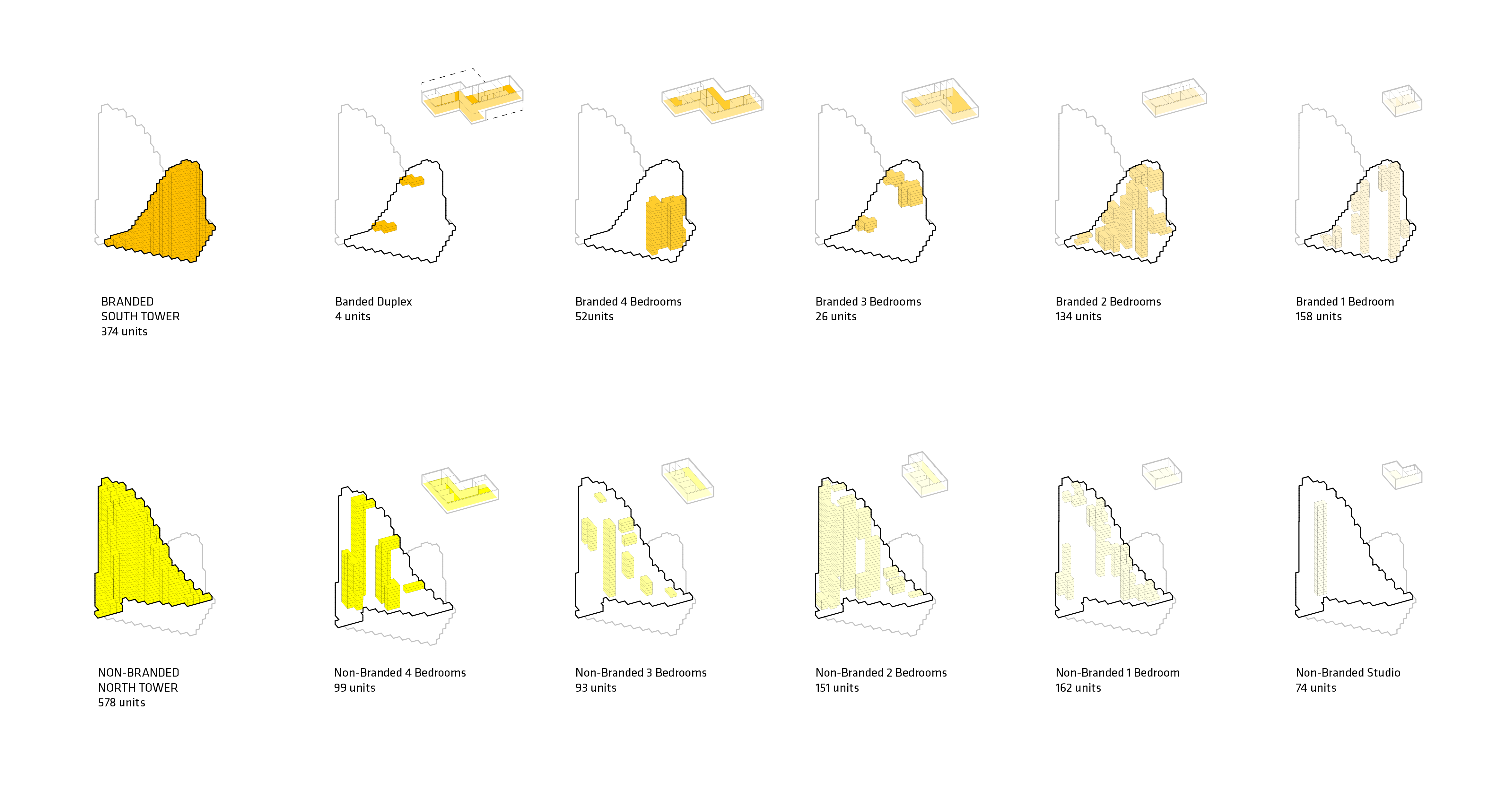
The system explained in the following diagram was designed to ensure the total privacy of each unit in spite of the pixelated geometry.
The iterative approach of Plot 31 left some room for thought. So many iterations were carefully crafted and eventually were discarded and thrown away. Finding the most efficient form is paradoxically extremely wasteful in efforts. Can an algorithm store the various ideas produced in this search process and adjust them to another housing site? How can AI and generative algorithms help?

'Le chêne,' pronounced [leuh-sheh-n' means oak tree in French, my native language.